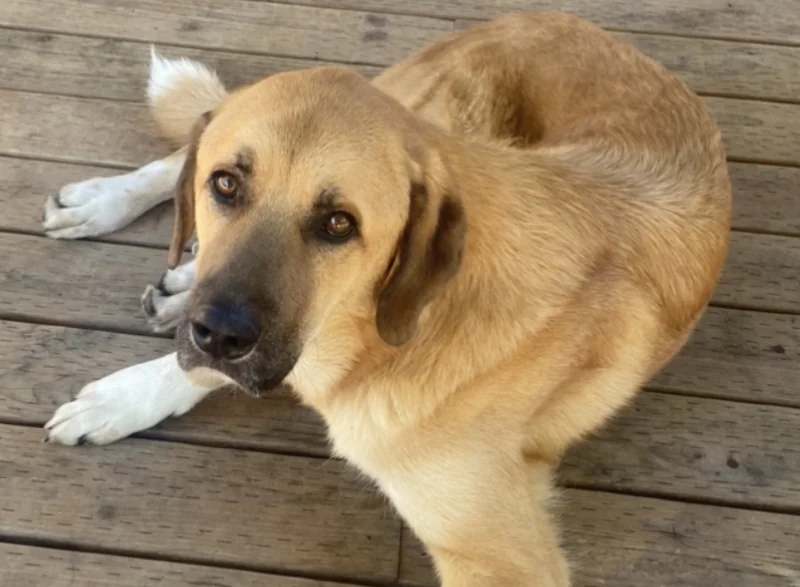
The Anatolian Shepherd is a ancient Anatolian livestock guardian descended from Mesopotamian mastiff antiquity. The Anatolian Shepherd descends from ancient Mesopotamian livestock-guarding mastiff types depicted in Babylonian art of the 2nd millennium BCE.
Quick facts
- AKC group
- Working
- Origin country
- Turkey (Anatolia)
- Origin period
- Antiquity
- Coat type
- Medium
- Coat colors
- Fawn (Karabaş — 'black head' fawn with black mask is the classical type), Brindle, White, Pinto — all colours and patterns acceptable
- Average lifespan
- 11-13 years
- Recognition
- AKC 1996 · FCI 1989 · UKC 1993 · Group 2 — Pinscher and Schnauzer-Molossoid breeds-Swiss Mountain and Cattle Dogs (Section 2.2: Molossoid breeds, Mountain type)
Origin
The Anatolian Shepherd descends from ancient Mesopotamian livestock-guarding mastiff types depicted in Babylonian art of the 2nd millennium BCE and in 8th-century BCE Assyrian reliefs. The breed has been kept by the shepherd peoples of the central Anatolian plateau (the modern Republic of Turkey) for at least 4,000 years to protect flocks of sheep and goats from wolf, jackal, brown bear, and Anatolian leopard. Working in the absence of the shepherd through the long Anatolian summers — when shepherds drive flocks to high mountain pasture and leave the dogs to manage them — produced the breed's defining trait of independent working character. The breed was first systematically imported to the United States in the 1970s by the United States Department of Agriculture as part of a livestock-protection programme.
Recognition
The American Kennel Club admitted the breed in 1996, the United Kennel Club followed in 1993, and the Federation Cynologique Internationale published the international standard (FCI No. 331) in 1989. The FCI assigns the breed to Group 2 — Pinscher and Schnauzer-Molossoid breeds-Swiss Mountain and Cattle Dogs (Section 2.2: Molossoid breeds, Mountain type).
Standard
The AKC and FCI standards describe a large, rugged, powerful and impressive guardian dog, with great endurance and agility, neither bullheaded nor heavy. The double coat is medium-length, weather-resistant, with a thick undercoat. Recognized colours are all colours and patterns; the classical Karabaş ('black head') type is fawn with a black mask. Males stand 74-81 cm at the withers, females 71-79 cm. The breed name covers what some registries (Turkey itself, the United Kennel Club) split into Kangal Shepherd Dog and Akbash Dog as separate breeds.
Sources & further reading (3)
- kennel-club-registry — accessed 2026-04-30
- encyclopedia — accessed 2026-04-30
- fci-standard — accessed 2026-04-30
Frequently asked questions
What is the Anatolian Shepherd's AKC group?
The American Kennel Club places the Anatolian Shepherd in the Working Group. The Working Group gathers breeds developed for jobs other than herding or hunting — guarding, draft, sled work, and water rescue — including the Boxer, Rottweiler, Saint Bernard, and Newfoundland. The breed's foundation working role was as a ancient Anatolian livestock guardian descended from Mesopotamian mastiff antiquity.
When was the Anatolian Shepherd officially recognized?
The American Kennel Club admitted the breed in 1996; the United Kennel Club followed in 1993; the Federation Cynologique Internationale published the international standard (FCI No. 331) in 1989.
What is the average lifespan of a Anatolian Shepherd?
Kennel-club longevity surveys place the Anatolian Shepherd's average lifespan in the 11-13 years range. The figure here represents the spread reported by the major parent-club studies and the Kennel Club (UK) purebred-dog health surveys.