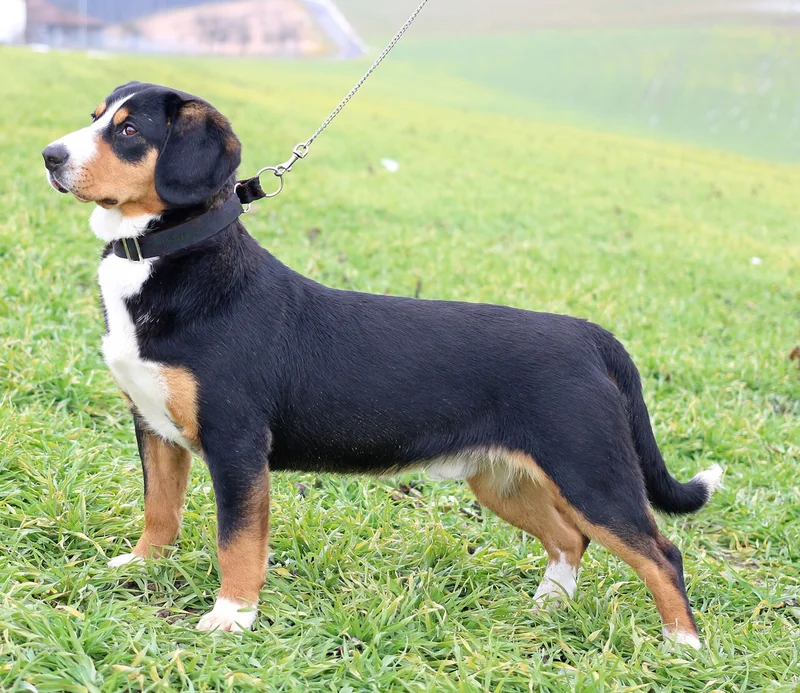
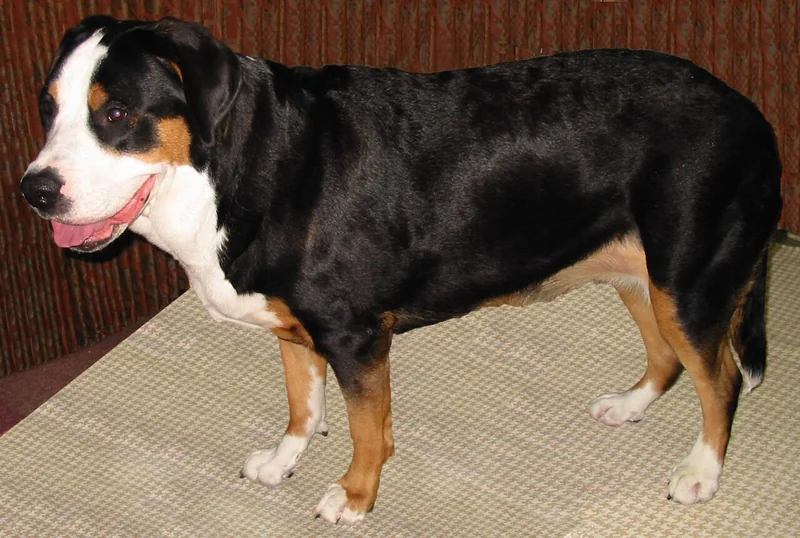
Canis lupus familiaris
Bernese Mountain Dog
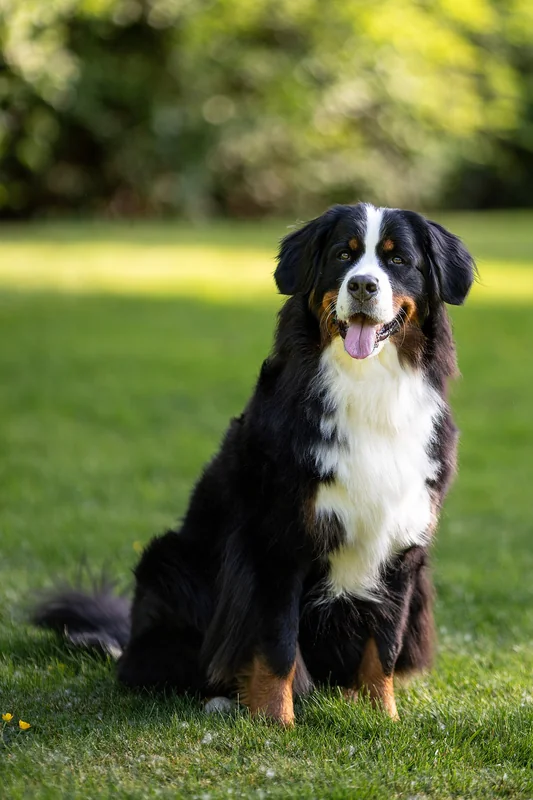 Featured photobernese-mountain-dog.jpg
The Bernese Mountain Dog is a Swiss alpine farm-dog of the canton of Bern, one of the four Sennenhund breeds. The Bernese Mountain Dog is one of four Swiss Sennenhund (alpine herder) breeds, developed from Roman-descended drover-mastiffs in the canton of Bern.
Quick facts
- AKC group
- Working
- Origin country
- Switzerland
- Origin period
- Roman antiquity (modern type formalized 1907)
- Coat type
- Long
- Coat colors
- Tricolor (Black, Rust, White) — black ground colour with rust and white markings
- Average lifespan
- 7-10 years
- Recognition
- AKC 1937 · FCI 1954 · UKC 1948 · Group 2 — Pinscher and Schnauzer-Molossoid breeds-Swiss Mountain and Cattle Dogs (Section 3: Swiss Mountain and Cattle Dogs)
Origin
The Bernese Mountain Dog is one of four Swiss Sennenhund breeds (along with the Greater Swiss, Appenzeller, and Entlebucher), all descended from Roman-descended drover-mastiffs that accompanied the legions across the Alps and persisted as alpine farm dogs in the German-speaking cantons of Switzerland. The Bernese type was concentrated around the village of Dürrbach in the canton of Bern, where the dogs were used by farmers to drive cattle, guard the farmstead, and pull milk-carts to the local cheese-makers. Swiss geologist Albert Heim formalized the modern breed in 1907 and the Schweizerischer Dürrbach-Klub was founded the same year; the name was officially changed to Berner Sennenhund (Bernese alpine-herder dog) in 1910.
Recognition
The American Kennel Club admitted the breed in 1937, the United Kennel Club followed in 1948, and the Federation Cynologique Internationale published the international standard (FCI No. 45) in 1954. The FCI assigns the breed to Group 2 — Pinscher and Schnauzer-Molossoid breeds-Swiss Mountain and Cattle Dogs (Section 3: Swiss Mountain and Cattle Dogs).
Standard
The AKC and FCI standards describe a large, sturdy, balanced dog of substantial bone and length, with a striking tricolour coat. The long, thick, slightly wavy or straight coat is the breed's defining feature: jet black ground colour with clearly defined rust markings on each cheek, above each eye, on the chest (in two patches), on each leg, and beneath the tail; white blaze, chest cross, paws, and tail tip complete the pattern. Males stand 64-70 cm at the withers, females 58-66 cm.
Sources & further reading (3)
- kennel-club-registry — accessed 2026-05-04
- encyclopedia — accessed 2026-05-04
- fci-standard — accessed 2026-05-04
Frequently asked questions
What is the Bernese Mountain Dog's AKC group?
The American Kennel Club places the Bernese Mountain Dog in the Working Group. The Working Group gathers breeds developed for jobs other than herding or hunting — guarding, draft, sled work, and water rescue — including the Boxer, Rottweiler, Saint Bernard, and Newfoundland. The breed's foundation working role was as a Swiss alpine farm-dog of the canton of Bern, one of the four Sennenhund breeds.
When was the Bernese Mountain Dog officially recognized?
The American Kennel Club admitted the breed in 1937; the United Kennel Club followed in 1948; the Federation Cynologique Internationale published the international standard (FCI No. 45) in 1954.
What is the average lifespan of a Bernese Mountain Dog?
Kennel-club longevity surveys place the Bernese Mountain Dog's average lifespan in the 7-10 years range. The figure here represents the spread reported by the major parent-club studies and the Kennel Club (UK) purebred-dog health surveys.