Canis lupus familiaris
Akita
 Featured photoakita.jpg
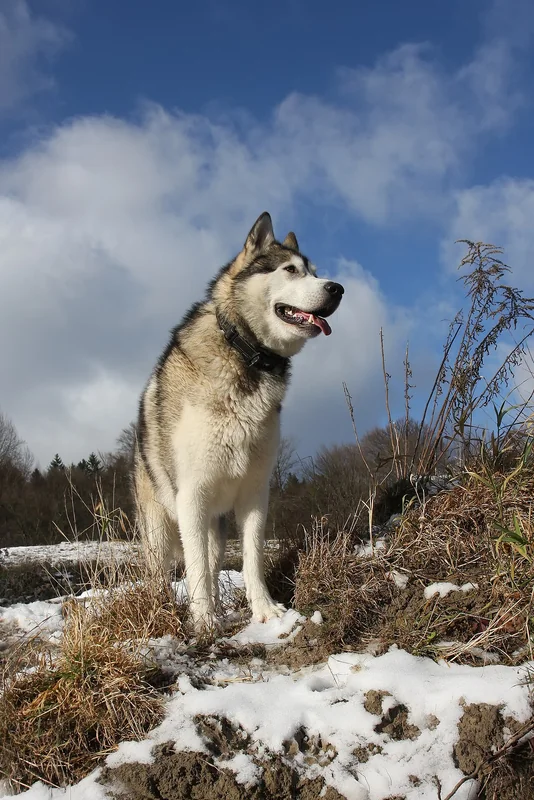
The Akita is a large Japanese spitz hunting dog of Akita prefecture — the breed of the loyal Hachikō. The Akita is a large Japanese spitz-type breed developed in the mountainous Akita prefecture of northern Honshu from the 17th century onward as a hunting dog for boar, deer, and the Yezo bear (Hokkaido brown bear).
Quick facts
- AKC group
- Working
- Origin country
- Japan (Akita Prefecture)
- Origin period
- 17th century (modern type formalized 1931)
- Coat type
- Double
- Coat colors
- Red Fawn, Sesame, Brindle, Pure White (with the red and sesame requiring the breed's characteristic urajiro pale ventral markings)
- Average lifespan
- 10-12 years
- Recognition
- AKC 1972 · FCI 1964 · UKC 1948 · Group 5 — Spitz and Primitive Types (Section 5: Asian Spitz and related breeds)
Origin
The Akita is a large Japanese spitz-type breed developed in the mountainous Akita Prefecture of northern Honshu from the 17th century onward, where the breed was used in matagi-style hunting (traditional Japanese mountain hunting) for boar, deer, and the Yezo bear (Hokkaido brown bear). The breed was nearly lost during the late 19th and early 20th centuries through crossing with imported Western breeds for dog-fighting, but the Akita-Inu Hozonkai (Society for the Preservation of the Japanese Akita) was founded in 1927 and the breed was declared a Japanese national monument in 1931. The breed is internationally famous through Hachikō, the Akita who waited for his deceased owner Professor Hidesaburō Ueno at Tokyo's Shibuya Station every day from 1925 to 1935; a bronze statue at the station has stood since 1948. The first Akitas reached the United States with returning serviceman from the post-war occupation of Japan; Helen Keller had imported the first one in 1937. The AKC admitted the breed in 1972.
Recognition
The American Kennel Club admitted the breed in 1972, the United Kennel Club followed in 1948, and the Federation Cynologique Internationale published the international standard (FCI No. 255) in 1964. The FCI assigns the breed to Group 5 — Spitz and Primitive Types (Section 5: Asian Spitz and related breeds).
Standard
The AKC standard recognizes a single Akita breed (covering both Japanese-line and American-line dogs), while the FCI separates Akita Inu (FCI No. 255, Japanese line) from the larger American Akita (FCI No. 344). The breed is large, powerful, alert, with much substance and heavy bone — slightly longer than tall, with a broad, deep chest and a moderately level back. The double coat consists of a soft, dense undercoat under a straight, harsh, standing-off outer coat. Japanese-line recognized colours: red fawn, sesame (red-fawn with black tipping), brindle, and pure white — all required to show urajiro (the distinctive pale ventral markings). Males stand 64-71 cm at the withers, females 58-66 cm.
Sources & further reading (3)
- kennel-club-registry — accessed 2026-05-04
- encyclopedia — accessed 2026-05-04
- fci-standard — accessed 2026-05-04
Frequently asked questions
What is the Akita's AKC group?
The American Kennel Club places the Akita in the Working Group. The Working Group gathers breeds developed for jobs other than herding or hunting — guarding, draft, sled work, and water rescue — including the Boxer, Rottweiler, Saint Bernard, and Newfoundland. The breed's foundation working role was as a large Japanese spitz hunting dog of Akita prefecture — the breed of the loyal Hachikō.
When was the Akita officially recognized?
The American Kennel Club admitted the breed in 1972; the United Kennel Club followed in 1948; the Federation Cynologique Internationale published the international standard (FCI No. 255) in 1964.
What is the average lifespan of a Akita?
Kennel-club longevity surveys place the Akita's average lifespan in the 10-12 years range. The figure here represents the spread reported by the major parent-club studies and the Kennel Club (UK) purebred-dog health surveys.