Canis lupus familiaris
Siberian Husky
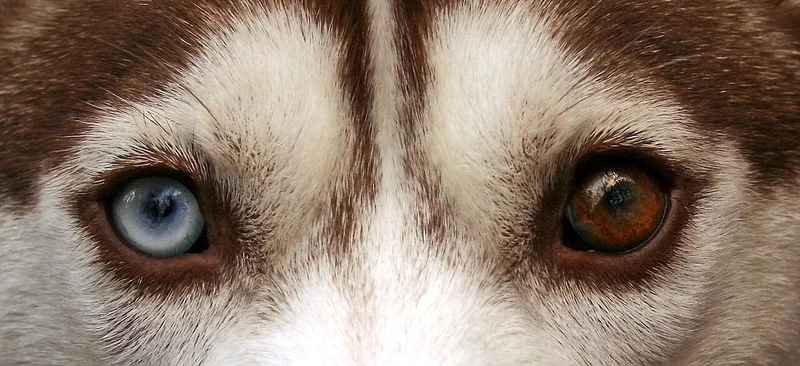 Featured photosiberian-husky.jpg
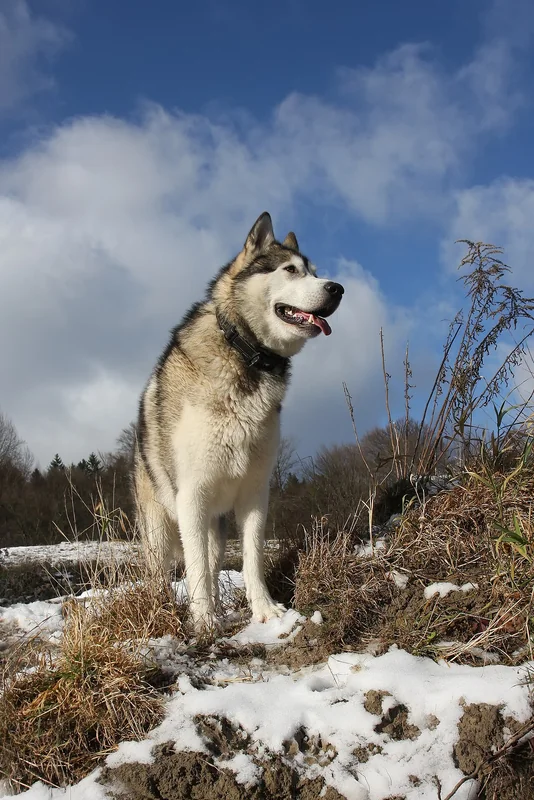
The Siberian Husky is a medium-sized working sled dog developed by the Chukchi people of the Chukotka Peninsula in the Russian Far East. The breed reached Alaska in 1908 via the All-Alaska Sweepstakes sled race; international fame followed the 1925 serum run to Nome, when a relay of Husky teams (lead dogs Togo and Balto) carried diphtheria antitoxin 1,085 km in five and a half days. The AKC admitted the breed in 1930; the FCI assigns it to Group 5. The standard describes a quick-moving 50-60 cm dog with a dense double coat.
Quick facts
- AKC group
- Working
- Origin country
- Russia (Siberia)
- Origin period
- Pre-20th century (formalized early 1900s)
- Coat type
- Double
- Coat colors
- Black, Grey, Red, Sable, Agouti, White, Black and White, Grey and White, Red and White, Sable and White
- Average lifespan
- 12-14 years
- Recognition
- AKC 1930 · FCI 1966 · UKC 1938 · Group 5 — Spitz and Primitive Types (Section 1: Nordic Sledge Dogs)
Origin
The breed was developed by the Chukchi people of the Chukotka Peninsula in the Russian Far East as a long-distance sled dog adapted to extreme cold. Genetic studies place the Siberian Husky among the Northern Spitz cluster of basal dog lineages, with the closest living relatives being the Alaskan Malamute, Greenland Dog, and Canadian Inuit Dog. The Chukchi line was nearly lost in the Soviet collectivization of the 1930s, when the Soviet government banned the keeping of Chukchi sled dogs; the modern Western line descends from the dogs imported to Alaska between 1908 and 1930.
Recognition
The American Kennel Club admitted the Siberian Husky in 1930. The Canadian Kennel Club followed in 1939 and the United Kennel Club in 1938. The FCI standard (FCI No. 270) is held by the AKC on behalf of the country of origin (USA), reflecting that the breed was formally standardized from the Alaskan Husky line after the original Chukchi lines were lost in Russia. The first AKC Siberian Husky champion, Northern Light Kobuk, finished his title in 1932.
Standard
The AKC and FCI standards describe a medium-sized, moderately compact dog with a smooth, effortless gait and a level top-line. The double coat is medium-length, with a soft, dense undercoat and a straight, smooth outer coat that should never be so long as to obscure the clean outline. Recognized colours range from pure white through black, grey, red, sable, and agouti, with most pattern combinations on white permitted. The almond-shaped eyes may be brown, blue, or any combination including parti-coloured (heterochromia) — a defining feature retained in the formal standard. Males stand 53-60 cm at the withers, females 50-56 cm.
Sources & further reading (3)
- kennel-club-registry — accessed 2026-04-29
- encyclopedia — accessed 2026-04-29
- fci-standard — accessed 2026-04-29
Frequently asked questions
What is the Siberian Husky's AKC group?
The American Kennel Club places the Siberian Husky in the Working Group. The Working Group gathers breeds developed for jobs other than herding or hunting — guarding, draft, and sled work — alongside the Alaskan Malamute, Saint Bernard, Bernese Mountain Dog, and Newfoundland. The Husky's foundation purpose was long-distance sled work for the Chukchi people of the Russian Far East.
When was the Siberian Husky officially recognized?
The American Kennel Club admitted the breed in 1930, four years after the 1925 serum run to Nome cemented its international reputation. The United Kennel Club followed in 1938 and the Canadian Kennel Club in 1939. The FCI standard (FCI No. 270) was first published in 1966 and is maintained by the AKC on behalf of the country of origin (USA), reflecting the breed's reconstruction from the Alaskan Husky line after the original Chukchi lines were lost in the Soviet 1930s.
What is the average lifespan of a Siberian Husky?
Kennel-club longevity surveys report an average lifespan of approximately 12 to 14 years. The Kennel Club (UK) 2004 purebred-dog health survey median was 12.6 years, and AKC parent-club longevity data is consistent with that range across the modern registry.