Canis lupus familiaris
Rafeiro do Alentejo
 Featured photorafeiro-do-alentejo.jpg
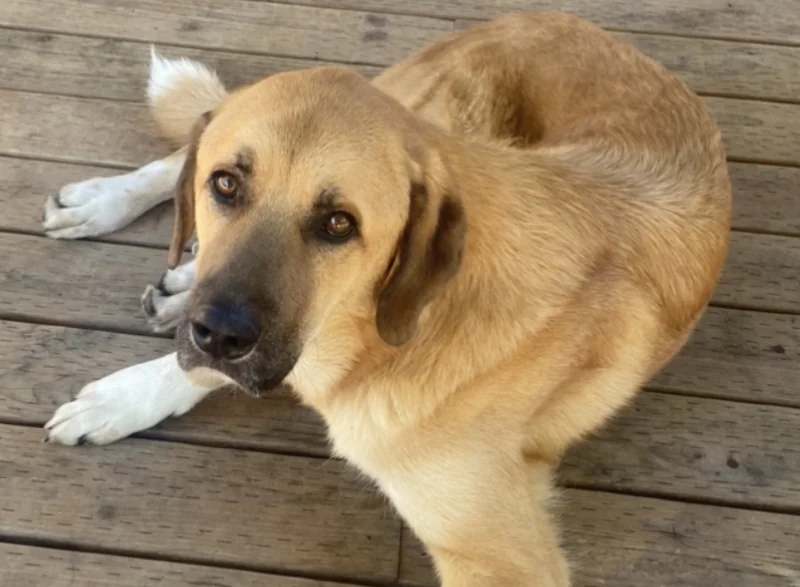
The Rafeiro do Alentejo is a large, powerful Portuguese livestock guardian from the Alentejo plain of southern Portugal, historically used to protect cattle and sheep flocks and to guard rural estates against wolves and human intruders. The breed moves with large transhumant flocks on seasonal migrations between winter lowland and summer mountain pastures. The FCI registers it as No. 96 under Portugal's patronage. Males stand 66–74 cm.
Quick facts
- AKC group
- Working
- Origin country
- Portugal
- Origin period
- Ancient, standardised 20th century
- Coat type
- Short
- Coat colors
- Black, Wolf Grey, Fawn, Yellow, Brindled or stripped
- Average lifespan
- 10-12 years
- Recognition
- FCI 1954 · Group 2 — Pinscher and Schnauzer-Molossoid Breeds, Swiss Mountain and Cattle Dogs (Section 2.2: Molossoid breeds, Mountain type)
Origin
The Rafeiro do Alentejo is considered one of the oldest Portuguese breeds and is associated with the broad, open Alentejo plateau — Portugal's largest agricultural region south of the Tagus River. The breed's mastiff-type build and its function as a livestock and estate guardian are consistent with the ancient tradition of large molosser-type dogs used across the Mediterranean and Iberian Peninsula as flock guardians. The breed traditionally accompanied the large seasonal transhumant migrations of sheep and cattle between the Alentejo winter pastures and the summer pastures of the Serra da Estrela and other Portuguese mountain ranges.
Recognition
The Clube Português de Canicultura (CPC) standardised the breed in the mid-20th century. The FCI registered the Rafeiro do Alentejo under standard No. 96 in 1954, classifying it in Group 2, Section 2.2 (Molossoid breeds, Mountain type) with Portugal as patron country. The breed is not currently recognised by the AKC or UKC. It is one of seven officially recognised Portuguese breeds.
Standard
The FCI standard describes a large, massive, powerful dog with a bear-like rounded head, medium-length muzzle, small, dark, almost triangular eyes, and small, triangular ears that hang flat to the head. The coat is short to medium, dense, and smooth. The colours include black, wolf grey, fawn, yellow, and brindle patterns; white patches and markings are common. Males stand 66–74 cm and weigh 35–60 kg. The breed's characteristic gait at rest is a slow, deliberate rolling walk.
Sources & further reading (3)
- fci-standard — accessed 2026-05-27
- encyclopedia — accessed 2026-05-27
- kennel-club-registry — accessed 2026-05-27
Frequently asked questions
What does 'Rafeiro do Alentejo' mean?
The name translates from Portuguese as 'Mongrel [or guard dog] of the Alentejo'. 'Rafeiro' derives from a Portuguese term for a large, mixed-type guard dog (rather than a pedigreed dog), though in modern usage it refers specifically to this breed. 'Alentejo' identifies the breed's geographic region — the broad agricultural plain south of the Tagus River in Portugal.
Is the Rafeiro do Alentejo AKC recognised?
The Rafeiro do Alentejo is not recognised by the AKC or UKC. The FCI has recognised the breed since 1954 under standard No. 96, with Portugal as patron country. The breed is maintained primarily in Portugal and is one of the country's seven officially recognised native dog breeds.
How does the Rafeiro do Alentejo differ from the Serra da Estrela Mountain Dog?
Both are large Portuguese livestock guardians, but the Rafeiro do Alentejo is from the southern lowland Alentejo plain while the Serra da Estrela Mountain Dog originates from the central mountain range. The Rafeiro is shorter-coated (short or medium), bear-headed, and heavier-bodied. The Serra da Estrela has a longer coat (long or short variety) and a slightly lighter, more mobile build suited to mountain terrain. Both are FCI Group 2, Section 2.2.