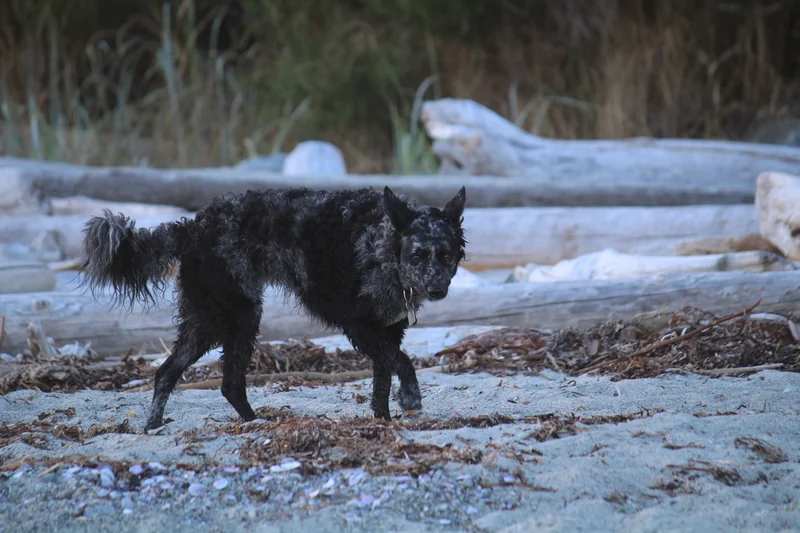
The Mudi is a small to medium-sized Hungarian herding breed that developed naturally in Hungary in the 19th century from crosses among various Hungarian pastoral dogs. The breed was identified and standardised as distinct by Dr. Dezső Fényes in 1936. The AKC admitted the Mudi in 2022 and places it in the Herding Group. The FCI registers it as No. 238. Males stand 41–47 cm.
Quick facts
- AKC group
- Herding
- Origin country
- Hungary
- Origin period
- 19th century (recognised 1936)
- Coat type
- Curly
- Coat colors
- Black, Brown, White, Yellow, Blue Merle, Ash, Fawn
- Average lifespan
- 12-14 years
- Recognition
- AKC 2022 · FCI 1966 · UKC 2006 · Group 1 — Sheepdogs and Cattledogs (Section 1: Sheepdogs)
Origin
The Mudi is the youngest of the three traditional Hungarian herding breeds (alongside the Puli and Pumi) and developed naturally in Hungary during the 19th century without deliberate breeding. The breed is believed to have arisen from crosses among the Puli, Spitz-type dogs that entered Hungary from Germany, and other Central European herding types. Its medium size, curly/wavy coat, and erect ears distinguish it from the corded Puli and the semi-erect-eared Pumi. Dr. Dezső Fényes, a Hungarian biologist and naturalist, was the first to describe and name the breed formally in 1936.
Recognition
The Magyar Ebtenyésztők Országos Egyesülete (Hungarian Kennel Club) registered the breed after Fényes's 1936 description. The FCI granted recognition in 1966 under standard No. 238, classifying the Mudi in Group 1, Section 1 (Sheepdogs) with Hungary as patron country. The UKC recognised the breed in 2006. The AKC placed the Mudi in the Miscellaneous Class in 2020 and granted full Herding Group recognition in 2022, making it one of the most recent breeds admitted to the AKC registry.
Standard
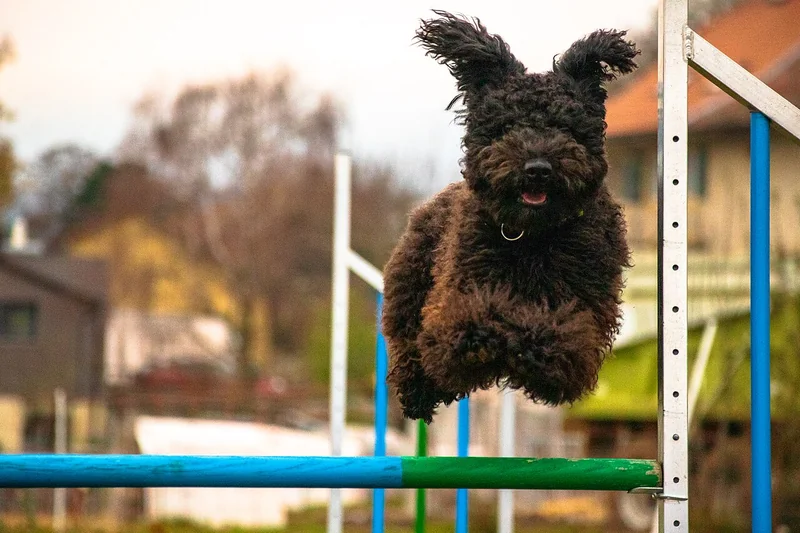
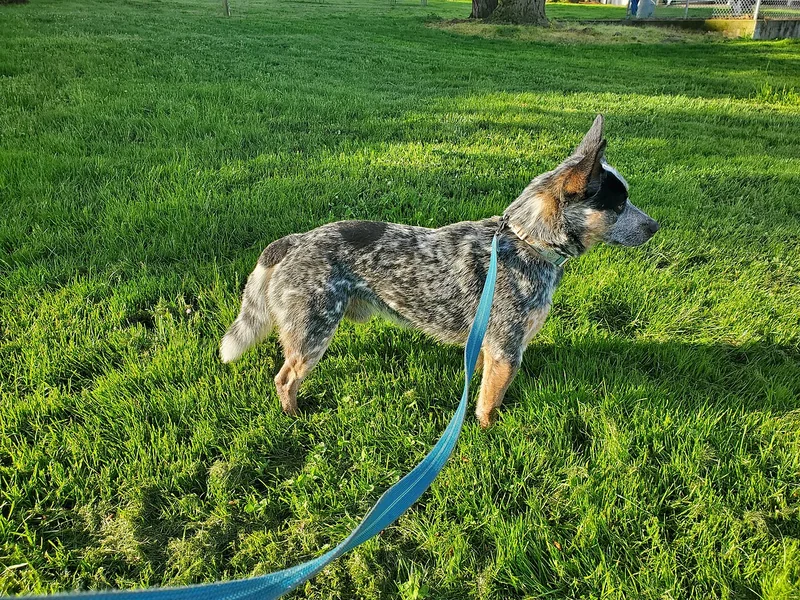
The FCI and AKC standards describe a medium-small, active, agile dog slightly longer than tall, with a wedge-shaped head, a narrow, pointed muzzle, and upright, V-shaped ears. The distinctive wavy or curly coat is 3–7 cm long, dense, and glossy. The breed can appear in a uniquely wide range of colours: black (the most common), brown, white, yellow, fawn, ash, and blue merle — the last being distinctive among Hungarian herding breeds. Males stand 41–47 cm and weigh 8–13 kg.
Sources & further reading (3)
- kennel-club-registry — accessed 2026-05-27
- encyclopedia — accessed 2026-05-27
- fci-standard — accessed 2026-05-27
Frequently asked questions
When did the AKC recognise the Mudi?
The AKC granted the Mudi full Herding Group recognition in 2022, after the breed entered the AKC Miscellaneous Class in 2020. The FCI had recognised the breed since 1966 and the UKC since 2006. The Mudi is one of the most recently added breeds in the AKC registry.
How does the Mudi differ from the Puli and Pumi?
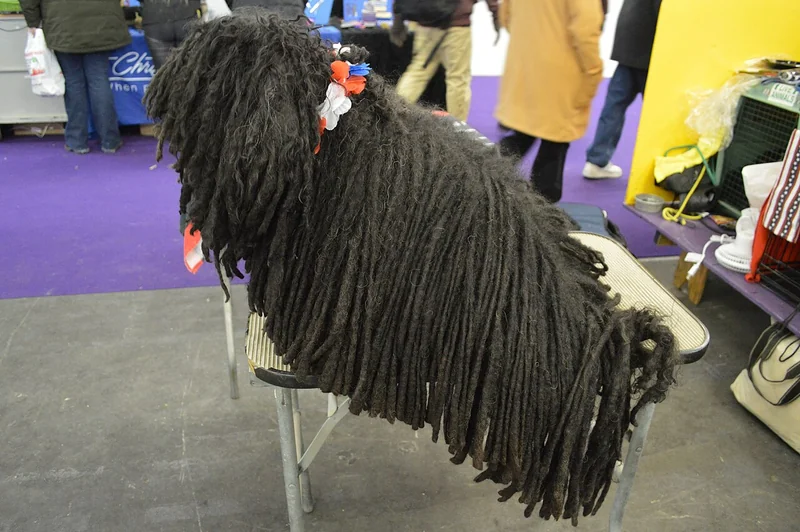
All three are Hungarian herding breeds, but each has a distinct coat and build. The Puli has a dense, corded coat that hangs to the ground in adult dogs. The Pumi has a wavy, semi-erect-curled coat and a unique terrier-like head with semi-erect ears. The Mudi has a shorter (3–7 cm), dense, wavy-to-curly coat with upright ears. The Mudi is also the rarest of the three in terms of worldwide registered population.
What colours can a Mudi be?
The FCI and AKC standards allow the Mudi in a wide range of colours: black, brown, white, yellow, fawn, ash, and blue merle (dappled). This colour diversity is unusual among herding breeds; blue merle in particular is rare in Hungarian dogs. Black is the most common colour in the breed population. All colours are treated as equally acceptable by the standard.