Canis lupus familiaris
Pumi (Hungarian Pumi)
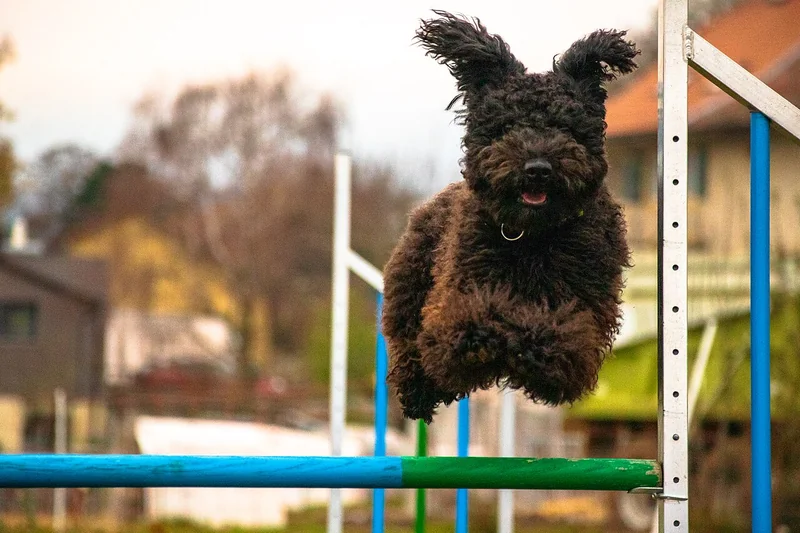 Featured photopumi.jpg
The Pumi is a Hungarian Pumi sheep-and-cattle drive herder split from the older Puli line in 1921. The Pumi is one of the three native Hungarian working breeds (alongside the Komondor and the Puli) and was developed in 17th- or 18th-century Hungary by crossing the older Puli with imported German and French herding dogs (Pomeranian and Briard types) to produce a more agile sheep-driving dog suited to the Hungarian sheep-and-cattle drives.
Quick facts
- AKC group
- Herding
- Origin country
- Hungary
- Origin period
- 17th-18th century (formalized 1921)
- Coat type
- Curly
- Coat colors
- Grey (any shade), Black, Fawn, White
- Average lifespan
- 12-14 years
- Recognition
- AKC 2016 · FCI 1966 · UKC 2008 · Group 1 — Sheepdogs and Cattledogs (Section 1: Sheepdogs)
Origin
The Pumi is one of the three native Hungarian working breeds (alongside the Komondor and the older Puli) and was developed in 17th- or 18th-century Hungary by crossing the older Puli with imported German and French herding dogs (German Pomeranian and French Briard types brought to Hungary by herding migrations across the Carpathian basin). The objective was a more agile, lighter, more vocal sheep-driving dog than the Puli, suited to the Hungarian sheep-and-cattle drives across the puszta (plains). The Pumi was first registered as separate from the Puli by the Hungarian Kennel Club in 1921 and the FCI followed in 1966. The AKC admitted the breed in 2016, making it one of the most recently-recognized AKC herding breeds.
Recognition
The American Kennel Club admitted the breed in 2016, the United Kennel Club followed in 2008, and the Federation Cynologique Internationale published the international standard (FCI No. 56) in 1966. The FCI assigns the breed to Group 1 — Sheepdogs and Cattledogs (Section 1: Sheepdogs).
Standard
The AKC and FCI standards describe a small, agile, lively, alert, very intelligent herding dog of lean and dry build, square in outline. The defining features are the curly double coat (a mix of soft, dense undercoat and rough, curly outer coat that mats into a wavy, slightly-curly surface — never corded) and the high-set semi-pricked or fully-pricked ears (with the upper third of the ear bending forward in the breed's signature 'spaniel-like' carriage). Recognized colours are grey (any shade), black, fawn, and white. Males stand 41-47 cm at the withers, females 38-44 cm.
Sources & further reading (3)
- kennel-club-registry — accessed 2026-04-30
- encyclopedia — accessed 2026-04-30
- fci-standard — accessed 2026-04-30
Frequently asked questions
What is the Pumi's AKC group?
The American Kennel Club places the Pumi in the Herding Group. The Herding Group, carved out of the older Working Group in 1983, gathers breeds developed to control the movement of livestock — Border Collies, Australian Shepherds, Welsh Corgis, and the German Shepherd among them. The breed's foundation working role was as a Hungarian Pumi sheep-and-cattle drive herder split from the older Puli line in 1921.
When was the Pumi officially recognized?
The American Kennel Club admitted the breed in 2016; the United Kennel Club followed in 2008; the Federation Cynologique Internationale published the international standard (FCI No. 56) in 1966.
What is the average lifespan of a Pumi?
Kennel-club longevity surveys place the Pumi's average lifespan in the 12-14 years range. The figure here represents the spread reported by the major parent-club studies and the Kennel Club (UK) purebred-dog health surveys.