Canis lupus familiaris
Lancashire Heeler
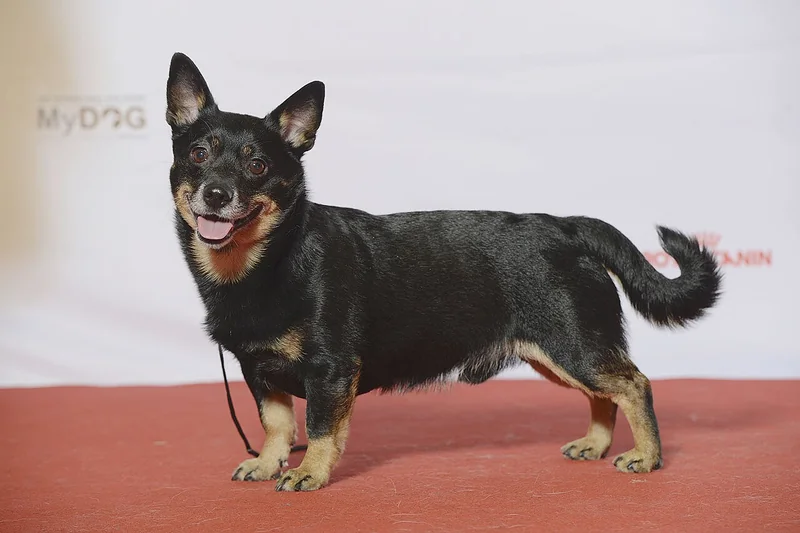 Featured photolancashire-heeler.jpg
The Lancashire Heeler is a small, robust black-and-tan herding dog from the Ormskirk district of Lancashire, England, used historically to drive cattle to market by nipping at their heels. The breed also worked as a ratter on Lancashire farms. The AKC admitted the Lancashire Heeler in 2024 and places it in the Herding Group. The Kennel Club (UK) recognised the breed in 1981 and the FCI in 2016. Males stand 30–31 cm.
Quick facts
- AKC group
- Herding
- Origin country
- England
- Origin period
- 19th century
- Coat type
- Short
- Coat colors
- Black and Tan, Liver and Tan
- Average lifespan
- 12-15 years
- Recognition
- AKC 2024 · FCI 2016 · UKC 2009 · Group 1 — Sheepdogs and Cattledogs (Section 2: Cattledogs, except Swiss Cattledogs)
Origin
The Lancashire Heeler was developed in the Ormskirk district of southwest Lancashire to drive cattle from the Welsh borders to the Lancashire market towns. Drovers bringing Welsh Black cattle from Wales are believed to have used Welsh Corgis as heeler dogs; local Lancashire terrier-type dogs (possibly related to the Manchester Terrier) then contributed to a local type that fixed the characteristic black-and-tan colouring and compact, low-slung build. The breed was known informally as the 'Ormskirk Terrier' or 'Ormskirk Heeler' in the 19th and early 20th centuries.
Recognition
The Lancashire Heeler Club was founded in 1978 by enthusiast Gwen Mackintosh, who gathered and registered the remaining specimens and drafted the first formal standard. The Kennel Club (UK) granted recognition in 1981. The breed entered the Kennel Club's Vulnerable Native Breed status in 2003 (annual registrations below 300). The FCI granted recognition in 2016 under standard No. 331, placing the breed in Group 1, Section 2 (Cattledogs). The UKC recognised it in 2009. The AKC admitted the Lancashire Heeler to the Herding Group in 2024.
Standard
The FCI and AKC standards describe a small, sturdy, low-to-ground dog with a level back, short, strong legs, and a lively, alert expression. The coat is short, dense, and weatherproof with a slight mane on the neck. Only two colours are recognised: black and tan, and liver and tan; the tan markings are rich, located above the eyes, on the muzzle, chest, legs, and under the tail. Males stand 30–31 cm; females 25–30 cm; the breed weighs 3–6 kg.
Sources & further reading (3)
- kennel-club-registry — accessed 2026-05-27
- encyclopedia — accessed 2026-05-27
- fci-standard — accessed 2026-05-27
Frequently asked questions
When did the AKC recognise the Lancashire Heeler?
The AKC admitted the Lancashire Heeler to the Herding Group in 2024, making it one of the most recently recognised AKC breeds. The Kennel Club (UK) had recognised the breed in 1981, the UKC in 2009, and the FCI in 2016 under standard No. 331.
Why is the Lancashire Heeler considered a vulnerable breed?
The Kennel Club (UK) classifies breeds with fewer than 300 annual registrations as Vulnerable Native Breeds. The Lancashire Heeler has appeared on this list intermittently, reflecting the breed's small global population and limited awareness outside the UK. Efforts by the Lancashire Heeler Club and increased international recognition (FCI 2016, AKC 2024) have helped grow awareness.
What working technique is implied by 'Heeler'?
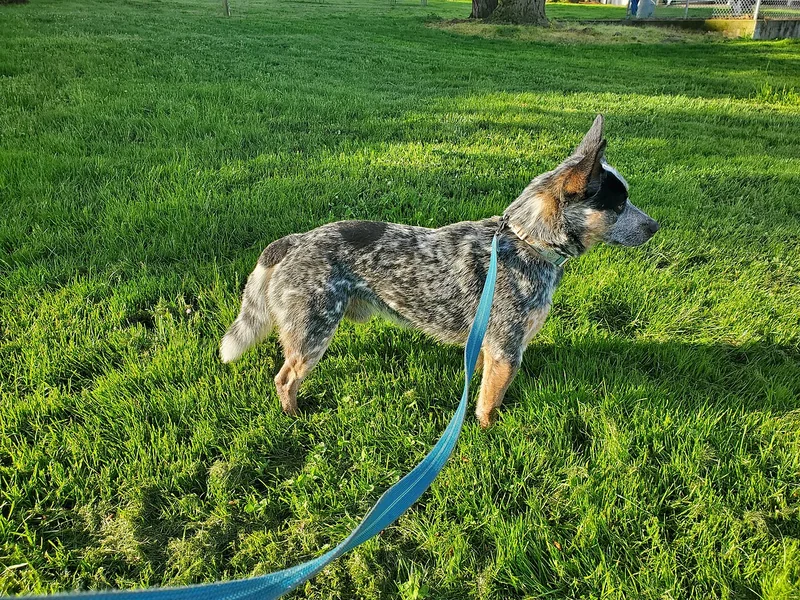
'Heeler' refers to the working technique of nipping at the heels of cattle to drive them forward. The Lancashire Heeler would dart in behind the herd, nip a heel to urge a slow animal forward, and then quickly drop low to avoid the animal's kick. The same heeling technique is used by the Welsh Corgi and Australian Cattle Dog, and is the defining characteristic of the 'heeler' type of cattle dog.