Canis lupus familiaris
Australian Shepherd
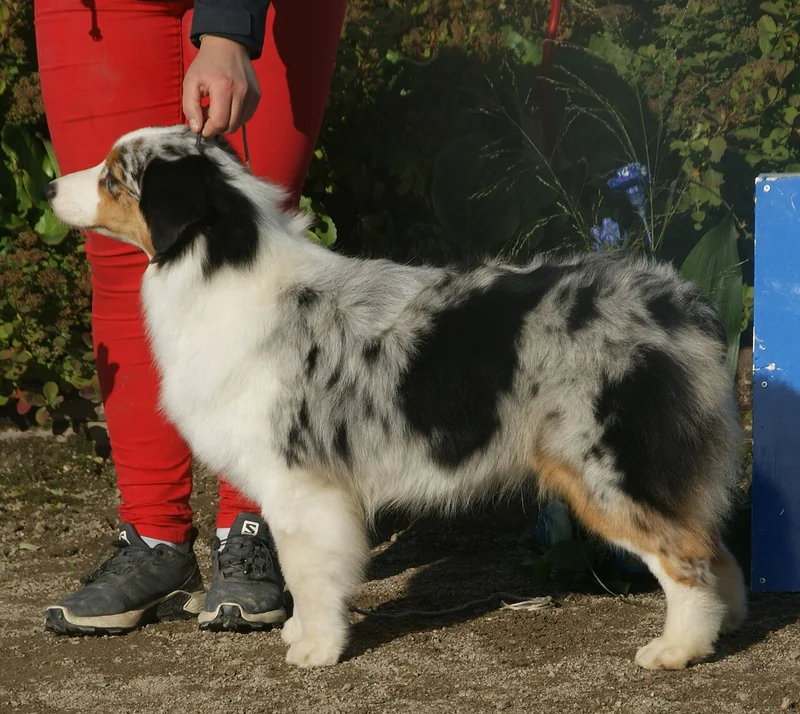 Featured photoaustralian-shepherd.jpg
The Australian Shepherd is a American (not Australian) Basque-shepherd line developed for western US ranches. Despite the name, the Australian Shepherd was developed in the western United States in the 19th and early 20th century from the working sheepdogs of Basque shepherds who emigrated to California after a stop in Australia.
Quick facts
- AKC group
- Herding
- Origin country
- United States (despite the name)
- Origin period
- 19th-20th century (formalized 1957)
- Coat type
- Medium
- Coat colors
- Black, Red, Blue Merle, Red Merle — each with white and tan markings
- Average lifespan
- 12-15 years
- Recognition
- AKC 1991 · FCI 2007 · UKC 1979 · Group 1 — Sheepdogs and Cattledogs (Section 1: Sheepdogs)
Origin
Despite the name, the Australian Shepherd was developed in the western United States, not Australia. The foundation lines were the working sheepdogs of Basque shepherds who emigrated from northern Spain (the Basque Country) to California in the late 19th and early 20th century, often via Australia (where they had stopped to work in the wool industry — hence the breed's misleading name). The breed was popularized at post-World War II western rodeos and Hollywood Westerns; the Australian Shepherd Club of America was founded in 1957 and maintains a separate working registry. The United Kennel Club recognized the breed in 1979, the AKC in 1991, and the FCI followed in 2007.
Recognition
The American Kennel Club admitted the breed in 1991, the United Kennel Club followed in 1979, and the Federation Cynologique Internationale published the international standard (FCI No. 342) in 2007. The FCI assigns the breed to Group 1 — Sheepdogs and Cattledogs (Section 1: Sheepdogs).
Standard
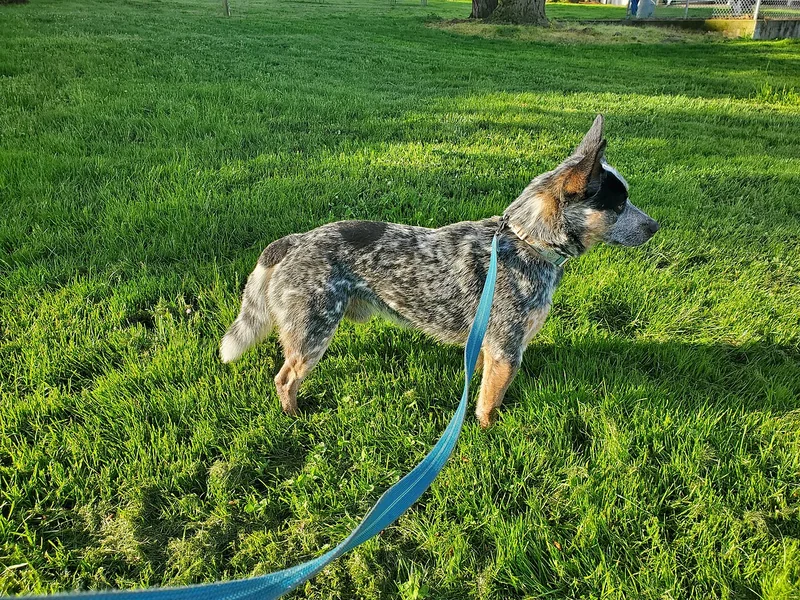
The AKC and FCI standards describe a well-balanced, slightly longer than tall, medium-sized, lithe and agile dog of moderate bone with a high degree of stamina and lithe agility. The double coat is medium length and texture, straight to slightly wavy, with a moderate undercoat. Recognized colours are black, red, blue merle, and red merle, each with or without white and tan (copper) markings. Eyes are brown, blue, amber, or any combination including parti-colour and heterochromia (a notable breed-defining trait). Males stand 51-58 cm at the withers, females 46-53 cm.
Sources & further reading (3)
- kennel-club-registry — accessed 2026-05-04
- encyclopedia — accessed 2026-05-04
- fci-standard — accessed 2026-05-04
Frequently asked questions
What is the Australian Shepherd's AKC group?
The American Kennel Club places the Australian Shepherd in the Herding Group. The Herding Group, carved out of the older Working Group in 1983, gathers breeds developed to control the movement of livestock — Border Collies, Australian Shepherds, Welsh Corgis, and the German Shepherd among them. The breed's foundation working role was as a American (not Australian) Basque-shepherd line developed for western US ranches.
When was the Australian Shepherd officially recognized?
The American Kennel Club admitted the breed in 1991; the United Kennel Club followed in 1979; the Federation Cynologique Internationale published the international standard (FCI No. 342) in 2007.
What is the average lifespan of a Australian Shepherd?
Kennel-club longevity surveys place the Australian Shepherd's average lifespan in the 12-15 years range. The figure here represents the spread reported by the major parent-club studies and the Kennel Club (UK) purebred-dog health surveys.