Canis lupus familiaris
Old English Sheepdog
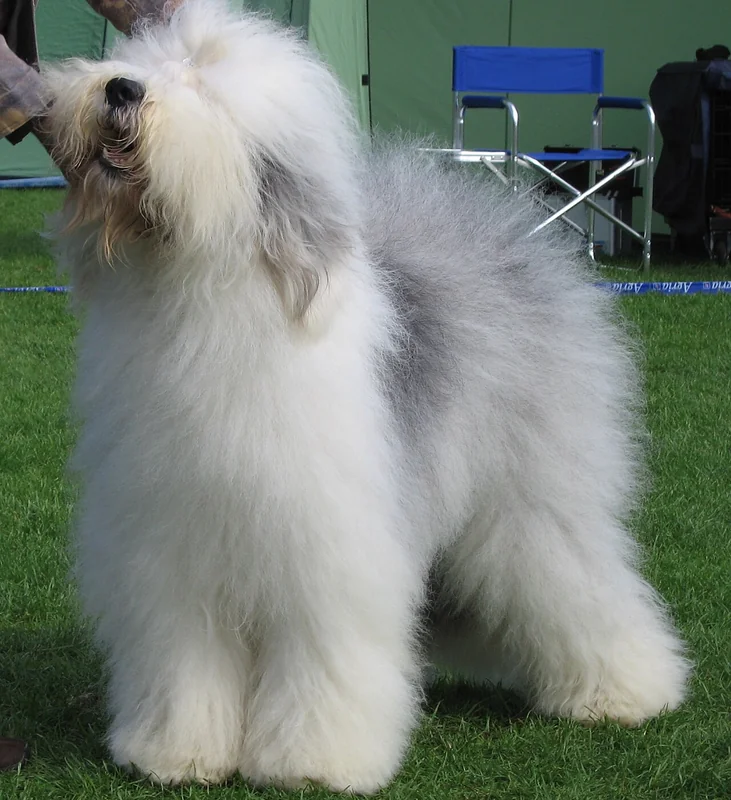 Featured photoold-english-sheepdog.jpg
The Old English Sheepdog is a early-19th-century West Country drover Bobtail — the iconic 'walking rug' sheepdog. The Old English Sheepdog was developed in early-19th-century western England (West Country) as a drover-dog used to drive sheep and cattle to the city markets of London and Birmingham.
Quick facts
- AKC group
- Herding
- Origin country
- England
- Origin period
- Early 19th century (formalized 1888)
- Coat type
- Long
- Coat colors
- Grey, Grizzle, Blue, Blue Merle — each with white markings
- Average lifespan
- 10-12 years
- Recognition
- AKC 1888 · FCI 1955 · UKC 1922 · Group 1 — Sheepdogs and Cattledogs (Section 1: Sheepdogs)
Origin
The breed was developed in early-19th-century western England — particularly Devon, Somerset, Cornwall, and the Welsh borders — as a drover-dog used to drive sheep and cattle from the agricultural west to the city markets of London and Birmingham. The colloquial name Bobtail comes from the historic practice of docking the tail to qualify the dog as a working drover under the 1796 dog tax exemption (working drovers were exempt; pet dogs were taxed). Foundation lines likely involved the Bearded Collie and various now-extinct British droving and herding breeds. The Old English Sheepdog Club was founded in 1888, the same year the AKC registered the breed; the breed first appeared at a Birmingham show in 1873.
Recognition
The American Kennel Club admitted the breed in 1888, the United Kennel Club followed in 1922, and the Federation Cynologique Internationale published the international standard (FCI No. 16) in 1955. The FCI assigns the breed to Group 1 — Sheepdogs and Cattledogs (Section 1: Sheepdogs).
Standard
The AKC and FCI standards describe a strong, square-looking, thickset, muscular, able-bodied dog with a most intelligent expression, free from coarseness and weediness. The defining feature is the profuse, shaggy, harsh-textured double coat that completely covers the body and falls over the eyes, giving the breed its iconic 'walking rug' silhouette. Recognized colours are any shade of grey, grizzle, blue, or blue merle — with or without white markings — but solid colour or a brown ground is disqualifying. Males stand 56-61 cm at the withers, females 51-58 cm.
Sources & further reading (3)
- kennel-club-registry — accessed 2026-05-04
- encyclopedia — accessed 2026-05-04
- fci-standard — accessed 2026-05-04
Frequently asked questions
What is the Old English Sheepdog's AKC group?
The American Kennel Club places the Old English Sheepdog in the Herding Group. The Herding Group, carved out of the older Working Group in 1983, gathers breeds developed to control the movement of livestock — Border Collies, Australian Shepherds, Welsh Corgis, and the German Shepherd among them. The breed's foundation working role was as a early-19th-century West Country drover Bobtail — the iconic 'walking rug' sheepdog.
When was the Old English Sheepdog officially recognized?
The American Kennel Club admitted the breed in 1888; the United Kennel Club followed in 1922; the Federation Cynologique Internationale published the international standard (FCI No. 16) in 1955.
What is the average lifespan of a Old English Sheepdog?
Kennel-club longevity surveys place the Old English Sheepdog's average lifespan in the 10-12 years range. The figure here represents the spread reported by the major parent-club studies and the Kennel Club (UK) purebred-dog health surveys.