Canis lupus familiaris
Catalan Sheepdog
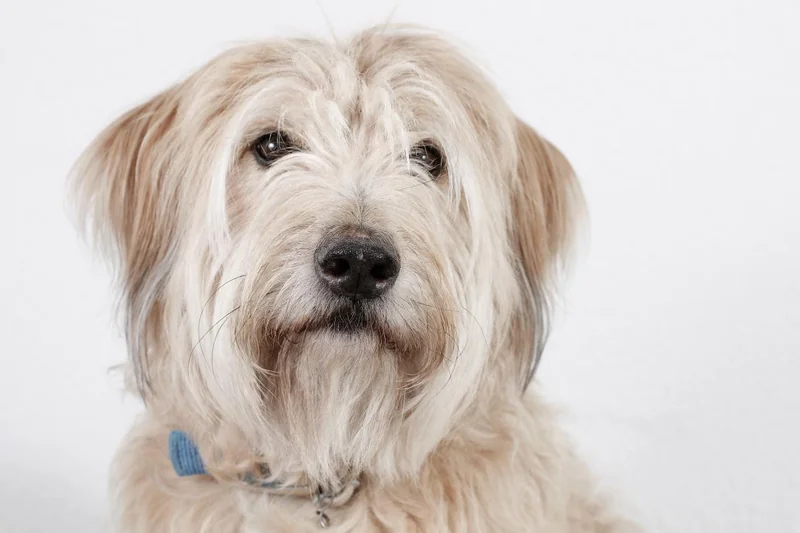 Featured photocatalan-sheepdog.jpg
The Catalan Sheepdog is a medium-sized Pyrenean herding dog native to Catalonia and the Spanish eastern Pyrenees, used for centuries to manage sheep and cattle on the mountain pastures of northeastern Spain. The breed was employed as a messenger and guard dog during the Spanish Civil War and World War II. The FCI registers it as No. 87 under Spain's patronage. Males stand 47–55 cm.
Quick facts
- AKC group
- Herding
- Origin country
- Spain
- Origin period
- Ancient, standardised 1929
- Coat type
- Long
- Coat colors
- Fawn (light to dark), Sable, Grey, Black, Tri-colour
- Average lifespan
- 12-14 years
- Recognition
- FCI 1954 · Group 1 — Sheepdogs and Cattledogs (Section 1: Sheepdogs)
Origin
The Catalan Sheepdog belongs to the family of rough-coated, medium-sized herding dogs native to the Pyrenean mountain range, which in Spain includes the Catalan (Gos d'Atura Català) and the Pyrenean Shepherd, and in France the Berger des Pyrénées. These dogs share a common ancestry in the ancient sheepdogs brought to the Pyrenees by early herding peoples. The Catalan variant developed primarily in the Catalan Pyrenees and the central plateau of Catalonia, where it was used by the 'amos' (estate owners) and shepherds who managed large flocks across the varied terrain from sea level to high mountain pasture.
Recognition
The Club de Gos d'Atura Català wrote the first breed standard in 1929. The Real Sociedad Canina de España (RSCE) and then the FCI recognised the breed under standard No. 87 in 1954, assigning it to Group 1, Section 1 (Sheepdogs) with Spain as patron country. The breed is not currently recognised by the AKC or UKC. The Catalan Sheepdog is considered a symbol of Catalan regional identity and culture.
Standard
The FCI standard describes a medium-sized, slightly longer-than-tall dog with a broad skull, a moderately long, strong muzzle, and oval-shaped dark amber eyes. The coat is long, flat, and slightly wavy, with a softer undercoat; it forms a longer, rougher 'cape' over the head, neck, and back. Adult dogs go through a 'moult' at 1–2 years during which the rear half of the body loses its long coat, creating a characteristic bipartite coat appearance. Colours range from fawn (light to dark), sable, grey, black, and tri-colour. Males stand 47–55 cm.
Sources & further reading (3)
- fci-standard — accessed 2026-05-27
- encyclopedia — accessed 2026-05-27
- kennel-club-registry — accessed 2026-05-27
Frequently asked questions
What role did the Catalan Sheepdog play in 20th-century wars?
The Catalan Sheepdog was recruited as a military working dog during both the Spanish Civil War (1936–1939) and World War II. Its intelligence and trainability made it suitable for messenger, patrol, and guard duties. Catalan Sheepdog wartime service accounts are documented in Spanish Civil War records. The breed's use in armed conflicts further cemented its status as a symbol of Catalan identity.
Is the Catalan Sheepdog AKC recognised?
The Catalan Sheepdog is not recognised by the AKC or UKC. The FCI has recognised the breed since 1954 under standard No. 87, with Spain as patron country.
What does 'Gos d'Atura Català' mean?
The name is in Catalan: 'Gos' means dog, 'd'Atura' derives from 'aturat' (stopped, halted — a reference to the herding technique of stopping and holding livestock in place), and 'Català' means Catalan. The full name therefore means 'Catalan dog that stops [the flock]'. This describes the breed's working style of controlling the movement of livestock through positioning and driving rather than nipping.