Canis lupus familiaris
Spanish Water Dog
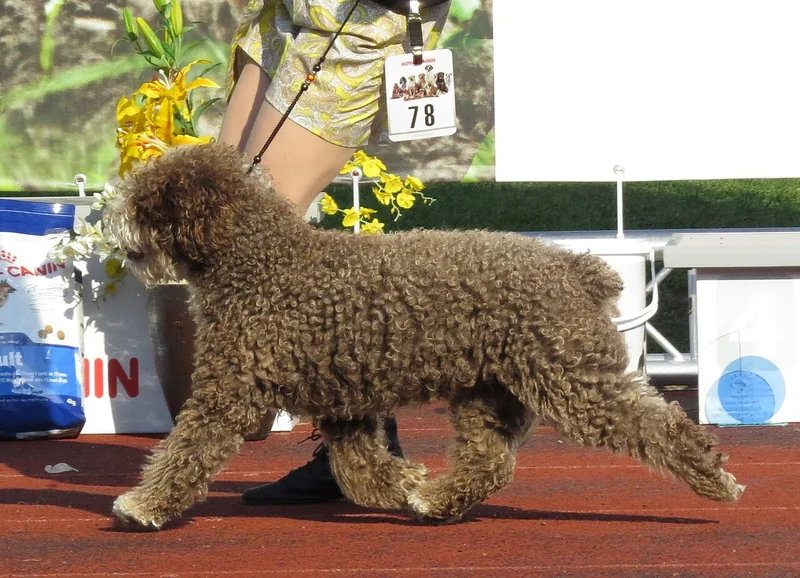 Featured photospanish-water-dog.jpg
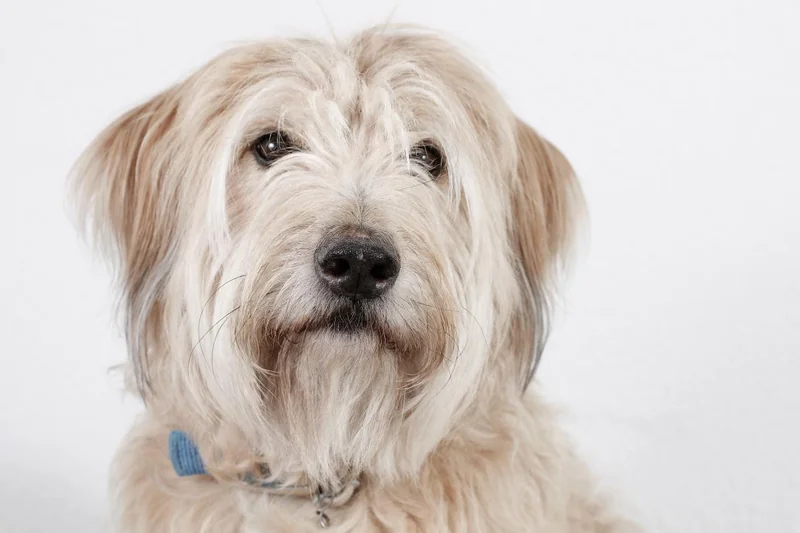
The Spanish Water Dog is a medium-sized, versatile working dog from southern Spain — particularly Andalusia — that historically served as a herder of sheep and goats, a retriever of waterfowl, and a fishing boat assistant. Its distinctive tight, curly coat forms natural cords when left untrimmed. One of the most genetically primitive breeds in Europe according to DNA studies, the Spanish Water Dog has lived in the Iberian Peninsula for thousands of years. The AKC admitted it in 2015. Males stand 44–50 cm and females 40–46 cm.
Quick facts
- AKC group
- Herding
- Origin country
- Spain
- Origin period
- Ancient
- Coat type
- Curly
- Coat colors
- White, Black, Brown, Bicolor White and Black, Bicolor White and Brown
- Average lifespan
- 10-14 years
- Recognition
- AKC 2015 · FCI 1999 · UKC 2009 · Group 8 — Retrievers, Flushing Dogs, Water Dogs (Section 3: Water Dogs)
Origin
The Spanish Water Dog's precise origin is debated, but the most widely accepted theory holds that curly-coated water dogs similar to the modern breed were brought to the Iberian Peninsula by North African Berber traders or Moorish settlers during the Arab occupation of Spain (711–1492 CE). DNA studies published in the 21st century confirmed that the Spanish Water Dog is among the most genetically primitive dog breeds in Europe, closely related to ancient Middle Eastern herding dogs. In Andalusia — particularly in the provinces of Málaga, Cádiz, and Seville — the breed was an essential multipurpose working dog for transhumant shepherds, hunters, and fishermen.
Recognition
The Real Sociedad Canina de España (RSCE) standardised the breed in the 1980s following revival efforts in Andalusia. Antonio García Pérez and Santiago Montesinos are credited with documenting and promoting the breed in the 1970s–1980s. The FCI granted recognition in 1999 (FCI No. 336) with Spain as patron country, placing the breed in Group 8, Section 3 (Water Dogs). The AKC entered the breed in the Miscellaneous Class in 2012 and granted full Herding Group recognition in 2015.
Standard
The FCI and AKC standards describe a medium-sized, squarely built, athletic dog with a characteristically curly, woolly coat that falls in natural curls and can be corded when long. The coat is never brushed — it is clipped uniformly to 3–12 cm and allowed to grow back in natural curls. All solid colours and bicolor combinations of white with black or brown are acceptable; tri-color and tan points are not permitted. The coat must always appear natural and unkempt, never fluffed. Males stand 44–50 cm; females 40–46 cm.
Sources & further reading (3)
- kennel-club-registry — accessed 2026-05-07
- encyclopedia — accessed 2026-05-07
- fci-standard — accessed 2026-05-07
Frequently asked questions
What AKC group does the Spanish Water Dog belong to?
The AKC places the Spanish Water Dog in the Herding Group, reflecting its primary historical function as a multipurpose herding, droving, and guarding dog in Andalusia. The FCI, however, places it in Group 8, Section 3 (Water Dogs) alongside the Portuguese Water Dog and Lagotto Romagnolo, emphasising its water-retrieval and fishing-assistance roles. The breed served both functions historically.
What is distinctive about the Spanish Water Dog's coat?
The Spanish Water Dog's coat forms tight, woolly curls that are never brushed — the breed is clipped uniformly (usually once a year) and the coat grows back in natural curls. When the coat is left unclipped for an extended period, it can form natural dreadlocks or cords similar to the Komondor or Puli. The coat is always presented in its natural, ungroomed state; any attempt to shape or fluff the curls is discouraged by the breed standard.
When was the Spanish Water Dog recognised by the AKC?
The AKC granted full recognition to the Spanish Water Dog in 2015, placing it in the Herding Group. The breed had been in the Miscellaneous Class since 2012. The FCI recognised it in 1999 (FCI No. 336). The breed was standardised by the Real Sociedad Canina de España in the 1980s following a revival effort by Andalusian breed enthusiasts in the 1970s.