Felis catus
Sokoke Longhair
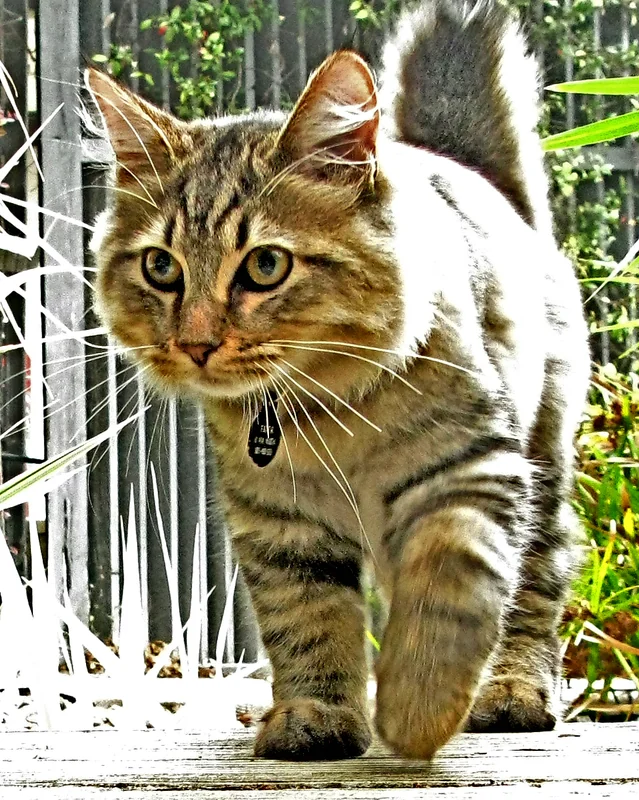
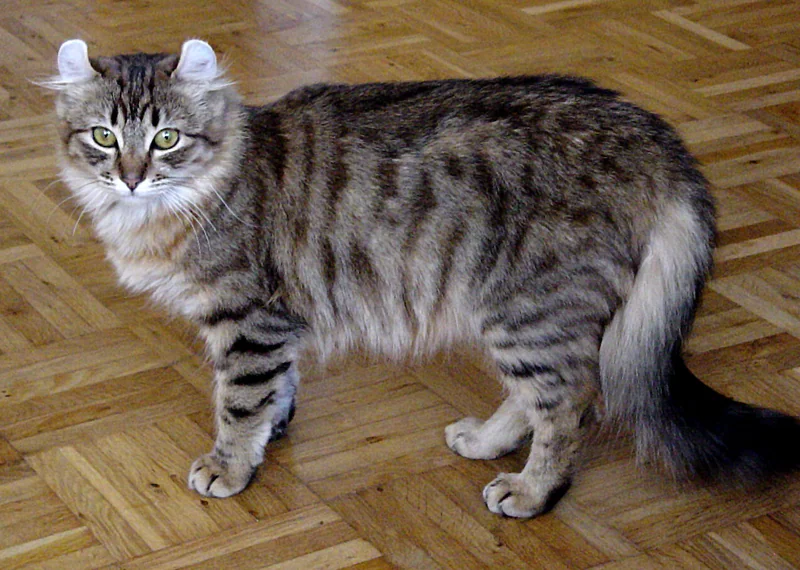
The Sokoke Longhair is the proposed longhaired division of the Sokoke, an African landrace breed originally found in the Arabuko Sokoke Forest of coastal Kenya. FIFe granted recognition in 1993; TICA followed. A longhaired expression within the Sokoke population forms the basis for the longhair division. The standard describes a medium-sized, slender cat with a distinctive blotched tabby pattern.
Quick facts
- Origin country
- Kenya (Arabuko Sokoke Forest, coastal)
- Origin period
- Discovered 1978 by Jeni Slater; FIFe recognition 1993; TICA recognition 2004
- Coat type
- Long
- Coat colors
- Brown modified blotched tabby (the only accepted pattern)
- Size category
- Medium
- Average lifespan
- 12–15 years
- Recognition
- —
Origin
The Sokoke originated in the Arabuko Sokoke Forest of coastal Kenya, where Jeni Slater discovered a colony of semi-feral cats with a distinctive modified blotched tabby pattern in 1978. The pattern — a marbled or whorled blotched tabby with ticked individual hairs — is unique among recognized breeds. Genetic studies suggest the Sokoke's closest relatives are cats from the coastal Indian Ocean region rather than sub-Saharan African domestic cats, suggesting introduction via Indian Ocean trade routes. FIFe recognized the Sokoke in 1993; TICA in 2004.
Standard
The FIFe/TICA standard describes a medium-sized, lean, athletic cat with long legs, a slightly wedge-shaped head, large ears, and almond-shaped eyes. The coat is short and close-lying in the standard form. The longhair division has a semi-long, fine coat with the same modified blotched tabby pattern. Only brown modified blotched tabby is accepted. The pattern must be clearly defined with good contrast.
Conservation Status of the Arabuko Sokoke Forest
The Sokoke Cat's native habitat — the Arabuko Sokoke Forest on Kenya's coast — is a biodiversity hotspot and one of East Africa's largest remaining coastal forests. The forest is threatened by logging, charcoal production, and agricultural encroachment. Conservation organizations have partnered with local communities to protect the forest, which is home not only to the Sokoke Cat's feral ancestor population but also to rare birds including Clarke's weaver and Sokoke scops owl. The breed's name commemorates this specific ecosystem.
Sources & further reading (2)
- encyclopedia — accessed 2026-05-27
- registry-breed-profile — accessed 2026-05-27
Frequently asked questions
What is the modified blotched tabby pattern of the Sokoke?
The Sokoke's pattern is described as a 'modified blotched tabby' — a variation of the standard blotched (classic) tabby in which the swirls and whorls are broken up, producing a marbled effect with individual ticked hairs. This gives a more complex, mottled appearance than a typical classic tabby. It is unique among recognized cat breeds.
Why is the Sokoke so rare?
The Sokoke is rare because it was only discovered in 1978, remains little-known outside specialty breeders, and the original feral population in Kenya's Arabuko Sokoke Forest has been threatened by deforestation. The international breeding population is small, and the single accepted colour pattern limits the gene pool compared to breeds with open colour standards.
Is the Sokoke Cat the only breed from sub-Saharan Africa?
Yes, the Sokoke is the only cat breed from sub-Saharan Africa recognized by major international registries (FIFe, TICA). Other African countries have indigenous cat populations but no formal breed standardization comparable to the Sokoke's FIFe recognition in 1993 and TICA recognition in 2004.