Felis catus
American Bobtail Longhair
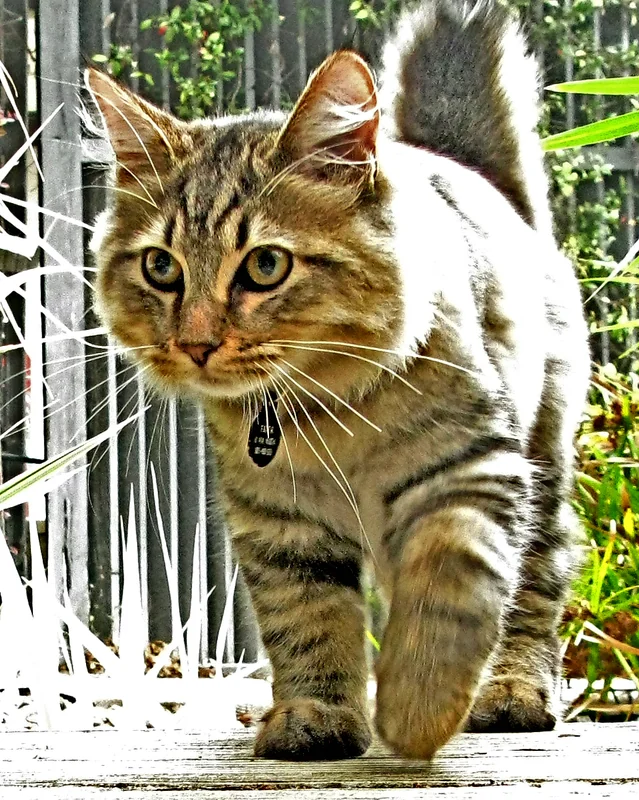 Featured photoamerican-bobtail-longhair.jpg
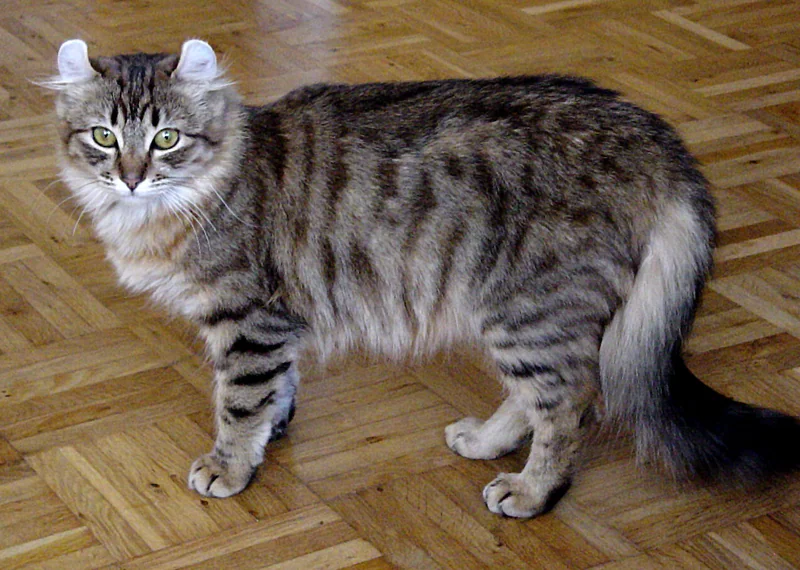
The American Bobtail Longhair is the longhaired coat-length variety of the American Bobtail, recognized as a separate CFA championship entry alongside the shorthaired variety. Both share the same 1960s wild-type bobtailed foundation traced to a short-tailed brown tabby kitten found in Arizona. The longhair variety has a non-matting, shaggy double coat that gives the cat a somewhat feral appearance. TICA recognizes both coat-length varieties within the American Bobtail breed standard.
Quick facts
- Origin country
- United States
- Origin period
- 1960s natural mutation (Yodi); modern programme from John and Brenda Sanders
- Coat type
- Long
- Coat colors
- All colours and patterns recognized; wild-type tabbies preferred in show ring
- Size category
- Medium
- Average lifespan
- 13-15 years
- Recognition
- CFA 2002 · TICA 2002
Origin
Both the shorthaired and longhaired American Bobtail arise from the same 1960s foundation: a naturally bobtailed kitten found in Arizona. The longhair coat appears within the breed population without directed outcrossing to longhaired breeds, suggesting the longhair gene was present in the founding gene pool.
Standard
The American Bobtail Longhair standard calls for a medium-to-large, moderately cobby, athletic cat with a rectangular stance. The tail is naturally bobbed — variable in length and shape, never carried above the back when alert. The coat is moderately long, shaggy, and non-matting, with a dense undercoat. The brow is prominent, giving the breed its characteristic hunter's gaze. Wild-type spotted and striped tabbies are common show specimens though all colours are accepted.
Bobtail Genetics
The American Bobtail's shortened tail results from a naturally occurring dominant mutation distinct from the Japanese Bobtail (which is recessive) and the Manx (which is on a different locus). The tail length is variable — from no tail to a half tail — and each tail is unique in shape, length, and curvature. The short tail gene in American Bobtails is unrelated to the spinal deformities associated with the Manx's taillessness when homozygous.
Sources & further reading (2)
- encyclopedia — accessed 2026-05-27
- registry-breed-profile — accessed 2026-05-27
Frequently asked questions
Is the American Bobtail Longhair a separate breed from the American Bobtail?
In CFA competition, the longhaired and shorthaired American Bobtails are shown as separate championship classes. TICA registers both coat lengths as one breed. Genetically, the two varieties are the same breed differing only in coat length.
How does the American Bobtail's tail differ from the Manx?
The American Bobtail carries a dominant bobtail gene that shortens the tail to approximately one-third to one-half the normal length. The Manx carries a dominant mutation on a different locus that can produce a full range from fully-tailed to completely rumpy; the homozygous Manx condition is lethal and associated with spinal defects. The American Bobtail's truncated tail does not involve spinal abnormalities; the gene's effect is confined to the tail vertebrae.
Is the American Bobtail Longhair hypoallergenic?
No cat is truly hypoallergenic. The American Bobtail Longhair produces the Fel d 1 allergen like all domestic cats. The longer coat may retain more dander than a shorthair, so individuals with cat allergies typically react to the breed normally.