Felis catus
Aegean Longhair
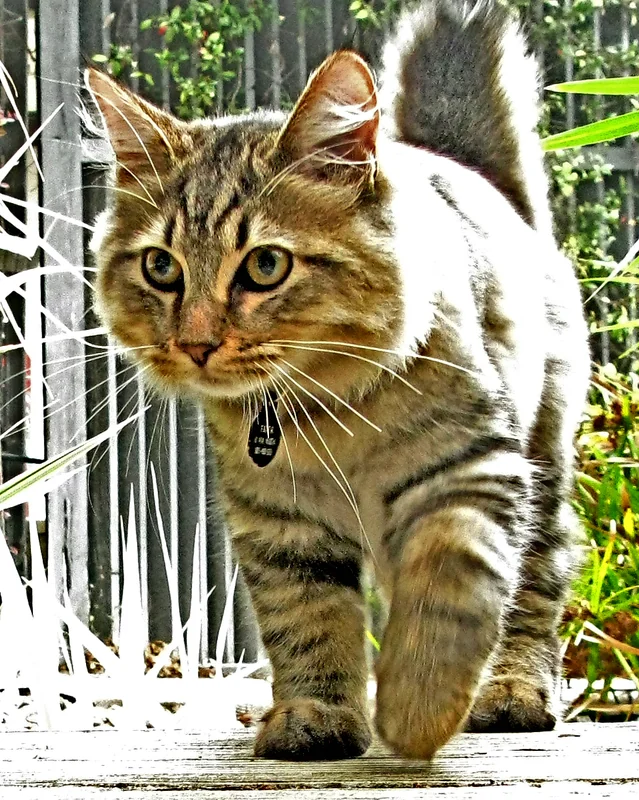
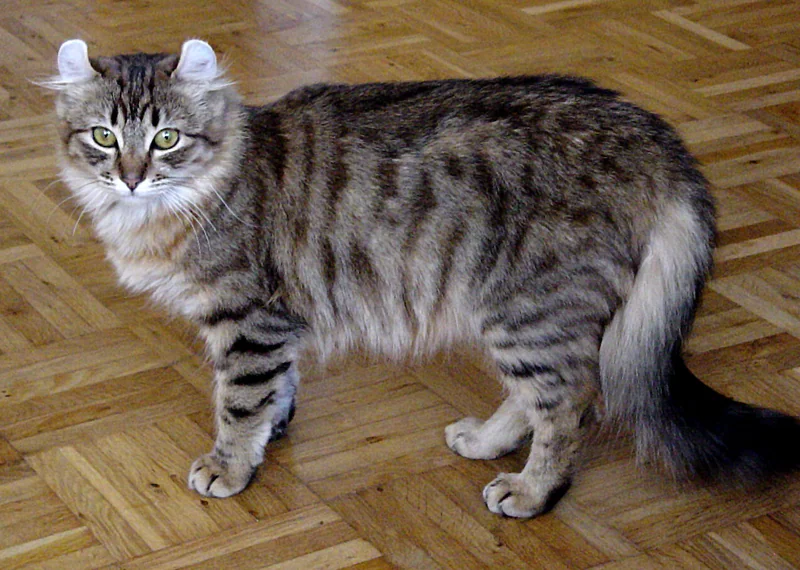
The Aegean Longhair is the longhaired division of the Aegean Cat, Greece's only native and naturally evolved breed, originating from the Cyclades islands of the Aegean Sea. The Hellenic Feline Federation (HFF) and TICA's registration programme recognize the breed. The standard describes a medium-sized, lean, semi-longhaired cat with a classic bicolour pattern.
Quick facts
- Origin country
- Greece (Cyclades Islands, Aegean Sea)
- Origin period
- Natural landrace of the Cyclades; Hellenic Feline Federation standardization 1990s
- Coat type
- Long
- Coat colors
- Bicolour (white with any colour), Tricolour (white with two colours)
- Size category
- Medium
- Average lifespan
- 12–15 years
- Recognition
- —
Origin
The Aegean Cat evolved naturally on the Cyclades islands of the Aegean Sea over thousands of years, associated with Greek fishing communities. The breed was standardized by the Hellenic Feline Federation in the 1990s. Its distinctive bicolour or tricolour pattern — always featuring substantial white — is a natural characteristic of the island population rather than a selectively bred trait. The breed remains rare outside Greece.
Standard
The HFF standard describes a medium-sized, lean, athletic cat with a moderately wedge-shaped head, medium-large ears, and almond-shaped eyes in any colour. The coat must include white; bicolour (white + one colour) and tricolour (white + two colours) patterns are accepted — solid non-white coats are not accepted. The longhair division has a semi-long, silky coat without excessive undercoat, a plumed tail, and light ear and toe furnishings.
Greek Island Origin and Fishing Culture
The Aegean Cat's white markings are characteristic of the Greek island cat population, where bicolour cats are especially common and are associated with the fishing tradition. Island fishing communities valued these cats for their role in controlling rodents in fishing boat storage areas and harbour warehouses. The GCCF's requirement for white in the coat reflects this real-world population characteristic, making the Aegean one of few breeds whose standard is built around an observed natural population phenotype.
Sources & further reading (2)
- encyclopedia — accessed 2026-05-27
- registry-breed-profile — accessed 2026-05-27
Frequently asked questions
Is the Aegean Cat the same as the Turkish Angora?
No. The Aegean Cat is a separate natural landrace from the Greek Cyclades islands. The Turkish Angora is a separate breed from Turkey, recognized by CFA, TICA, FIFe, and GCCF. The two breeds share the eastern Mediterranean geographic region but have distinct origins, standards, and registry histories.
Why does the Aegean standard require white in the coat?
The white marking requirement reflects the natural phenotype of the Cyclades island cat population, in which bicolour and tricolour patterns — particularly those with substantial white — are highly prevalent. This is an inherited characteristic of the island gene pool rather than a selectively imposed standard.
How rare is the Aegean Cat outside Greece?
The Aegean Cat is extremely rare outside Greece. The breed is not recognized by CFA, GCCF, FIFe, or WCF, limiting its international show presence. TICA carries it in registration, but the international breeding population is very small. Most Aegean Cat breeding and show activity occurs within Greece and the Hellenic Feline Federation's network.