Felis catus
Pixie-Bob Longhair
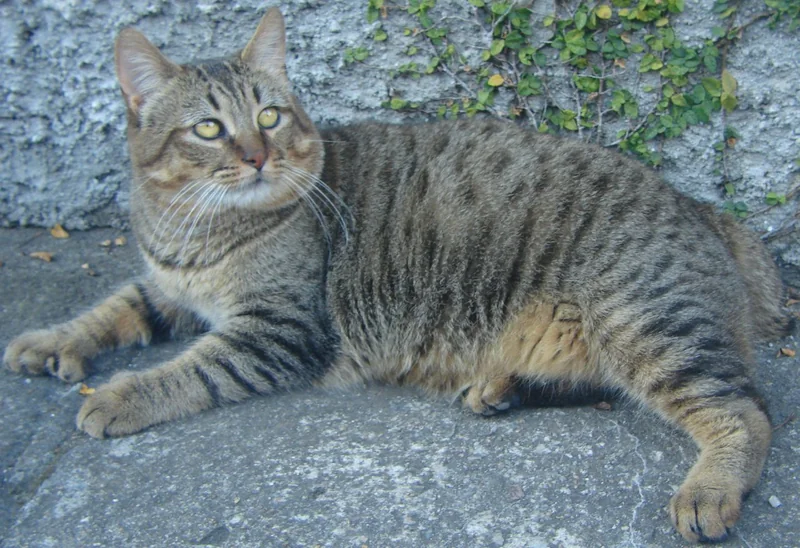 Featured photopixie-bob-longhair.jpg
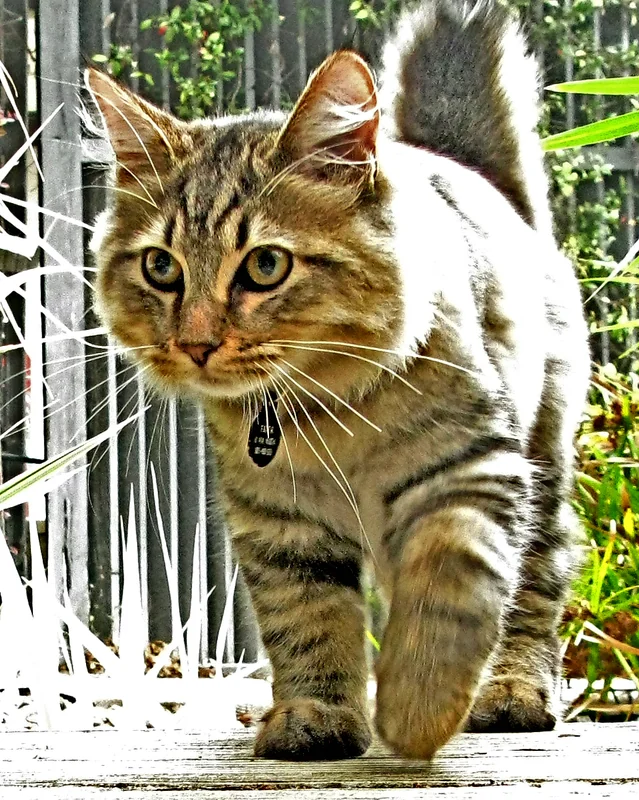
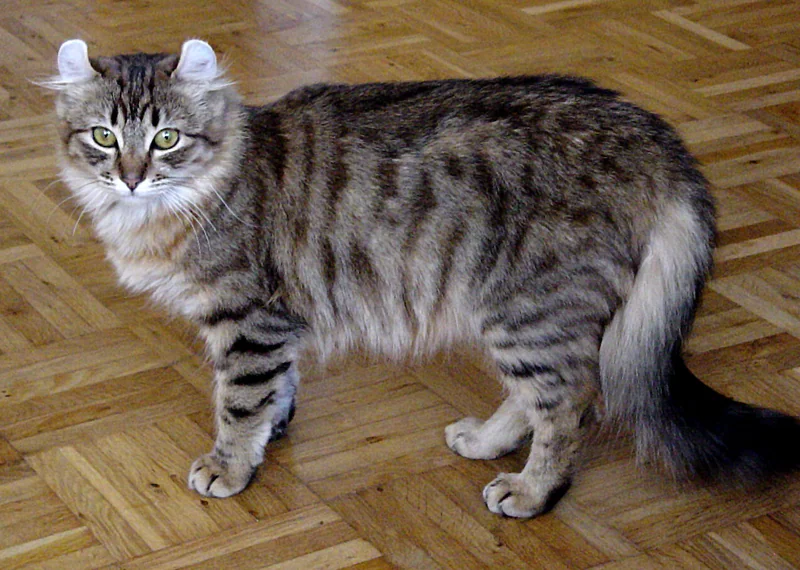
The Pixie-Bob Longhair is the longhaired coat-length variety of the Pixie-Bob breed, recognized as a separate CFA championship class alongside the Pixie-Bob Shorthair. Both varieties share the same heavy-boned, bobtailed, spotted-tabby characteristics and the polydactyl trait (up to seven toes) that TICA and CFA permit within the breed standard. The foundation of the Pixie-Bob is attributed to Carol Ann Brewer of Washington State, who obtained a large polydactyl bobtailed male in 1985. The longhair variety has a soft, moderately long coat with a dense undercoat.
Quick facts
- Origin country
- United States (Washington State)
- Origin period
- 1985 Washington State foundation (Carol Ann Brewer); CFA championship 1998
- Coat type
- Long
- Coat colors
- Brown spotted tabby standard; all spotted tabby color variants
- Size category
- Medium
- Average lifespan
- 13-15 years
- Recognition
- CFA 1998 · TICA 1998
Origin
Carol Ann Brewer acquired a large bobtailed, polydactyl cat near the Cascade Range of Washington State in 1985. That cat, named Keba, was bred to a domestic female, and a resulting female kitten named Pixie gave the breed its name. Brewer aimed for a bobcat-appearance domestic cat. The breed was developed through selective outcrossing to domestic spotted-tabby cats.
Recognition
TICA accepted the Pixie-Bob for championship status in 1998, recognising both shorthaired and longhaired varieties as separate classes. CFA similarly recognises both coat lengths in championship competition. The Pixie-Bob is notable as one of the few CFA breeds in which polydactyly — up to seven toes per foot — is permitted and recorded in the breed standard.
Standard
The longhaired Pixie-Bob standard describes a semi-long, soft coat with a dense undercoat, lying flat when the cat is relaxed. The overall type is a heavy-boned, muscular, pear-shaped cat with a bobbed tail (2-4 cm minimum, articulated), a broad pear-shaped head, medium-set ears with tufts, and gold or green eyes. The spotted-tabby pattern in brown/red tones is standard; the resemblance to the North American coastal red bobcat is a stated goal of the breed standard.
Sources & further reading (2)
- encyclopedia — accessed 2026-05-27
- registry-breed-profile — accessed 2026-05-27
Frequently asked questions
Are Pixie-Bobs actually related to bobcats?
No genetic evidence supports the belief that Pixie-Bobs carry bobcat (Lynx rufus) ancestry. DNA studies have found no non-domestic feline genetics in tested Pixie-Bobs. The bobcat-like appearance results from selective breeding for large size, spotted tabby pattern, bobbed tail, and polydactyly — all traits that can arise in domestic cats without wild ancestry.
Is the Pixie-Bob really part bobcat?
No genetic evidence supports bobcat (Lynx rufus) ancestry in the Pixie-Bob. DNA testing of Pixie-Bobs finds only domestic cat markers. The bobcat-like appearance — spotted coat, tufted ears, bobtail — results from selective breeding of domestic cats, not hybridization. The founding story of the breed involves a naturally polydactyl, bobtailed domestic cat named Maggie, not a bobcat cross.
What is the difference between the Pixie-Bob Longhair and the Maine Coon?
The Maine Coon (CFA/TICA/FIFe/GCCF recognized) has a distinctly long, rectangular body, a large square muzzle with a defined chin, and a flowing coat. The Pixie-Bob Longhair has a stockier conformation with a pear-shaped body, a heavier brow, a distinctly bobbed tail, and may have polydactyly. The two breeds are genetically unrelated despite both being large longhaired North American breeds.