Felis catus
Ojos Azules Longhair
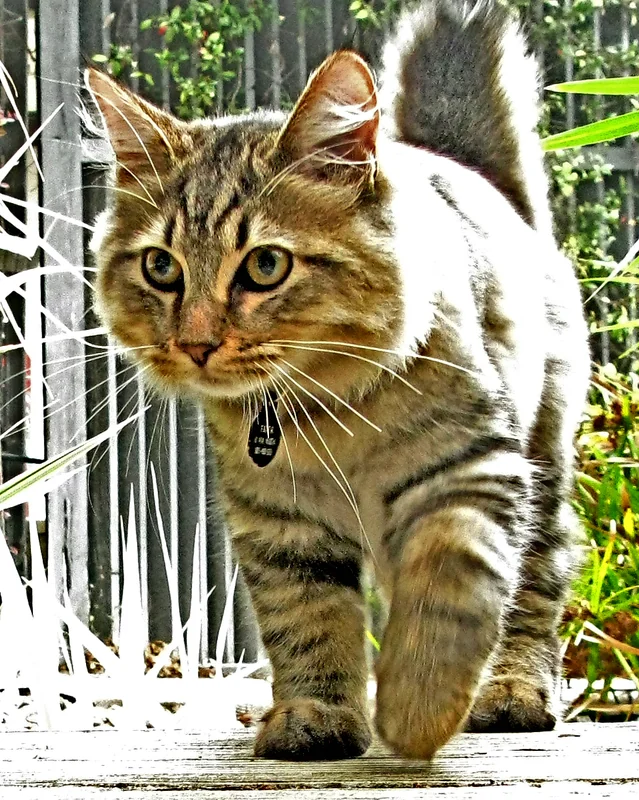
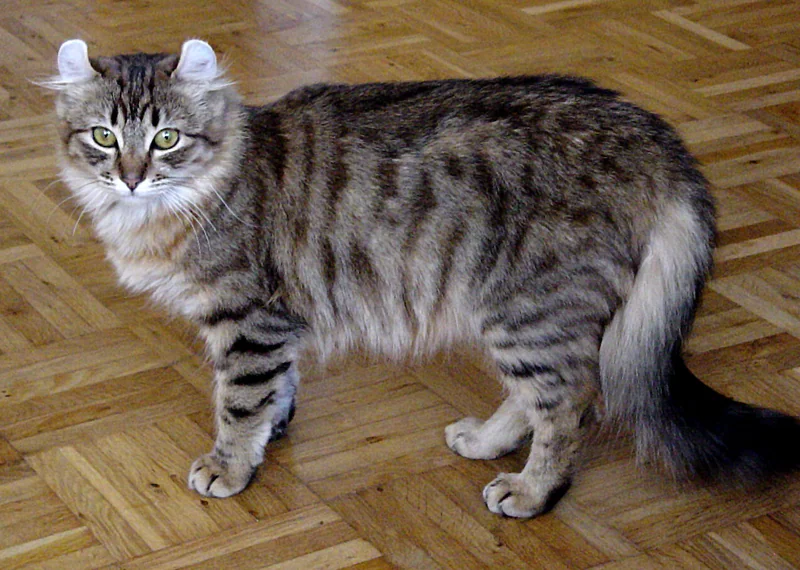
The Ojos Azules Longhair is the longhaired coat-length variety of the Ojos Azules breed. Both varieties share the unique genetic mutation first identified in a female tortoiseshell cat named Cornflower in New Mexico in 1984, which produces vivid blue eyes in cats of any coat colour — including non-white, non-pointed cats. TICA recognises the Ojos Azules in both coat lengths. The mutation also carries a homozygous lethal effect; all Ojos Azules cats are maintained as heterozygotes to prevent birth defects. The breed remains extremely rare in numbers.
Quick facts
- Origin country
- United States (New Mexico)
- Origin period
- 1984 natural mutation (Cornflower, New Mexico); TICA registration 1991
- Coat type
- Long
- Coat colors
- Any coat colour; blue eyes regardless of coat colour or pattern — defining trait
- Size category
- Medium
- Average lifespan
- 10-14 years
- Recognition
- TICA 1991
Origin
The breed originates from a 1984 natural mutation observed in Cornflower, a tortoiseshell female found in New Mexico. The mutation produces deep blue or violet-blue eyes in cats of any coat colour through a mechanism independent of the white, colourpoint, or white-spotting genes. The foundation for the longhair variety came from mating Ojos Azules cats with longhaired domestic cats carrying the mutation.
Recognition
TICA registered the Ojos Azules in 1991 for both shorthaired and longhaired varieties. The breed has been in TICA's Preliminary New Breed category and has limited championship competition history. No other major international registry (CFA, FIFe, GCCF) formally recognizes the Ojos Azules.
Genetics and Rarity
The Ojos Azules is exceptionally rare; the breeding population has numbered only a few dozen cats at any one point since the founding mutation was identified in 1984. The blue-eye gene is dominant; homozygous combinations are believed to be lethal or associated with severe developmental abnormalities including skull deformities. For this reason, Ojos Azules are always bred heterozygous — one copy of the blue-eye gene. Maintaining the breed has proven extremely difficult, and the TICA registration programme has seen little activity since the mid-2000s.
Sources & further reading (2)
- encyclopedia — accessed 2026-05-27
- registry-breed-profile — accessed 2026-05-27
Frequently asked questions
What makes the Ojos Azules mutation unusual?
Most blue-eyed domestic cats achieve blue eyes through genes linked to white coat (W gene) or point-restriction (cs gene). The Ojos Azules mutation produces deep blue eyes independently of coat colour — a tortoiseshell, black, or tabby Ojos Azules can have vivid blue eyes. The mutation is autosomal dominant, but homozygotes suffer birth defects, so all breeding Ojos Azules must be heterozygous.
Why are Ojos Azules so rare?
The Ojos Azules blue-eye gene is dominant; homozygous combinations are associated with developmental problems. Breeders must breed the Ojos Azules gene heterozygously — always with a non-carrier mate — meaning only approximately half the offspring carry the trait. The small founding population, geographic isolation in New Mexico, and the necessity of out-crossing to non-carrier cats have kept the breed extremely rare. TICA activity on the breed has been minimal in recent years.
Are there Ojos Azules breeders active today?
The Ojos Azules breeding population was always very small and its activity under TICA's registration programme has been minimal since the mid-2000s. No prominent active breeding programme has been publicly announced as of 2026. The breed may effectively exist only in historical TICA records and among a very small number of private breeders.