Felis catus
Kuchinta Longhair
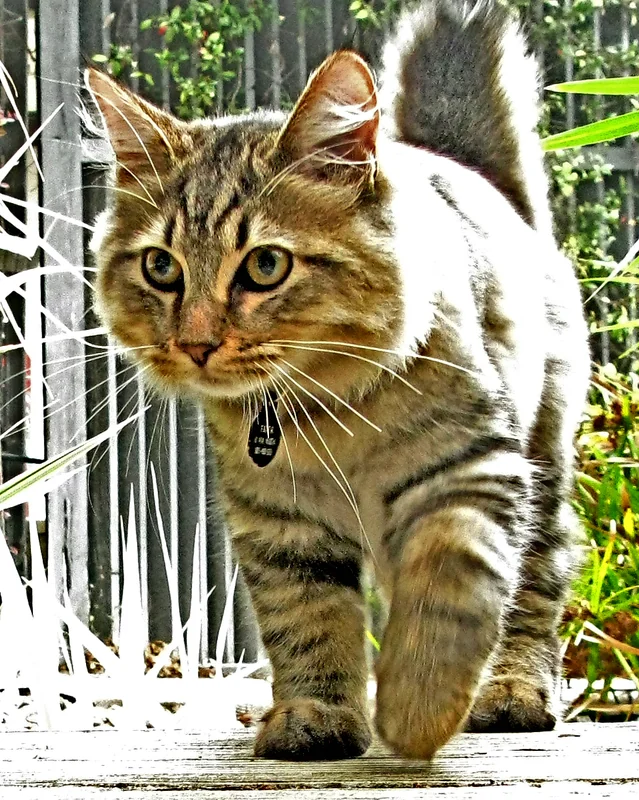
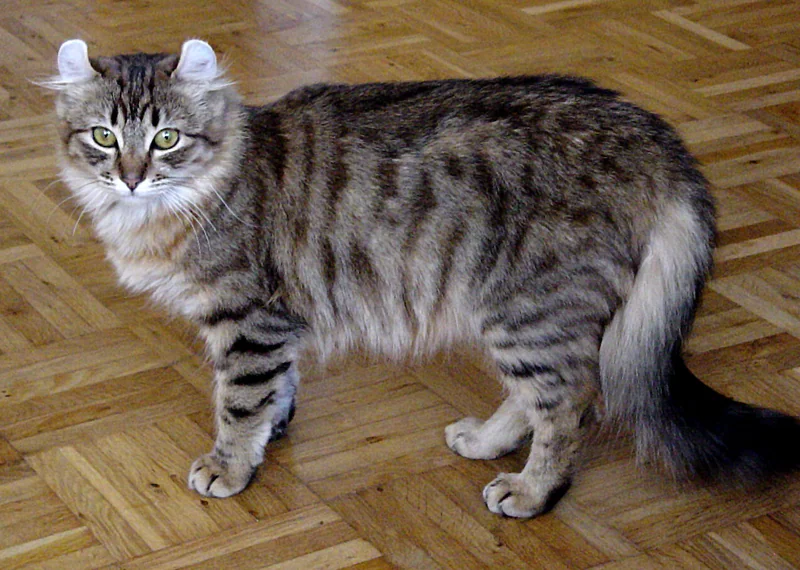
The Kuchinta Longhair is the longhaired division of the Kuchinta, a natural ticked-tabby landrace breed native to Malaysia. The Malaysian Cat Federation (MCF) recognizes the breed. The standard describes a medium-sized, lean, agile cat with a distinctive ticked agouti coat and a semi-long, silky expression.
Quick facts
- Origin country
- Malaysia
- Origin period
- Natural ticked-tabby landrace; Malaysian Cat Federation recognition
- Coat type
- Long
- Coat colors
- Brown ticked tabby (the traditional Kuchinta colour), Other ticked tabby colours
- Size category
- Medium
- Average lifespan
- 12–16 years
- Recognition
- —
Origin
The Kuchinta is a natural landrace breed from Malaysia, part of the broader Southeast Asian ticked-tabby cat population distributed across the Malay Peninsula, Singapore, Sri Lanka, and neighbouring regions. The ticked agouti pattern — each hair shaft banded with multiple alternating lighter and darker colour bands — is characteristic of this regional population. The Malaysian Cat Federation standardized the Kuchinta as a distinct national breed. The longhair division reflects the semi-long coat expressions occurring naturally within Malaysia's domestic cat population.
Standard
The working MCF standard describes a medium-sized, lean, well-proportioned cat with a slightly wedge-shaped head, medium-large ears, and almond-shaped eyes. The coat pattern is ticked tabby: each hair shaft has multiple bands of alternating lighter and darker colour, producing a warm, stippled body surface without discrete tabby stripes. The longhair division has a semi-long, fine, silky coat with the ticked pattern maintained, a plumed tail, and light ear furnishings.
Regional Context
The Kuchinta sits within a family of Southeast Asian ticked-tabby landraces that includes the Singapore Singapura (recognized by CFA/TICA/FIFe), the Sri Lankan Ceylon (recognized by FIFe), and the Abyssinian (ticked coat of possibly Southeast Asian ancestry, per genetic studies). These breeds share the ticked agouti coat as a regional genetic trait and are believed to descend from a common ancestral Southeast Asian cat population that spread via Indian Ocean trade routes.
Sources & further reading (1)
- encyclopedia — accessed 2026-05-27
Frequently asked questions
Is the Kuchinta the same as the Singapura?
The Kuchinta and the Singapura are both Southeast Asian ticked-tabby landraces with similar coat genetics, but they are standardized as separate breeds by their respective national cat fancies. The Singapura (from Singapore) is recognized by CFA, TICA, and FIFe; the Kuchinta (from Malaysia) is recognized by the Malaysian Cat Federation only. The two share common Southeast Asian ancestry but have distinct national breed histories.
Which registries recognize the Kuchinta Longhair?
The Kuchinta Longhair is recognized by the Malaysian Cat Federation (MCF) in both shorthair and longhair coat-length classes. CFA, TICA, GCCF, FIFe, and WCF do not currently carry the Kuchinta.
Why is the Kuchinta's ticked coat significant?
The ticked agouti coat pattern is rare among recognized breeds — only the Abyssinian, Singapura, Ceylon, and a few other breeds have it as their defining characteristic. The pattern produces a warm, mottled appearance without discrete tabby stripes or spots, giving the Kuchinta its characteristic 'wild' look. In the broader Southeast Asian cat population, ticked coat cats are common, making the Kuchinta's pattern a reflection of the region's ancestral domestic cat genetics.