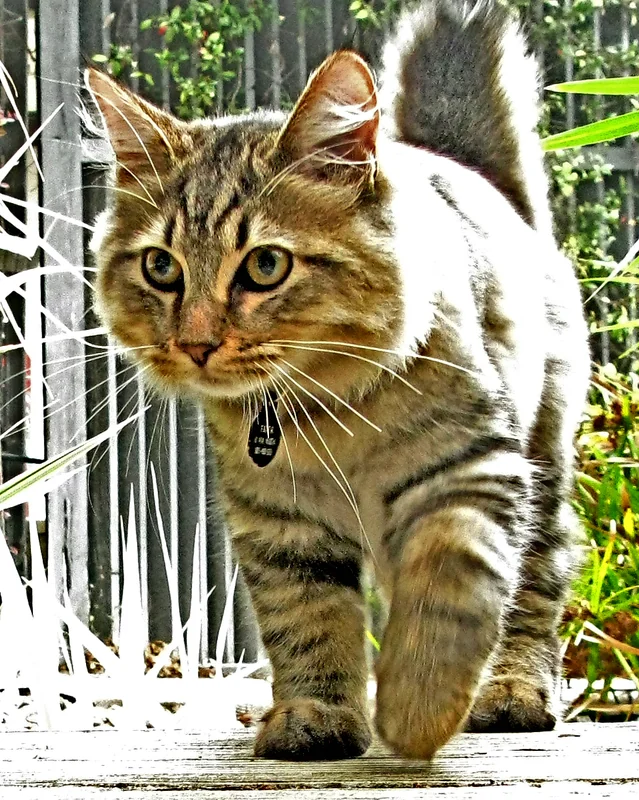
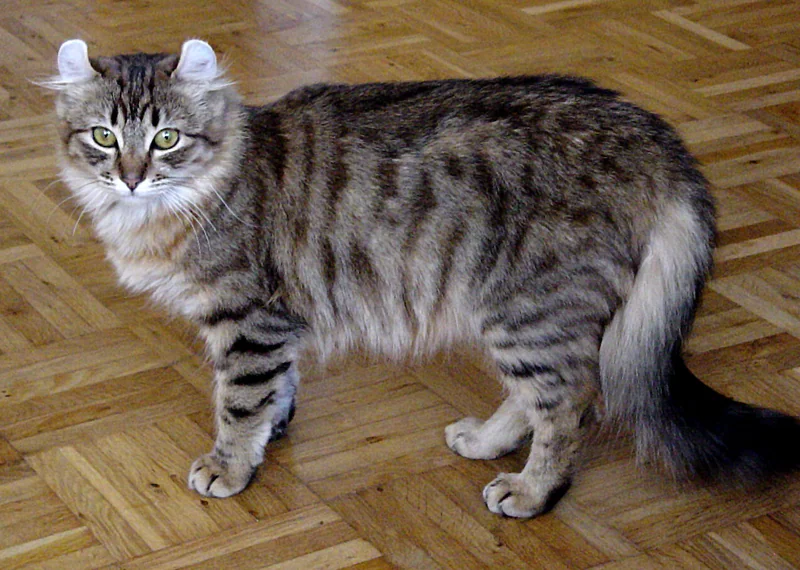
Felis catus
Korat Longhair
The Korat Longhair is the longhaired division of the Korat, one of ancient Thailand's most celebrated breeds, documented in the Tamra Maew as the Si-Sawat — a silver-blue cat considered a bearer of good luck. The Korat shorthair is recognized by CFA (1967), TICA, FIFe, and GCCF. The longhair division is recognized by TICA and WCF. The standard describes a medium-sized, heart-shaped-faced cat with a distinctive silver-blue coat in semi-long expression.
Quick facts
- Origin country
- Thailand (Nakhon Ratchasima province, Korat Plateau)
- Origin period
- Documented in Tamra Maew (c. 14th–18th century); CFA shorthair recognition 1967; longhair division TICA/WCF
- Coat type
- Long
- Coat colors
- Silver-blue (the only accepted colour)
- Size category
- Medium
- Average lifespan
- 12–16 years
- Recognition
- —
Origin
The Korat is one of ancient Thailand's most treasured breeds, documented in the Tamra Maew as the Si-Sawat. The manuscripts describe a silver-blue cat with green eyes, considered an auspicious bearer of good fortune — particularly given as a gift to brides. The first Korats reached the United States in 1959 and were recognized by CFA in 1967. TICA, FIFe, and GCCF recognize the shorthair. Longhaired Korat-type cats have been identified in the Thai domestic population; TICA and WCF recognize the longhair division.
Standard
The CFA/TICA standard for the Korat describes a medium-sized, semi-cobby cat with a distinctive heart-shaped face when viewed from the front, luminous peridot-green eyes, and a single-layered silver-blue coat with a characteristic silver tipping that produces a 'halo' effect when the coat moves. Only silver-blue is accepted — any other colour is a disqualification. The longhair division applies the same conformation and colour standard to a semi-long, silky coat with a plumed tail.
Silver-Blue Coat and the 'Halo' Effect
The Korat's silver-blue coat is unique among recognized breeds in its construction. Each guard hair is a single colour — blue-grey — but the hair shaft has a lighter, silvery tip. When the cat moves, the light tips catch the light and produce a shimmering silver halo effect across the coat. The CFA standard explicitly describes this as a 'silver-tipped' coat that gives the cat its distinctive 'good luck' aura — a property celebrated in the Tamra Maew manuscripts for nearly a millennium.
Sources & further reading (3)
- encyclopedia — accessed 2026-05-27
- registry-breed-profile — accessed 2026-05-27
- registry-breed-profile — accessed 2026-05-27
Frequently asked questions
Why is only blue accepted for the Korat?
The Korat's silver-blue coat is the breed's most distinctive characteristic, documented in the Tamra Maew as the Si-Sawat's defining feature. All major registries recognize that maintaining the single-colour standard is central to the Korat's identity; Korat cats in any other colour are typically registered as Thai Lilac or Thai Blue Point (separate breeds derived from Korat crosses) rather than as Korats.
What is the difference between the Korat and the Russian Blue?
Both are silver-blue cats, but the Korat has a semi-cobby body with a heart-shaped face, single-layered coat, and peridot-green eyes. The Russian Blue has a foreign-type long body with a wedge head, a double-layered plush coat, and vivid green eyes. The two breeds are genetically and geographically distinct.
Are Korat Longhairs shown separately from Korat Shorthairs?
In registries that recognize the Korat Longhair (TICA, WCF), the two coat-length classes are shown in separate divisions. The longhair division applies the full Korat standard — silver-blue only, heart-shaped face, peridot-green eyes — to the semi-long coat. The shorthair (recognized by CFA, TICA, FIFe, GCCF) competes in the established Korat championship class.