Felis catus
British Angora
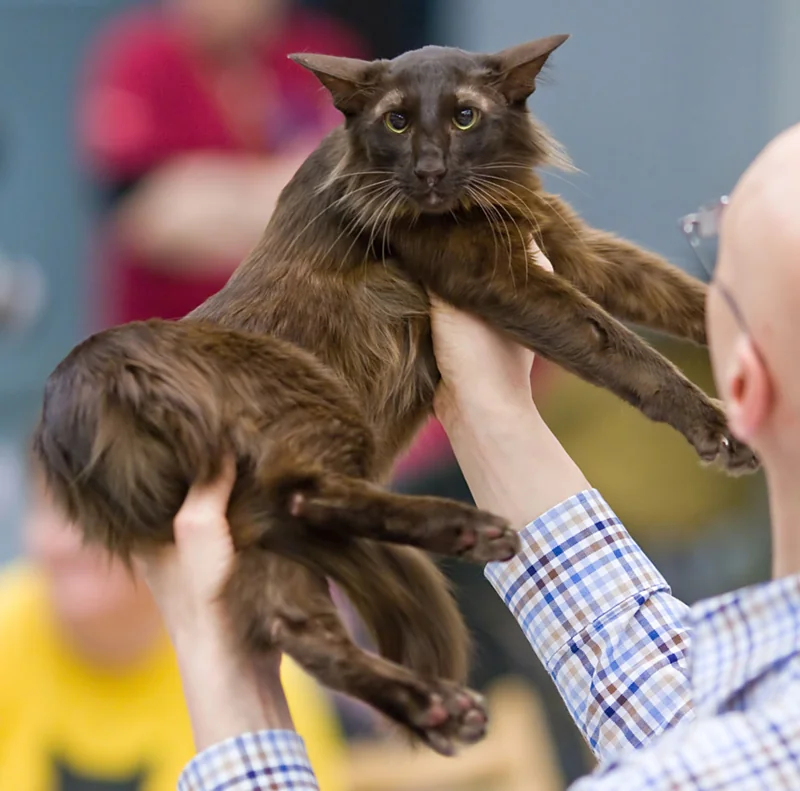 Featured photobritish-angora.jpg
The British Angora was a GCCF-recognized longhaired Oriental-type breed developed in the UK from Abyssinian and Siamese/Oriental crosses, distinct from the Turkish Angora. Recognized by the GCCF from 1977, the breed was renamed to Oriental Longhair in 2003 to avoid confusion with the Turkish Angora.
Quick facts
- Origin country
- United Kingdom
- Origin period
- 1968 development programme (Maureen Silson and others); GCCF recognition; reclassified as Oriental Longhair from 2003
- Coat type
- Long
- Coat colors
- All Oriental/foreign colours: solid, tabby, silver, smoke, bicolour
- Size category
- Medium
- Average lifespan
- 12-16 years
- Recognition
- GCCF 1977
Origin
The British Angora was bred from Oriental Shorthairs carrying the longhair gene, developed from 1968 by UK breeders to recreate the elegant, longhaired Angora type in British cat fancy. The GCCF recognized it in 1977 as distinct from the Turkish Angora. Its subsequent merger into the Oriental Longhair class in GCCF from about 2003 reflects the convergence of the breeding lines.
Standard
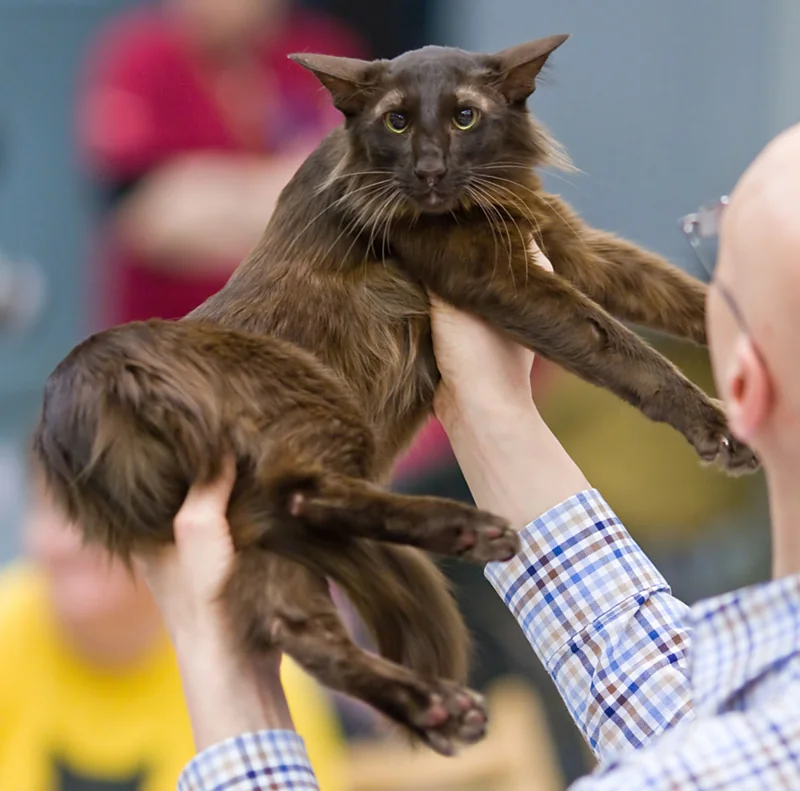
The British Angora standard described a slender, svelte cat with a long, tapering wedge head, large wide-based ears, almond-shaped eyes, and a long, fine-boned body — identical to the Oriental type standard. The coat is long, fine, and silky without undercoat, lying close to the body. All Oriental color classes were accepted, distinguishing the British Angora from the Turkish Angora's traditionally white-preferred standard.
GCCF Historical Status
The British Angora was recognized by the GCCF from 1977 as a longhaired Oriental-type cat developed in the UK from Abyssinian and Siamese/Oriental crosses, producing a slender, silky-coated cat distinct from the Turkish Angora. The GCCF withdrawn the British Angora name in 2003 and merged the breed into the Oriental Longhair category to avoid confusion with the Turkish Angora. The breed's historical recognition from 1977 to 2003 represents a 26-year period of formal GCCF recognition.
Sources & further reading (1)
- encyclopedia — accessed 2026-05-27
Frequently asked questions
Is the British Angora the same as the Turkish Angora?
No. The British Angora was developed in the UK from Oriental Shorthair breeding lines, and its type conforms to the Oriental body standard — a more extreme wedge-head, large ears, and svelte body. The Turkish Angora is an ancient natural Turkish breed with a more moderate, semi-foreign body type. The British Angora was later reclassified as Oriental Longhair in GCCF, while the Turkish Angora remains a separate breed.
Why was the British Angora name discontinued?
The GCCF discontinued the British Angora name in 2003 to avoid confusion with the Turkish Angora — a completely separate breed from Turkey recognized by CFA, TICA, FIFe, and GCCF. The British Angora was an Oriental-type longhaired cat developed in the UK from Siamese/Oriental × Abyssinian crosses, with no relation to the Turkish Angora. After renaming, the breed was absorbed into the Oriental Longhair category.
Where can I find British Angora cats today?
The British Angora as a separate GCCF breed name no longer exists; the cats were merged into the Oriental Longhair category in 2003. Descendants are shown as Oriental Longhairs within the GCCF. The breed's genes persist in UK Oriental Longhair lines but under the renamed breed designation.