Felis catus
Oriental Longhair
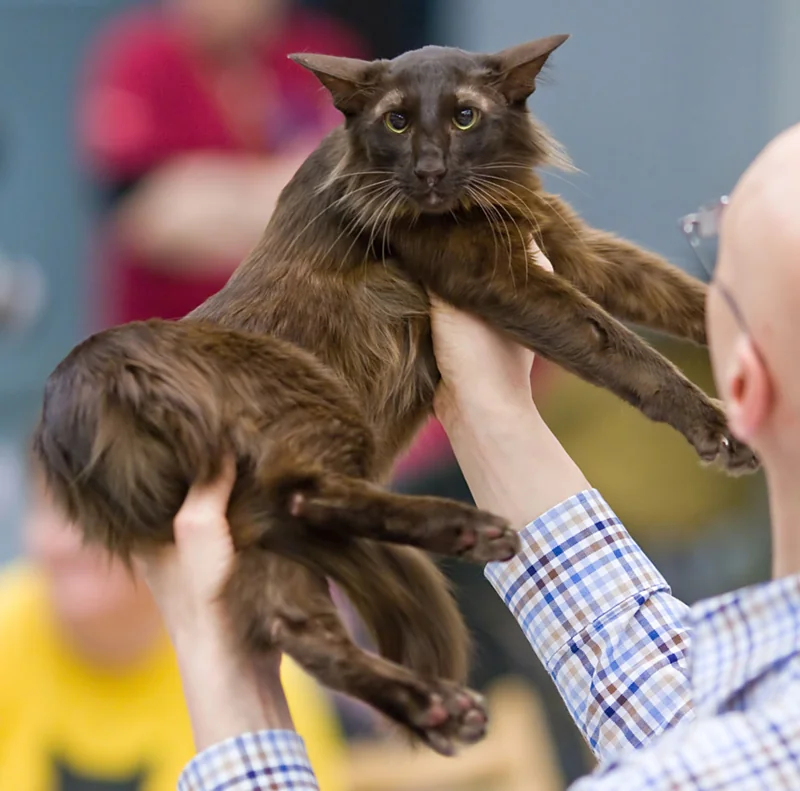
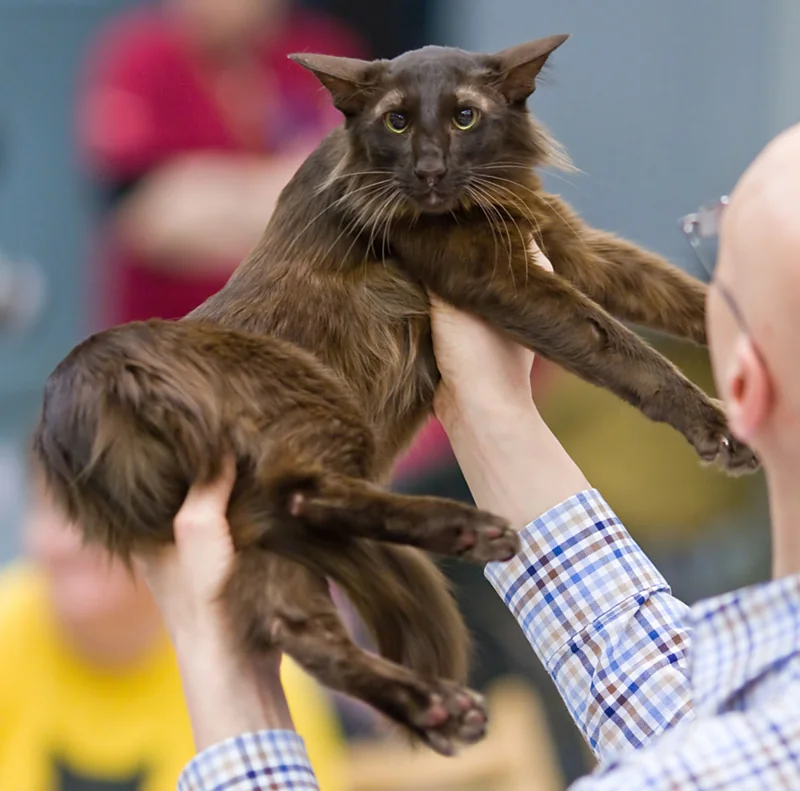 Featured photooriental-longhair.jpg
The Oriental Longhair is a long-haired breed sharing the Siamese body type but carrying a full range of non-pointed coat colours. The breed was developed in the United Kingdom from Oriental Shorthair x Balinese crosses; long-haired offspring of Oriental Shorthairs that did not carry the Siamese point gene formed the foundation. CFA granted championship status in 1995; FIFe in 1985; TICA at its 1979 founding; and GCCF in 1997. The standard describes a long, lean, tubular cat conforming to the Oriental Shorthair standard except for coat length.
Quick facts
- Origin country
- United Kingdom
- Origin period
- Long-haired non-pointed Siamese-type developed from Oriental Shorthair x Balinese; CFA championship 1995
- Coat type
- Long
- Coat colors
- Over 300 colour and pattern combinations recognized: solid, shaded, smoke, tabby, bicolour, particolour
- Size category
- Medium
- Average lifespan
- 10-15 years
- Recognition
- CFA 1995 · TICA 1979 · GCCF 1997 · FIFe 1985
Origin
The Oriental Longhair was developed in the United Kingdom in the 1970s and 1980s from crosses between Oriental Shorthairs and Balinese cats. The goal was a long-haired non-pointed Siamese-type cat — combining the Oriental Shorthair body and colour range with the Balinese coat length. Long-haired offspring that did not carry the Siamese point gene formed the foundation. The breed was initially called the British Angora before being renamed Oriental Longhair.
Recognition
FIFe granted recognition in 1985 under the name Oriental Longhair. TICA had recognized the breed at its 1979 founding under earlier classifications. CFA granted championship status in 1995 and merged the Oriental Shorthair and Oriental Longhair into a single 'Oriental' breed with two coat divisions the same year. GCCF recognized the Oriental Longhair as a separate breed in 1997. CFA recognizes over 300 colour and pattern combinations across both coat divisions.
Standard
The CFA standard describes the Oriental Longhair as conforming to the Oriental Shorthair standard in all respects except coat length. The body is long, tubular, and well-muscled with a very long neck and long thin legs. The head is a long tapering wedge with large flaring ears continuing the line of the wedge. The coat is medium-long, fine, and silky — not as long or dense as the Persian. The tail is a long, plumed, fine plume. Eye colour is vivid green for most colours and odd-eyed or blue for whites.
Sources & further reading (3)
- registry-breed-profile — accessed 2026-04-30
- encyclopedia — accessed 2026-04-30
- fife-standard — accessed 2026-04-30
Frequently asked questions
Is the Oriental Longhair the same breed as the Oriental Shorthair?
In CFA classification since 1995, the Oriental Longhair and Oriental Shorthair are two coat divisions of a single 'Oriental' breed. FIFe and GCCF treat them as separate breeds with parallel standards. The two share an identical body type and the same colour and pattern range; they differ only in coat length.
When was the Oriental Longhair recognized?
TICA had recognized the breed at its 1979 founding. FIFe granted recognition in 1985. CFA granted championship status in 1995. GCCF recognized the Oriental Longhair as a separate breed in 1997.
How does the Oriental Longhair differ from the Balinese?
The Oriental Longhair carries non-pointed coat colours — solid, shaded, smoke, tabby, bicolour, particolour — over 300 combinations. The Balinese is restricted to point colours only (pale body with darker mask, ears, legs, tail). Both share the same long, tubular Siamese body type and silky long coat.