Zygopetalum mackaii
Zygopetalum mackaii Care Guide
 Featured photozygopetalum-mackaii.jpg
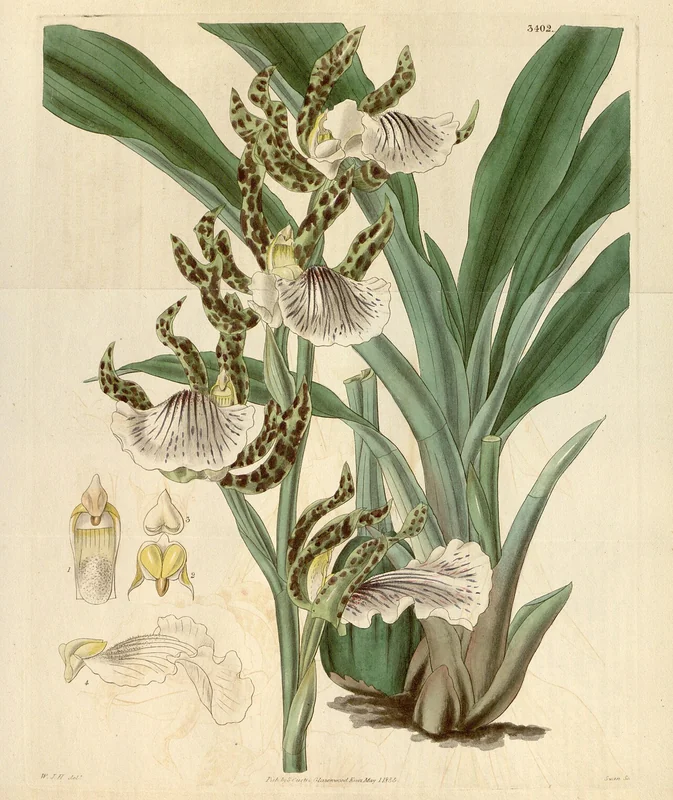
Zygopetalum mackaii is a terrestrial and epiphytic orchid from the cool mountain forests of Brazil, producing striking flowers with green-and-brown barred petals and a bold white lip striped with radiating violet-purple veins. The intense, sweet-hyacinth fragrance is exceptional — one of the most powerful perfumes in the orchid world. A cool-growing orchid, it is well-suited to unheated conservatories and cool rooms and blooms reliably in autumn to winter, providing fragrant colour at a time when most houseplants are dormant.
Care facts at a glance
- Light
- Bright indirect
- Water
- Water every 7 days in the growing season; reduce to every 10 to 14 days in winter.
- Humidity
- 55–75 %
- Temperature
- 8–25 °C
- Soil
- Free-draining terrestrial orchid mix: coarse perlite, composted bark, and a small amount of peat-free potting compost.
- Origin
- Cool montane forests of southern and southeastern Brazil, particularly São Paulo and Minas Gerais states.
- Mature size
- Clump-forming pseudobulbs; flower spikes to 50–60 cm with 4–7 flowers.
Overview
Zygopetalum mackaii Hook. was described in 1827 and named after James T. Mackay, the botanist who founded the Trinity College Botanic Garden in Dublin. It is one of the most widely cultivated Zygopetalum species, valued for the extraordinary combination of dramatic colour patterning and exceptional fragrance. The genus name refers to the yoke (zygon) that connects the base of the lip to the column — a structural feature of the flower architecture. Z. mackaii grows in cool, shaded montane forests as a terrestrial or semi-epiphytic plant, often in humus-rich pockets on rocky slopes.
Care Priorities
- Cool conditions (below 18 °C at night) are required for reliable flowering; in a constantly warm room the plant grows but rarely blooms.
- Bright, indirect light — some morning direct sun is beneficial for building pseudobulbs but avoid harsh afternoon sun.
- Repot every 1–2 years; the pseudobulbs spread and quickly outgrow their container. Divide at repotting to maintain vigour.
- Good airflow around the plant prevents fungal issues; a gentle fan on low setting in humid indoor conditions helps.
- Never allow water to collect in the crown between the leaves; bacterial rot can destroy the growing point.
Common Problems
Leaf spotting (pale, irregular patches) is a sign of fungal disease developing in wet, stagnant conditions; treat with fungicide and improve ventilation. Spider mites in warm, dry conditions cause pale stippling of leaves; treat with horticultural oil. Pseudobulb rot begins where old pseudobulbs are damaged or where water pools at the base; ensure good drainage and avoid bruising pseudobulbs during handling. Failure to flower in a constantly warm room is the most common grower complaint — a clear cool period (below 15 °C nights for 6–8 weeks) is the reliable trigger.
Sources & further reading (2)
- botanical-garden — accessed 2026-05-27
- encyclopedia — accessed 2026-05-27
Frequently asked questions
How strong is the fragrance?
Exceptional — Z. mackaii produces one of the most powerful and appealing fragrances in the orchid world: a rich, sweet, hyacinth-like scent that fills a room when several flowers are open. The fragrance intensifies in the morning warmth and is detectable across a large indoor space. It is comparable in intensity to a potted hyacinth.
When does it bloom?
Typically autumn to early winter (October–December in the northern hemisphere), making it a valued source of fragrance and colour during a season with few flowering plants. The flowers last 4–6 weeks in cool conditions. A cool-growing orchid's autumn bloom is a direct adaptation to cool, post-summer conditions in its montane Brazilian habitat.
Can I divide it?
Yes — division at repotting is the standard propagation method. Each division should have at least 3–4 pseudobulbs to establish and bloom reliably. Back-bulbs (old pseudobulbs without leaves) can be separated and potted; they occasionally shoot from dormant buds at the base.