Blechnum gibbum
Blechnum gibbum Care Guide
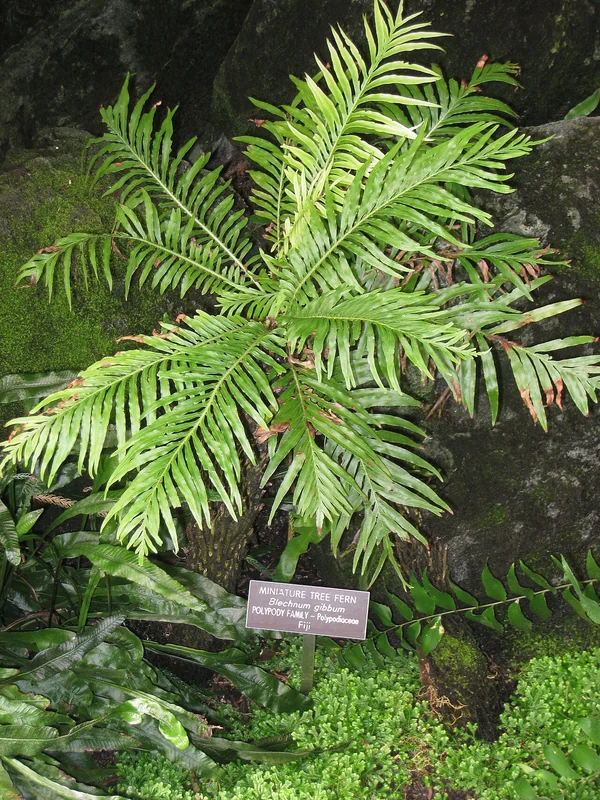 Featured photoblechnum-gibbum.jpg
Blechnum gibbum, the silver lady fern, is a small tree-forming fern from New Caledonia that produces a slender trunk up to 90 cm tall topped with a graceful rosette of arching, bright-green pinnate fronds. The trunk develops slowly over many years and gives the plant an unusually architectural quality among indoor ferns. It requires consistent warmth, high humidity, and indirect light, and is best suited to experienced fern growers who can provide stable tropical conditions.
Care facts at a glance
- Light
- Bright indirect
- Water
- Keep consistently moist but not waterlogged; water every 5 to 7 days in summer, less in winter.
- Humidity
- 60–85 %
- Temperature
- 13–28 °C
- Soil
- Humus-rich, well-draining fern mix; add bark and perlite to standard potting compost.
- Origin
- Humid tropical forests of New Caledonia.
- Mature size
- 60 to 90 cm tall with trunk; frond spread 60 to 80 cm.
Overview
Blechnum gibbum belongs to the Blechnaceae family and is sometimes placed in the genus Struthiopteris or Lomaria in older literature. Its miniature tree fern habit distinguishes it from virtually all other commonly cultivated ferns. Like true tree ferns (Dicksonia, Cyathea), the trunk is composed of matted root tissue rather than true woody stem. Unlike large tree ferns, it can be successfully grown indoors in a container.
Care Priorities
- Maintain high humidity above 60 percent consistently; a large saucer with pebbles and water beneath the pot helps.
- Bright, indirect light is ideal; direct sun quickly scorches the fronds.
- Never allow the crown to dry out — the trunk and root mass can be moistened by misting the outside.
- Avoid cold temperatures below 13 °C; this is a strictly tropical species.
Common Problems
Frond browning at the tips indicates low humidity or irregular watering; increase both. Crown rot from water pooling at the top of the trunk is the most serious problem; water at the base only. Spider mites thrive in hot, dry conditions; increase humidity and treat with neem oil if spotted. Slow or no new frond production in winter is normal dormancy.
Sources & further reading (2)
- botanical-garden — accessed 2026-05-08
- encyclopedia — accessed 2026-05-08
Frequently asked questions
Does it always develop a trunk indoors?
Yes, but slowly — expect the trunk to become visible after 3 to 5 years of consistent growth. The trunk height increases as older fronds are shed and the growing point rises.
Can I grow it in a bathroom?
Ideal if the bathroom receives indirect natural light. The consistent warmth and humidity from bathing mimics its tropical forest origin.
How do I keep the trunk moist?
Mist the outside of the trunk lightly once or twice a week. Some growers wrap the trunk in damp sphagnum moss secured with mesh, mimicking its habit of colonising mossy boulders and tree bases.