Zantedeschia aethiopica
Zantedeschia aethiopica Care Guide
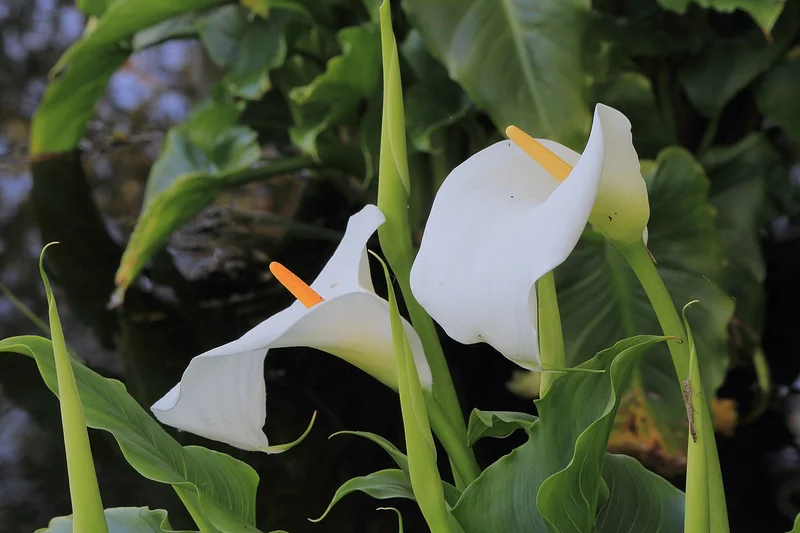 Featured photozantedeschia-aethiopica.jpg
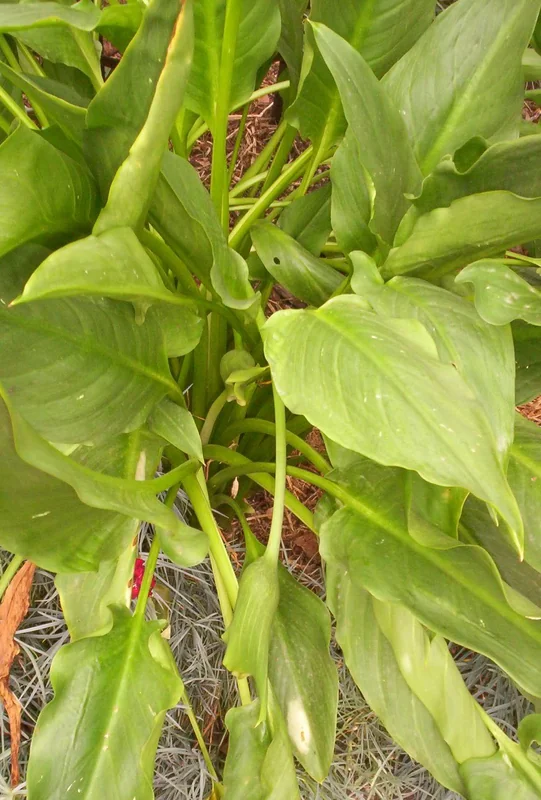
Zantedeschia aethiopica, the common calla lily, is a rhizomatous aroid native to southern Africa that produces elegant white spathes encircling a golden spadix above rich, glossy, sagittate foliage. Despite its formal appearance it is a surprisingly robust plant, tolerating a wide range of light conditions and even brief waterlogging. Given a cool winter dormancy it blooms reliably each spring.
Care facts at a glance
- Light
- Bright indirect
- Water
- Keep moist throughout the growing season, watering every 3–5 days; reduce to minimal in winter dormancy.
- Humidity
- 50–80 %
- Temperature
- 5–28 °C
- Soil
- Rich, moisture-retentive loam with added perlite for aeration; slightly acidic pH 5.5–6.5.
- Origin
- Wetlands, stream margins, and forest edges of southern and eastern Africa.
- Mature size
- 60 to 100 cm tall; spreads by rhizomes to form a substantial clump.
Overview
Zantedeschia aethiopica was described by Sprengel in 1826, though references to its distinctive white flowers appear in botanical literature from the 17th century. The 'lily' part of its common name is a misnomer — it belongs to the family Araceae, not Liliaceae. The white spathe is a modified leaf (bract) that surrounds the true flowers on the spadix. In its native habitat it colonises seasonally inundated grasslands and riverbanks, which explains its unusual tolerance of wet soils.
Care Priorities
- Allow a dry winter dormancy of at least 6–8 weeks: stop watering in autumn, let foliage die back, and store the rhizome in a cool, frost-free place.
- Resume watering in early spring and move to a bright spot to initiate flowering.
- Feed every 2 weeks with a phosphorus-rich formula from the time new growth appears until after flowering.
- Re-pot every 2 years in fresh, rich compost to maintain vigorous bloom production.
Common Problems
Leaves that yellow rapidly with a soft, mushy base indicate Erwinia soft rot — a bacterial disease exacerbated by overwatering. Remove all affected tissue and treat surrounding soil with a copper-based fungicide. Spathes that fail to appear usually mean the plant did not receive a sufficient dormancy period, has been over-fed with nitrogen (which promotes leaves at the expense of flowers), or is pot-bound. Aphids colonise young shoots in spring; remove with a strong water jet or insecticidal soap.
Sources & further reading (2)
- botanical-garden — accessed 2026-05-27
- encyclopedia — accessed 2026-05-27
Frequently asked questions
How do I make it flower every year?
The key is a true dormancy period. In autumn, allow foliage to die back, stop watering entirely for 6–8 weeks, and keep the rhizome cool (5–10 °C). Resume watering and warmth in spring; flowers should follow within 8–10 weeks.
Can I grow it in a pond or water feature?
Yes — Z. aethiopica is semi-aquatic in nature. It can be grown with its rhizome partially submerged in shallow water (up to 30 cm deep) in an outdoor pond in mild climates, making it unusual among popular houseplants.
Are coloured calla lilies the same species?
No. Coloured calla lilies (pink, orange, yellow, purple) are hybrids involving Z. rehmannii and other southern African species. Z. aethiopica produces only pure-white spathes; it is the most robust and frost-tolerant species in the genus.