Aglaonema pictum
Aglaonema pictum (Camouflage) Care Guide
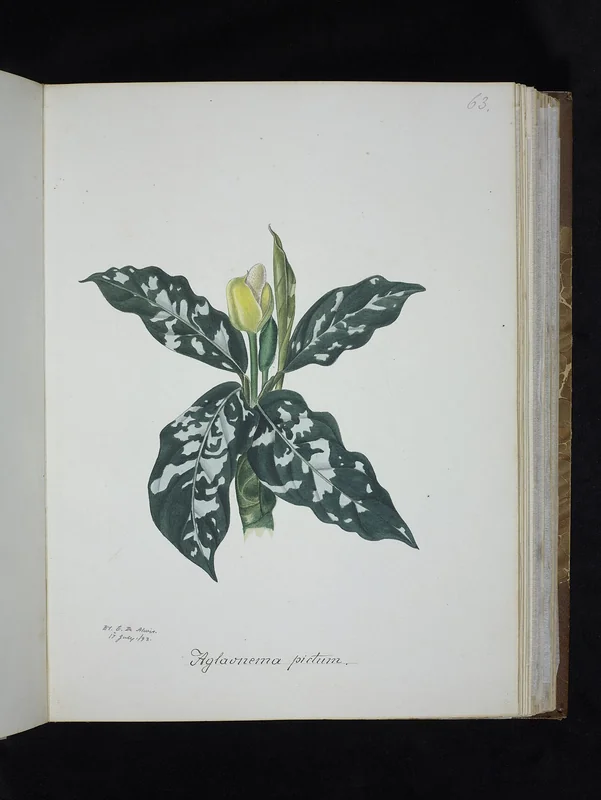 Featured photoaglaonema-pictum.jpg
Aglaonema pictum is an Indonesian aglaonema known for its irregular leaf pattern in three or more shades of green, giving the appearance of military camouflage. The Tricolor cultivar is the most coveted, with bright cream patches added to the green tones. It is more humidity-loving than most Chinese evergreens and one of the more striking-looking aglaonemas in cultivation.
Care facts at a glance
- Light
- Bright indirect
- Water
- Water when the top 2 cm of mix has dried.
- Humidity
- 60–80 %
- Temperature
- 18–27 °C
- Soil
- Well-draining mix of bark, perlite, and coir; airy aroid blend.
- Origin
- Forests of Sumatra and surrounding Indonesia.
- Mature size
- 30 to 60 cm tall.
Overview
Aglaonema pictum has been collected since the 1880s but only became widely available in trade in the 2010s. The Tricolor cultivar is genetic and stable, unlike chimeric variegations that can revert.
Care Priorities
- Bright filtered light keeps the camouflage pattern crisp.
- Higher humidity than most aglaonemas — it sulks below 60 percent.
- Filtered water; tap water spots the leaves.
- Allow the top of the mix to dry between waterings.
Common Problems
Pale, washed-out pattern is too little light. Crispy edges are dry air or hard water. Yellow leaves with mushy bases is overwatering.
Sources & further reading (2)
- encyclopedia — accessed 2026-04-28
- botanical-garden — accessed 2026-04-28
Frequently asked questions
Pictum vs commutatum — care difference?
Pictum is more humidity-sensitive and slower-growing than commutatum. Commutatum tolerates ordinary indoor conditions; pictum prefers bathroom-style humidity.
Will the Tricolor revert?
No — pictum Tricolor is genetic, not chimeric. The pattern is stable on new growth.
Why is my pictum slow?
Slow is normal. Pictum pushes 3 to 6 leaves a year indoors. Faster growth needs greenhouse-style steady warmth and humidity.