Alocasia x amazonica
Alocasia amazonica (Polly) Care Guide
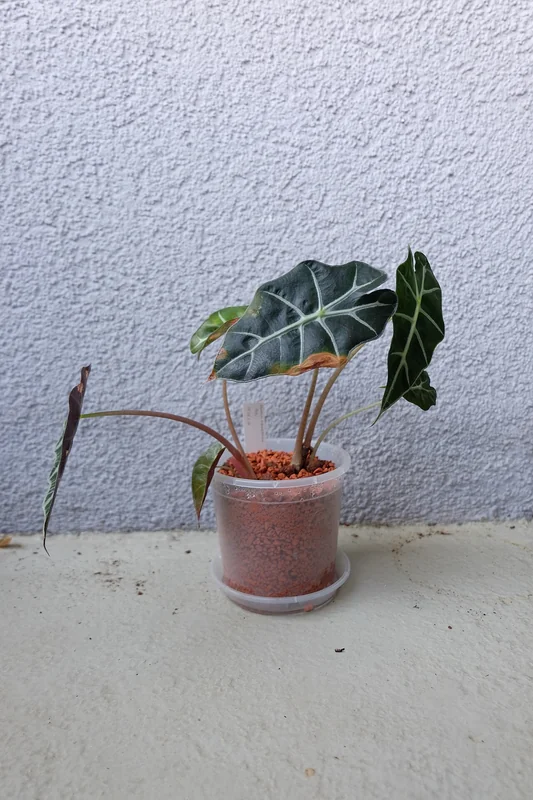 Featured photoalocasia-amazonica.jpg
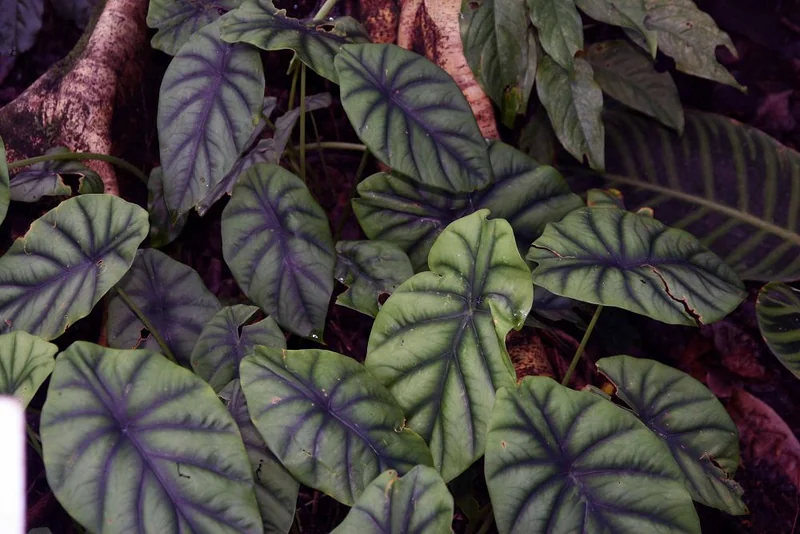
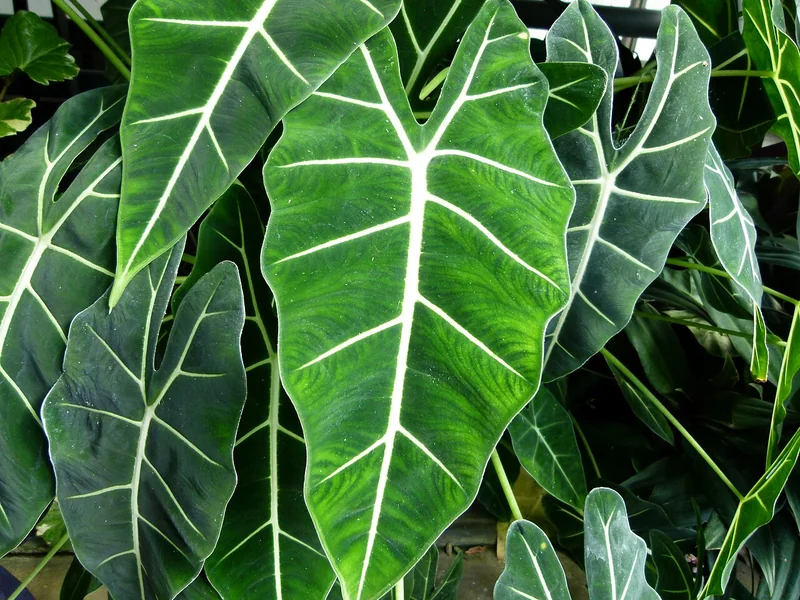
Alocasia x amazonica is a hybrid — despite the name it is not native to the Amazon — most often sold as the cultivar Polly. It stays compact, with dark, almost black-green arrow-shaped leaves outlined by bright white veins and ruffled edges. It is one of the most decorative small alocasias and one of the most temperamental about water and humidity.
Care facts at a glance
- Light
- Bright indirect
- Water
- Water when the top third of the mix has dried.
- Humidity
- 60–80 %
- Temperature
- 18–27 °C
- Soil
- Open, well-draining aroid mix with bark, perlite, and a small fraction of coir.
- Origin
- Hybrid of Asian Alocasia species — not a wild plant.
- Mature size
- 30 to 60 cm tall, similar spread.
Overview
Alocasia x amazonica was created in a Florida nursery in the 1950s. The name is misleading — there is no Amazon connection — but the plant has become one of the most-grown alocasias for its high-contrast leaves and compact size.
Care Priorities
- Bright filtered light keeps vein contrast bold; deep shade dulls the leaves.
- Water sparingly: the corm rots much faster than it dries.
- Steady warmth above 18 °C; cold draughts cause leaf drop.
- Humidity above 60 percent prevents crispy edges on the ruffled leaves.
Common Problems
Yellowing leaves with mushy bases is overwatering. Crispy edges with healthy roots is dry air. Total leaf drop in winter is often dormancy — keep the corm just barely moist and warm, and new growth typically returns in spring.
Sources & further reading (2)
- encyclopedia — accessed 2026-04-28
- botanical-garden — accessed 2026-04-28
Frequently asked questions
Is Polly the same as Amazonica?
Polly is the most common cultivar of Alocasia x amazonica. Names are used interchangeably in trade.
Why do my new leaves come in tiny?
Small new leaves usually mean the corm is short on energy after stress. Keep conditions stable for a few cycles and leaf size returns.
Can I revive a Polly that has lost all its leaves?
Often yes. If the corm feels firm and is not mushy, hold it in barely moist mix at 18 to 22 °C and wait — many plants flush new leaves within 6 to 10 weeks.