Xanthosoma sagittifolium
Xanthosoma sagittifolium Care Guide
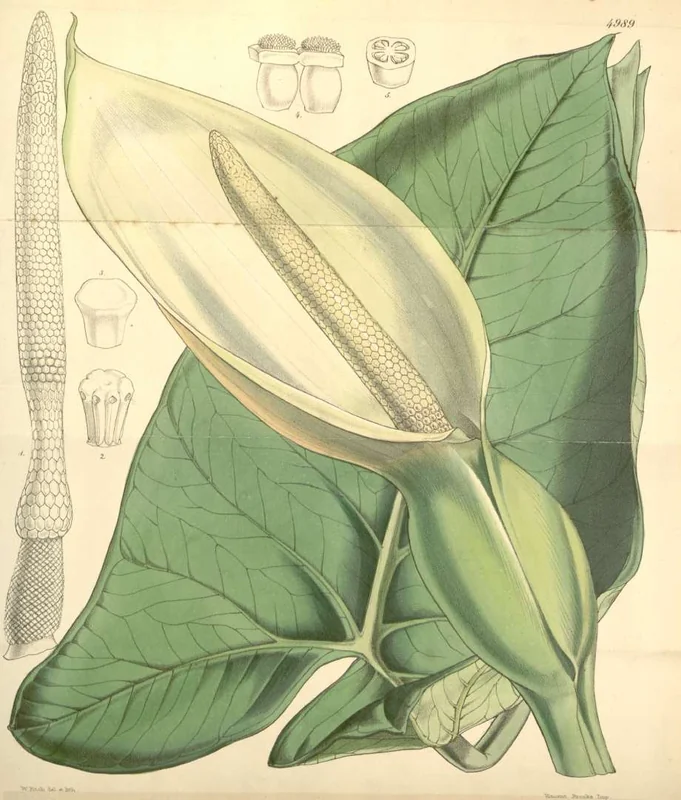 Featured photoxanthosoma-sagittifolium.jpg
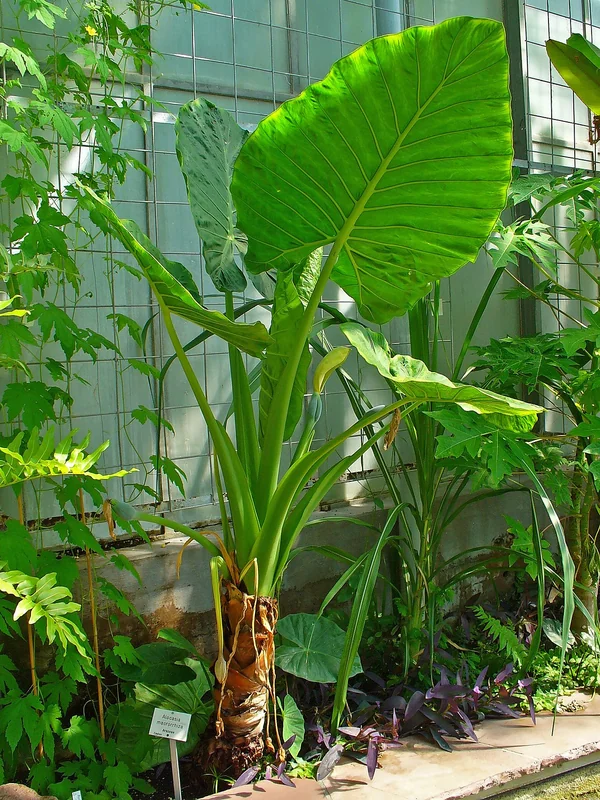
Xanthosoma sagittifolium is a large, rhizomatous aroid from tropical America grown for its enormous, arrowhead-shaped leaves that can reach 90 cm in length on petioles up to 1.5 m tall. It is closely related to Colocasia but differs in having basal leaf lobes that point forward rather than backward. Indoors it makes a dramatic architectural statement in bright, humid spaces, requiring generous watering and feeding to support its rapid, large-scale growth.
Care facts at a glance
- Light
- Bright indirect
- Water
- Keep consistently moist; water every 3–5 days in summer. Reduce slightly in winter but do not allow prolonged drought.
- Humidity
- 60–90 %
- Temperature
- 18–35 °C
- Soil
- Rich, moisture-retentive loam amended with perlite for drainage; slightly acidic pH 5.5–6.5.
- Origin
- Tropical America; widely cultivated and naturalised throughout tropical regions worldwide.
- Mature size
- 1.2 to 1.8 m tall indoors; leaves 50–90 cm long.
Overview
Xanthosoma sagittifolium (L.) Schott has been cultivated throughout tropical America and the Caribbean for millennia. It is one of the largest commonly grown aroids, and its rapid growth rate under good conditions is impressive — producing a new, full-sized leaf every 2–3 weeks in summer. The genus name comes from the Greek for 'yellow body', referring to the yellow flesh of the corms in some species. Indoors it requires a large floor space and a heavy pot to prevent toppling.
Care Priorities
- Use a large, heavy pot (30–45 cm diameter) from the start — the plant will rapidly outgrow smaller containers.
- Bright, indirect light maintains the largest leaf size; reduce light and the leaves become smaller and more upright.
- Feed generously with a nitrogen-rich formula throughout the growing season.
- In cooler winters the plant slows considerably; reduce watering and feeding but do not allow full dormancy indoors.
Common Problems
Sudden leaf collapse in summer usually signals severe drought stress — water immediately and the plant will typically recover within hours. Yellowing older leaves are normal leaf cycling and not a concern if new growth continues. Leaf margins that turn brown and crispy indicate low humidity or salt build-up; flush the pot with plain water and boost humidity. Dasheen mosaic virus causes yellow mosaic patterning on leaves — there is no cure; remove the affected plant to prevent spread.
Sources & further reading (2)
- botanical-garden — accessed 2026-05-27
- encyclopedia — accessed 2026-05-27
Frequently asked questions
How is Xanthosoma different from Colocasia?
The key visual difference is in the leaf attachment: Xanthosoma has a non-peltate leaf where the petiole attaches at the base of the leaf, while Colocasia has a peltate leaf where the petiole attaches inside the leaf margin. The basal lobes also differ in direction. Both are large aroids with similar care needs.
What size pot does it need?
Start in a pot at least 30 cm wide and repot up one size each spring. A mature plant may need a 50 cm container. Use terracotta or heavy ceramic to provide ballast against the weight of the leaves.
Can I keep it outdoors in summer?
Yes — moving it outdoors in a sheltered, partly shaded position from late spring to early autumn accelerates growth dramatically. Bring it back indoors before temperatures drop below 15 °C.