Chlorophytum comosum
Spider Plant Care Guide: Chlorophytum comosum
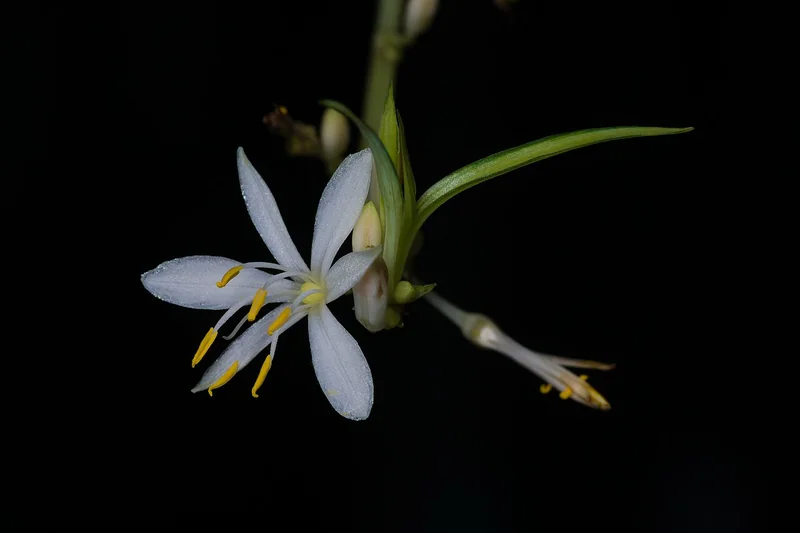 Featured photochlorophytum-comosum.jpg
The Spider Plant (Chlorophytum comosum) is a beloved houseplant known for its arching variegated leaves and small 'spiderettes' that dangle from the mother plant on long flowering stems. Native to coastal southern Africa, it tolerates a wide range of indoor conditions — bright filtered light, ordinary household humidity, and an irregular watering schedule — which is why it has been a beginner-friendly mainstay for over a century. Mature plants form thick fleshy roots that anchor them in shallow pots and contribute to their resilience between waterings.
Care facts at a glance
- Light
- Bright indirect
- Water
- Water when the top inch of soil feels dry to the touch, ensuring the soil remains consistently moist but never soggy.
- Humidity
- 40–60 %
- Temperature
- 18–24 °C
- Soil
- Use a well-draining potting mix, ideally one formulated for houseplants, to prevent waterlogging. A mix with peat moss, perlite, and vermiculite works well.
- Origin
- Native to the coastal areas of Southern Africa, where it grows as a perennial herb.
- Mature size
- Indoors, it typically grows 1-2 feet (30-60 cm) tall and wide, with plantlets cascading up to 3 feet (90 cm) long.
Overview
The Spider Plant (Chlorophytum comosum) is a highly adaptable and forgiving houseplant, perfect for beginners. It's famous for its long, arching leaves, often variegated with white or cream stripes, and the small 'spiderettes' or plantlets that grow on long stems. These plantlets can be easily removed and rooted to create new plants, making propagation simple and fun. Below ground, mature plants develop thick, water-storing roots that allow them to bounce back from missed waterings.
Care Priorities
Caring for a Spider Plant is straightforward, focusing on a few key areas:
- Light: Provide bright, indirect light. Direct sun can scorch the leaves.
- Watering: Keep the soil consistently moist but not waterlogged. Allow the top inch of soil to dry out between waterings.
- Humidity: Average household humidity is usually fine, but they appreciate higher humidity, especially in dry environments.
- Soil: Use a well-draining potting mix to prevent root issues.
- Fertilizer: Feed lightly during the growing season (spring and summer).
Common Problems
While generally robust, Spider Plants can encounter a few issues. Brown leaf tips are very common and can be caused by fluoride in tap water, low humidity, or inconsistent watering. Using distilled or filtered water and increasing humidity can help. Root rot is another frequent problem, almost always due to overwatering; ensure your pot has good drainage and allow the soil to dry out between waterings. Pests like spider mites and mealybugs can sometimes appear, but they are usually easy to treat with insecticidal soap.
Sources & further reading (4)
- encyclopedia — accessed 2026-04-24
- dataset — accessed 2026-04-24
- botanical-garden — accessed 2024-07-30
- botanical-garden — accessed 2024-07-30
Frequently asked questions
Why are the tips of my Spider Plant's leaves turning brown?
Brown leaf tips are a common issue for Spider Plants. They can be caused by fluoride or chlorine in tap water, low humidity, inconsistent watering (either too much or too little), or a buildup of fertilizer salts. Try using filtered or distilled water, increasing humidity, and ensuring consistent watering.
How do I propagate Spider Plant 'spiderettes'?
Propagating spiderettes is very easy! Simply snip off a plantlet from the mother plant. You can then place it directly into a small pot of moist potting mix, or root it in a glass of water until roots develop before planting. They root quickly and easily.
How often should I fertilize my Spider Plant?
During the active growing season (spring and summer), fertilize your Spider Plant every 2-4 weeks with a balanced liquid houseplant fertilizer. Reduce or stop fertilizing during the fall and winter months when growth slows down.
Can Spider Plants tolerate low light conditions?
While Spider Plants can tolerate lower light, they thrive and produce more spiderettes in bright, indirect light. In very low light, their growth may slow, and variegation might become less pronounced.