Alocasia macrorrhizos
Alocasia macrorrhizos (Giant Taro) Care Guide
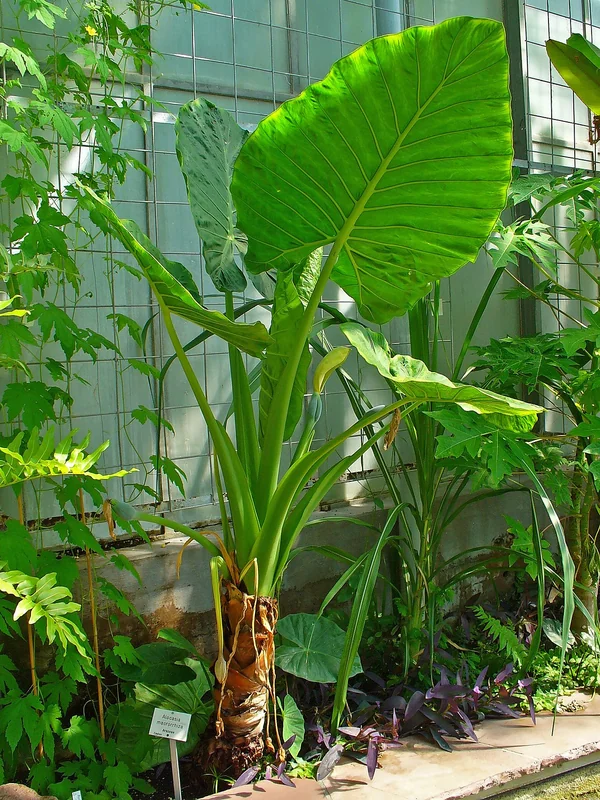 Featured photoalocasia-macrorrhizos.jpg
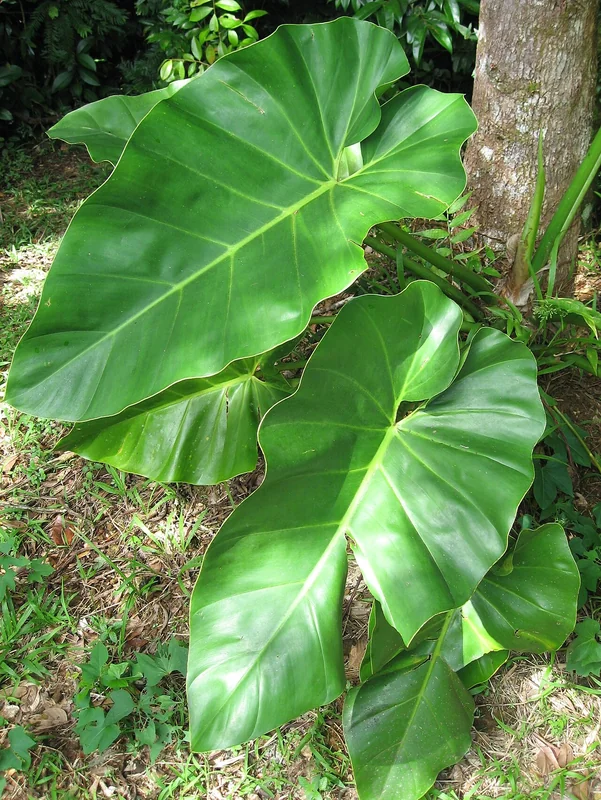
Alocasia macrorrhizos is the largest commonly grown alocasia, capable of producing arrow-shaped leaves over a metre long on equally tall petioles. In Southeast Asia it has been carried into cultivation for over a thousand years. As a houseplant or patio plant it makes a tropical statement in bright rooms with high humidity and steady water.
Care facts at a glance
- Light
- Bright indirect
- Water
- Water when the top 2 to 3 cm of mix has dried; large leaves use water quickly.
- Humidity
- 60–80 %
- Temperature
- 18–30 °C
- Soil
- Rich, well-draining loam with extra perlite or bark; macrorrhizos is a heavier feeder than most alocasias.
- Origin
- Tropical Southeast Asia and the western Pacific.
- Mature size
- 1.5 to 3 metres tall indoors with adequate light, larger outdoors.
Overview
Alocasia macrorrhizos has been cultivated for thousands of years in tropical Asia and the Pacific. As a houseplant it is the genus's giant — a bright living-room corner plant for those with the space, or a summer patio specimen in cooler climates.
Care Priorities
- Plenty of light is essential; in poor light leaves stay small and pale.
- Use a large, heavy pot — macrorrhizos top-heaviness will tip lighter pots.
- Water generously in summer, much less in winter dormancy.
- Feed regularly; this species is a heavier feeder than most alocasias.
Common Problems
Lopsided growth is a light problem; rotate the pot weekly. Sudden leaf collapse is usually overwatering in cool weather. Brown crispy edges signal dry air.
Sources & further reading (2)
- encyclopedia — accessed 2026-04-28
- botanical-garden — accessed 2026-04-28
Frequently asked questions
How big does it get indoors?
In a bright warm room with humidity above 60 percent, mature plants throw individual leaves over a metre across on petioles up to 1.5 m tall. Restricting pot size keeps the overall plant smaller, but each leaf is still substantial.
Will it survive a cold draught?
Briefly, but a cold spell at 10 °C or below can trigger leaf drop or worse. Keep it warm.
Difference between macrorrhizos and odora?
Both are giant elephant-ear alocasias; odora is generally smaller, hardier, and has a sweeter flower scent. Macrorrhizos has stiffer, more upright leaves.