Tillandsia xerographica
Tillandsia xerographica Care Guide
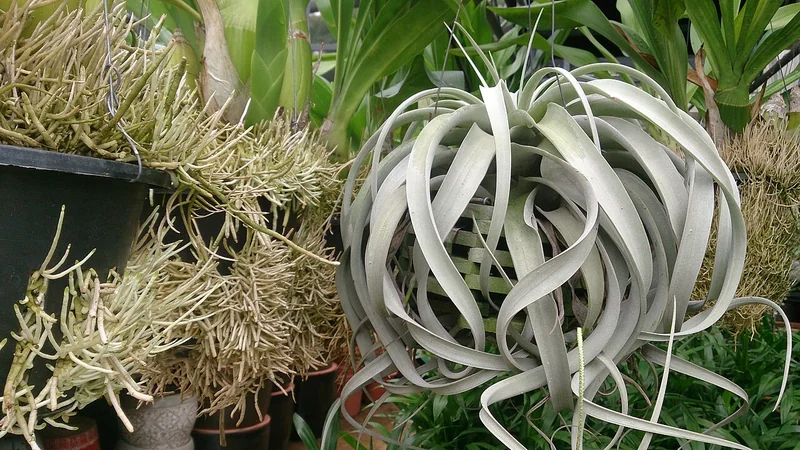 Featured phototillandsia-xerographica.jpg
Tillandsia xerographica is one of the largest and most dramatic air plants in the genus, producing an arching rosette of broad, silvery-grey leaves that curl and recurve as they age. Native to dry tropical forests of Guatemala, El Salvador, Honduras, and Mexico, it is an epiphyte that absorbs moisture and nutrients entirely through its leaves. It requires excellent air circulation, bright light, and periodic misting or brief soaking — no soil ever needed. Its sculptural form makes it one of the most popular plants for contemporary interior design.
Care facts at a glance
- Light
- Bright indirect
- Water
- Mist 2 to 3 times per week or soak in water for 20 to 30 minutes once a week in summer; reduce to once every 10 to 14 days in winter.
- Humidity
- 40–70 %
- Temperature
- 10–35 °C
- Soil
- No soil required — mount on driftwood, cork bark, or display in a vessel with airflow.
- Origin
- Dry tropical forests of Guatemala, El Salvador, Honduras, and southern Mexico.
- Mature size
- 30 to 60 cm across; flower spike to 50 cm tall.
Overview
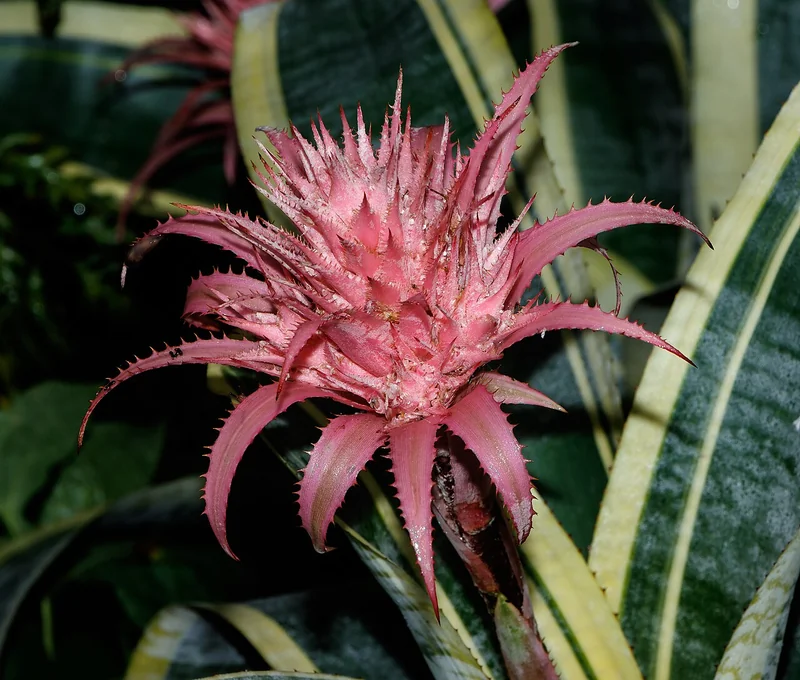
Tillandsia xerographica was described by H.Rohweder and is native to seasonally dry forests that experience prolonged drought — unusual for a tillandsia, most of which prefer humid environments. The silvery colour of the leaves is produced by specialised cells called trichomes, which are highly effective at absorbing moisture from the air and reflecting intense sunlight. At flowering, the plant produces a spectacular multi-branched inflorescence with pink, red, and green bracts.
Care Priorities
- Always allow the plant to dry within 4 hours of soaking — pooled water at the leaf base causes rot.
- Bright, indirect light or some direct morning sun mimics its native exposed forest conditions.
- Air circulation is essential; stagnant, humid conditions cause rot faster than drought.
- As with all tillandsias, it will eventually produce pups after flowering — wait until pups reach one third of the mother's size before separating.
Common Problems
Brown, mushy leaves at the centre of the rosette indicate rot from trapped water; remove affected leaves, allow to dry completely, and improve air circulation. Pale, bleached leaves are usually sunburn from too much direct midday sun. Wrinkling of leaves between mistings indicates underwatering; increase soaking frequency. Scale insects at the leaf base can be removed with isopropyl alcohol on a cotton swab.
Sources & further reading (2)
- botanical-garden — accessed 2026-05-08
- encyclopedia — accessed 2026-05-08
Frequently asked questions
Do air plants really need no soil?
Correct — tillandsias are epiphytes that in nature attach to trees, rocks, or wire with their small roots (which serve anchoring purposes only). All moisture and nutrients are absorbed through leaf trichomes.
My xerographica is curling up. Is that normal?
Some curling is natural and part of the species' appearance. If the leaves are curling inward severely or looking desiccated, it needs more water. If they are open and relaxed, it is well-hydrated.
How long does the plant live?
Individual plants are monocarpic — they flower once and then die over the following months, but not before producing pups. The colony persists through the pups indefinitely.