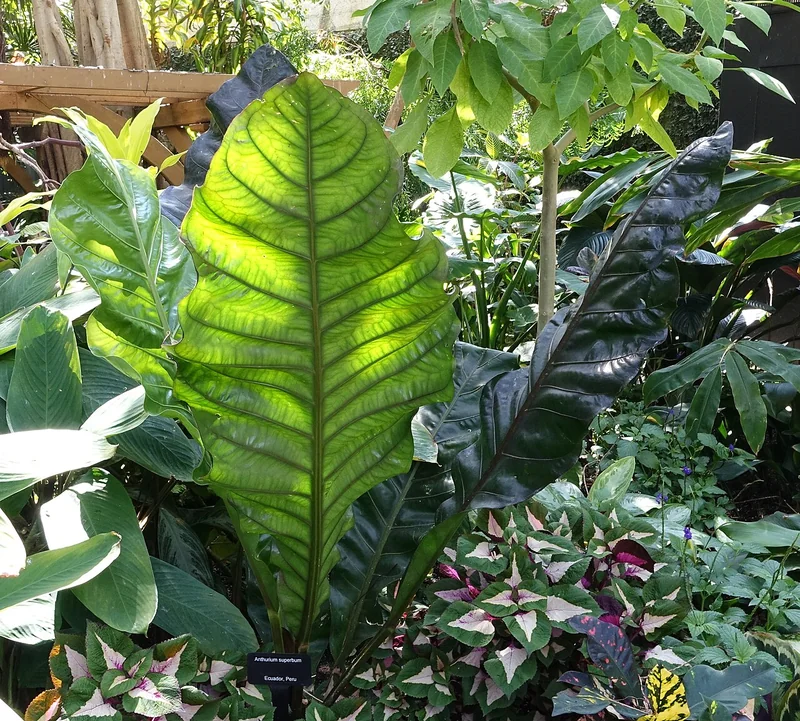
Anthurium superbum is a bird's-nest type anthurium from Ecuadorian forests, growing as a stiff rosette of upright, leathery leaves that emerge bronze and harden to deep green. Unlike most popular anthuriums it is grown for its sculptural form rather than spathes or velvet venation. It tolerates lower humidity than the velvet species and is one of the easier large anthuriums for typical homes.
Care facts at a glance
- Light
- Bright indirect
- Water
- Water when the top 2 to 3 cm of mix dries; let the pot lighten noticeably between waterings.
- Humidity
- 50–70 %
- Temperature
- 18–27 °C
- Soil
- Coarse aroid mix of bark, perlite, and a little coir; chunky enough that water flows through fast.
- Origin
- Lowland and lower montane forests of Ecuador.
- Mature size
- 60 to 90 cm tall, similar spread.
Overview
Anthurium superbum is an epiphyte and lithophyte from Ecuador that catches falling leaf litter inside its upright rosette, much like a bromeliad bird's nest. The architectural form makes it a striking specimen even without flowers.
Care Priorities
- Use a chunky bark mix and a pot with strong drainage.
- Bright filtered light; tolerates a little direct morning sun.
- Do not water into the rosette — pour at the soil only.
- Wipe the leathery leaves clean every few weeks for best light capture.
Common Problems
Black centres in the rosette point to crown rot from water sitting in the cup. Yellow lower leaves are usually normal turnover; rapid loss is overwatering. Spider mites occasionally colonise the dry tops of upright leaves.
Sources & further reading (2)
- encyclopedia — accessed 2026-04-28
- botanical-garden — accessed 2026-04-28
Frequently asked questions
Will it flower indoors?
It can, with a small green spathe and pale spadix, but the foliage is the main attraction. Many growers cut the inflorescences off.
Is it easier than crystallinum or magnificum?
Yes — much easier. It tolerates ordinary indoor humidity and is more forgiving of imperfect watering.
How big a pot does it need?
Match the rootball plus 2 to 3 cm; oversized pots stay wet and rot the crown.