Scindapsus pictus var. argyraeus
Scindapsus pictus var. argyraeus Care Guide
 Featured photoscindapsus-pictus-argyraeus.jpg
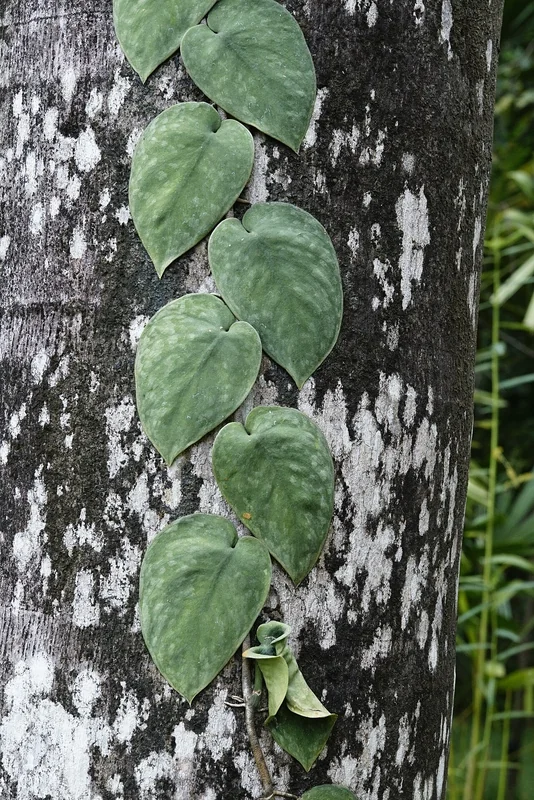
Scindapsus pictus var. argyraeus, widely sold as 'satin pothos' or 'silk pothos', is a Southeast Asian aroid with small, heart-shaped, matte, dark-green leaves decorated with irregular silver-grey blotches that give them a painted, satin-like sheen. It trails or climbs freely from hanging baskets and shelves and is considered one of the most forgiving aroids for typical indoor conditions — tolerating lower light and irregular watering better than many of its relatives.
Care facts at a glance
- Light
- Medium light
- Water
- Water when the top 3 to 5 cm of substrate has dried; every 7 to 14 days in the growing season.
- Humidity
- 45–70 %
- Temperature
- 15–30 °C
- Soil
- Well-draining mix: potting compost with perlite; a slightly coarser mix than for Pothos aureum.
- Origin
- Humid tropical forests of Southeast Asia — Borneo, Malaysia, Sumatra, and surrounding islands.
- Mature size
- Trailing to 1.5 to 3 m; leaves 5 to 10 cm long in juvenile form; larger on climbing plants.
Overview
Scindapsus pictus var. argyraeus is native to the humid forests of Southeast Asia, where it grows as a climbing or trailing epiphyte on tree trunks in the forest understorey. The genus Scindapsus is closely related to Epipremnum (pothos) but is distinct — the satin pothos is not a true pothos (Epipremnum) despite its common name. The silver blotches on the leaf surface are caused by variations in mesophyll cell structure beneath the epidermis, identical in mechanism to the spots on Hoya sigillatis. The matte, slightly fuzzy texture of the leaf surface — giving the 'satin' common name — is produced by minute surface hairs on the cuticle.
Care Priorities
- Medium to bright indirect light is ideal; it tolerates lower light than most aroids but the silver patterning becomes less vivid and leaf spacing increases in insufficient light.
- Allow good drying between waterings; it is notably more drought-tolerant than Pothos aureum and resents staying consistently moist.
- The matte leaf surface is easily marked by hard water; use filtered or distilled water to prevent mineral spotting that mars the appearance.
- Avoid leaf-shine products entirely — they block the stomata and damage the distinctive satin surface texture permanently.
Common Problems
White mineral deposits on the leaf surface from hard tap water cause permanent spotting on the matte surface; switch to distilled or filtered water. Yellowing stems combined with stunted growth and root ball that slides out whole suggest root rot from overwatering; allow to dry more between waterings and repot in fresh, drier mix. Spider mites in hot, dry conditions cause stippling and a general dull appearance; the matte surface makes early damage harder to see than on glossy-leaved plants — inspect undersides regularly. Pale, widely spaced leaves indicate insufficient light; move to a brighter indirect position.
Sources & further reading (2)
- botanical-garden — accessed 2026-05-08
- encyclopedia — accessed 2026-05-08
Frequently asked questions
Is satin pothos actually a pothos?
No — it is a Scindapsus, a separate genus. Despite the common name, true pothos are in the genus Epipremnum. The two are closely related in the Araceae family but are genetically and taxonomically distinct.
Why is the silver pattern fading?
Reduced silver pattern intensity is almost always caused by insufficient light. Move the plant to a brighter indirect position — the silver blotches will be more vivid on new leaves produced in better light.
Can I grow it in a hanging basket?
Yes — it is one of the best aroids for hanging baskets due to its compact leaf size and graceful trailing habit. The cascading stems show the two-toned green-silver leaf pattern to best effect from below.