Platycerium superbum
Platycerium superbum Care Guide
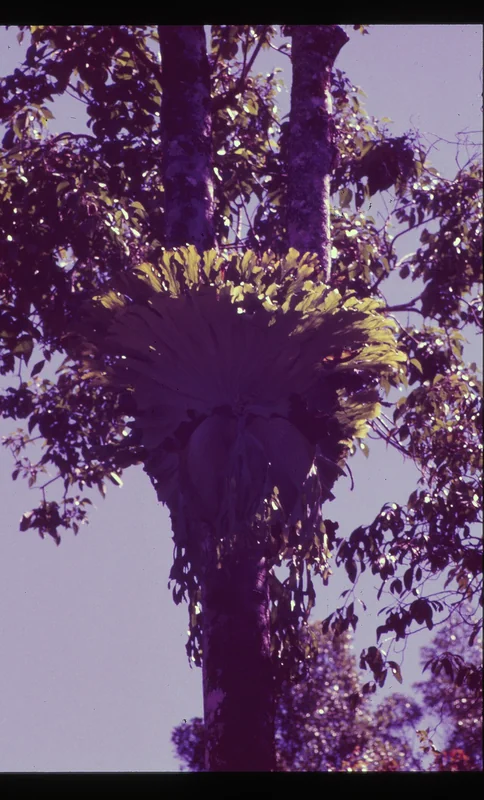 Featured photoplatycerium-superbum.jpg
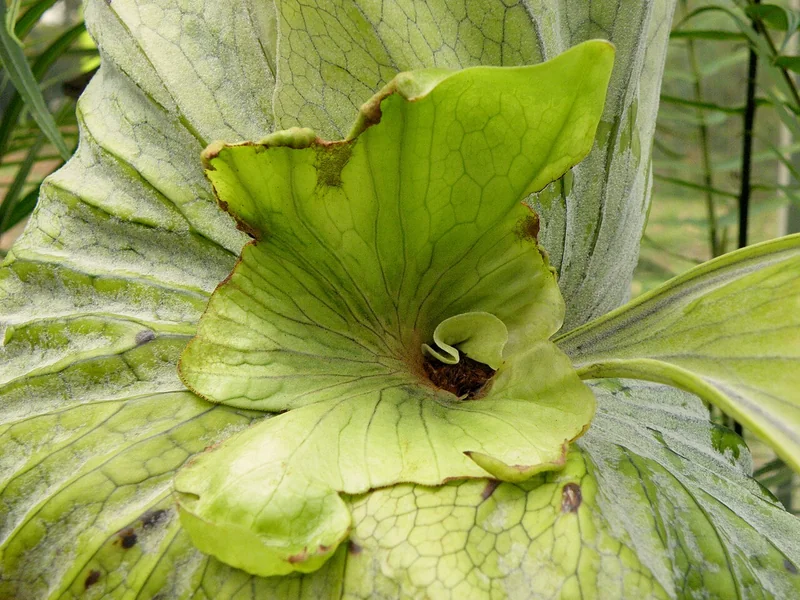
Platycerium superbum is an Australian staghorn fern that produces the most impressively large shield fronds of any platycerium — individual shields can reach over 1 metre across and are deeply lobed at the upper margin. The fertile fronds hang down in long, pendulous strands reaching 2 metres. This is a solitary species: unlike most staghorns it does not produce pups or offsets, making propagation from spore the only reliable method. It is a spectacular specimen plant for large, humid indoor spaces.
Care facts at a glance
- Light
- Bright indirect
- Water
- Soak the mount thoroughly once every 7 to 10 days in summer; every 14 to 21 days in winter.
- Humidity
- 60–85 %
- Temperature
- 13–30 °C
- Soil
- Mounted on hardwood, cork, or tree fern fibre with sphagnum moss at the root zone.
- Origin
- Humid rainforests of Queensland, New South Wales, and Southeast Asia.
- Mature size
- Shield fronds to 120 cm wide; fertile fronds to 200 cm long.
Overview
Platycerium superbum is differentiated from P. grande by its Australian distribution and by being entirely solitary — it never produces pups. Its enormous lobed shield fronds are among the most dramatic of any fern species, developing over many years into a spreading canopy. The fertile fronds produce large, undivided, spore-bearing patches (sori) rather than the multiple smaller ones seen in species like P. bifurcatum. Growth is slow; a large shield takes 5 to 10 years to develop.
Care Priorities
- Mount high on a wall in a humid room or greenhouse where the fertile fronds have room to hang freely.
- Bright, indirect light; some morning sun is tolerated but harsh afternoon sun bleaches the fronds.
- Soak the mount but allow it to drain and dry before re-soaking — good airflow through the sphagnum root zone is critical.
- Do not cut or disturb the shield fronds; each one takes years to develop.
Common Problems
The most common cause of decline is shield rot from overwatering — the dense sphagnum stays wet and anaerobic conditions develop. Reduce watering frequency and improve airflow. Scale insects on the undersides of fertile fronds can be controlled with neem oil, applied carefully to avoid waterlogging the spore patches. Spore patches turning black before brown and then yellow indicates fungal rot — treat with dilute copper-based fungicide.
Sources & further reading (2)
- botanical-garden — accessed 2026-05-08
- encyclopedia — accessed 2026-05-08
Frequently asked questions
Why does my P. superbum not produce pups?
This is normal — P. superbum is a solitary species that never offsets. It can only be propagated from spore, making it rarer and more expensive than pup-producing species.
How long does it take to produce a large specimen?
A decades-long commitment. Plants with shields exceeding 60 cm are typically 5 to 15 years old. Patience and stable growing conditions are the key to a truly spectacular specimen.
How do I tell P. superbum from P. grande?
P. superbum is solitary (no pups), Australian in origin, and has fewer but larger sori at the fertile frond tips. P. grande produces pups and has more subdivided sori.