Philodendron × 'Pink Princess'
Philodendron Pink Princess Care Guide
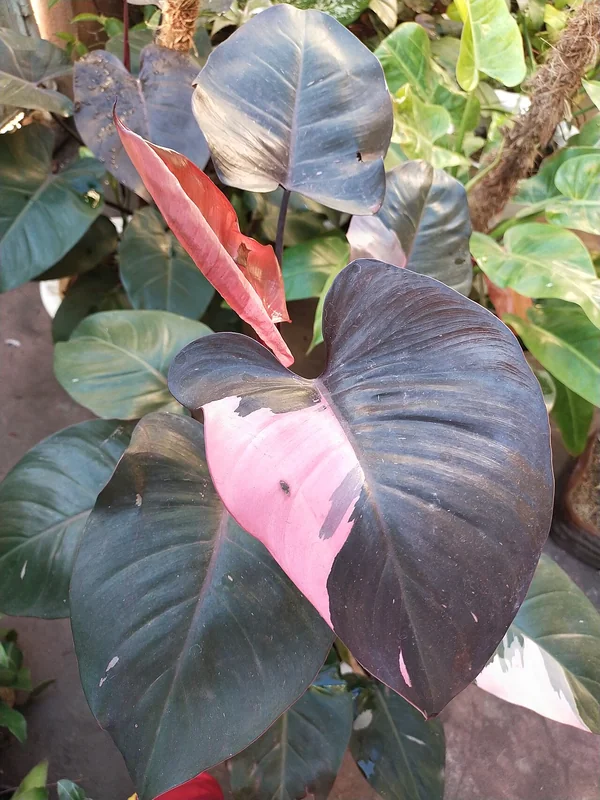 Featured photophilodendron-pink-princess.jpg
Philodendron Pink Princess grows best with bright indirect light, evenly moist but not soggy soil, and warm indoor temperatures. The pink variegation stays more pronounced when the plant gets steady light and balanced feeding during active growth. It is slower than many green philodendrons, so overwatering and low light are the most common causes of decline.
Care facts at a glance
- Light
- Bright indirect
- Water
- Water when the top 1 to 2 inches of mix feel dry.
- Humidity
- 50–70 %
- Temperature
- 18–29 °C
- Soil
- Chunky aroid mix with bark, coco coir, and perlite for quick drainage.
- Origin
- Hybrid cultivated from tropical Philodendron lineage native to Central and South America.
- Mature size
- 2 to 4 feet tall indoors with support.
Overview
Pink Princess is grown for its dark leaves splashed with bubblegum pink variegation. It behaves like other climbing philodendrons: give it warmth, airflow, and a stake or moss pole if you want larger leaves.
Care Priorities
- Keep light bright but filtered.
- Use a fast-draining aroid mix.
- Water thoroughly, then let excess drain.
- Rotate the pot to keep growth balanced.
Common Problems
Brown edges usually point to dry air or inconsistent watering. Long gaps between pink leaves often mean the plant needs more light, while yellowing lower leaves can be an early sign of wet soil staying cold for too long.
Sources & further reading (1)
- extension — accessed 2026-04-24
Frequently asked questions
Why is my Pink Princess losing pink color?
Low light is the usual reason. Move the plant to brighter indirect light and avoid pushing soft growth with excess fertilizer.
Can Pink Princess live in direct sun?
Short periods of gentle morning sun can work, but strong afternoon sun can scorch variegated leaves. Bright indirect light is the safer default indoors.
How often should I water Pink Princess in winter?
Water less often than in peak growth and always check the potting mix first. The top layer should dry a bit before you water again.