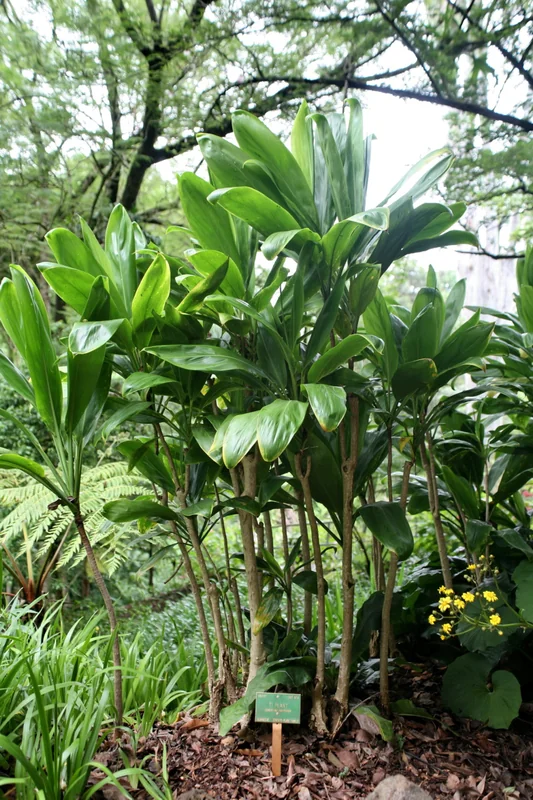
Cordyline fruticosa is the Hawaiian Ti plant, a Pacific tropical with bold strap-shaped leaves on woody upright stems. Many cultivars exist with leaves in green, pink, red, burgundy, or multicolour combinations. It is grown for foliage and is widely used as outdoor landscape plant in tropical regions. Indoors it tolerates ordinary conditions when given enough light to maintain its colour.
Care facts at a glance
- Light
- Bright indirect
- Water
- Water when the top 2 cm of mix has dried.
- Humidity
- 40–60 %
- Temperature
- 18–27 °C
- Soil
- Well-draining houseplant mix with perlite.
- Origin
- Pacific Islands and Southeast Asia.
- Mature size
- 1 to 2 metres tall indoors over many years.
Overview
Cordyline fruticosa has been cultivated in Polynesia for centuries as a sacred plant — the leaves are used in hula skirts and religious offerings. Many trade cultivars exist with vivid leaf colours, including Red Sister, Hawaiian Boy, and Pink Diamond.
Care Priorities
- Bright filtered light keeps colours saturated.
- Filtered water; tap-water salts cause leaf-tip browning.
- Allow the top of the mix to dry between waterings.
- Trim brown leaf tips at a natural angle for cosmetic appeal.
Common Problems
Brown leaf tips are tap-water minerals. Loss of colour saturation is too little light. Yellow lower leaves with healthy upper foliage is normal age turnover.
Sources & further reading (2)
- encyclopedia — accessed 2026-04-28
- botanical-garden — accessed 2026-04-28
Frequently asked questions
Why are the tips browning?
Almost always tap-water fluoride. Switch to filtered or rainwater for clean new growth.
Indoor or outdoor?
Both, in tropical climates. In temperate regions treat as houseplant; outdoor exposure below 10 °C damages the foliage.
Cordyline or dracaena?
Different genera but commonly confused. Cordyline has a single growing point and produces side shoots from the trunk; dracaena typically branches from a single trunk in different ways.