Philodendron patriciae
Philodendron patriciae Care Guide
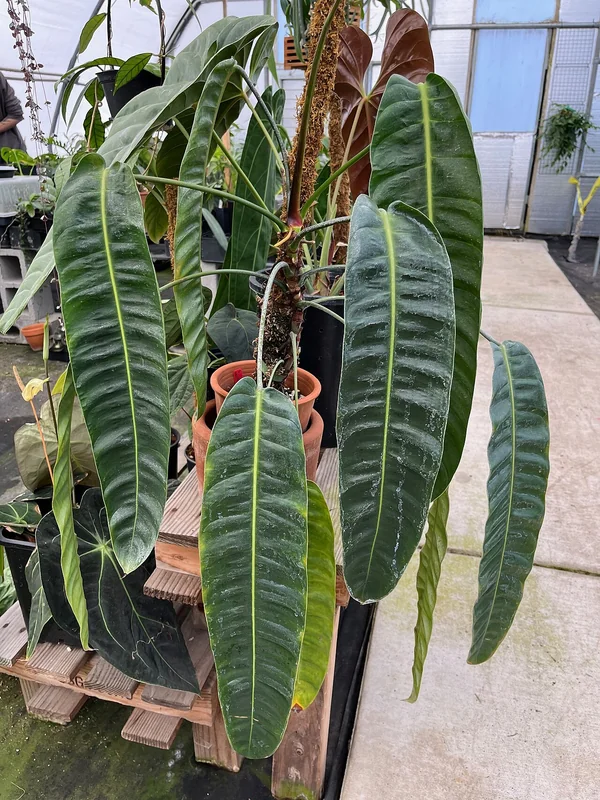 Featured photophilodendron-patriciae.jpg
Philodendron patriciae is one of the most visually striking philodendrons in cultivation, producing extraordinarily long, corrugated, pendulous leaves that can exceed 100 cm in exceptional specimens. Native to humid forests in Colombia, it grows as a hemi-epiphyte and requires a sturdy climbing structure and consistently warm, moist conditions. The deeply ribbed leaf texture and impressive length make it one of the most desired species among serious aroid collectors.
Care facts at a glance
- Light
- Bright indirect
- Water
- Water when the top 3 cm of the mix has dried; maintain consistent moisture in the growing season.
- Humidity
- 65–90 %
- Temperature
- 18–30 °C
- Soil
- Open, bark-heavy aroid mix with sphagnum layers to maintain moisture without waterlogging.
- Origin
- Humid lowland and montane forests of Colombia.
- Mature size
- 1.5 to 3 m tall as a climber; leaves 60 to 100+ cm long.
Overview
Philodendron patriciae was described by Thomas Croat. It is named in honour of Patricia Kernan, a botanical illustrator. The species belongs to a group of philodendrons with elongated, corrugated leaves that hang pendulously from the node. Its leaves are among the longest of any philodendron grown indoors and require ceiling height to reach full potential.
Care Priorities
- A tall, sturdy moss pole or totem is essential — the plant climbs to produce its most impressive leaves.
- Humidity above 65 percent ensures leaves develop without marginal browning or desiccation.
- Large leaves require generous feeding; reduce fertiliser to monthly in winter.
- Protect from cold draughts and temperatures below 16 °C, which cause leaf yellowing and drop.
Common Problems
Corrugation developing unevenly or leaves emerging flatter than expected can indicate insufficient climbing support or inadequate light. Brown tips or margins are usually low humidity; increase ambient moisture around the plant. Root rot progresses quickly in this species if the medium stays saturated — always check drainage and airflow in the pot.
Sources & further reading (2)
- botanical-garden — accessed 2026-05-08
- encyclopedia — accessed 2026-05-08
Frequently asked questions
How long can the leaves really get?
In ideal conditions with a tall moss pole and high humidity, leaves of 90 cm to over 100 cm have been documented in mature specimens. Indoor plants typically produce 60 to 80 cm leaves.
Is it good for beginners?
Its requirements are not extreme, but its size and demand for a large climbing structure make it better suited to experienced growers with the space to accommodate it.
Can I keep it in a pot without a support?
Without a vertical support the leaves remain smaller and the plant sprawls rather than climbs. A moss pole or bark totem is strongly recommended for best results.