Philodendron joepii
Philodendron joepii Care Guide
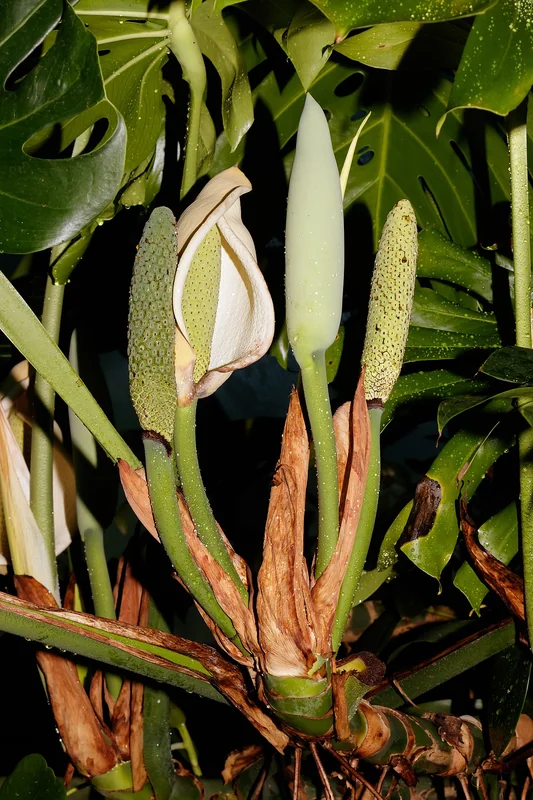 Featured photophilodendron-joepii.jpg
Philodendron joepii is a rare aroid from French Guiana with a highly distinctive leaf shape that is difficult to confuse with any other species. The mature leaves are three-lobed with two large basal lobes and a dramatically elongated terminal lobe, creating a silhouette that collectors sometimes compare to a fish tail or a letter Y. It is a prized collector plant that demands warm, humid conditions and a robust climbing structure to reach its full ornamental potential.
Care facts at a glance
- Light
- Bright indirect
- Water
- Water when the top 3 cm of the mix has dried; do not allow the root ball to dry out completely.
- Humidity
- 65–85 %
- Temperature
- 20–30 °C
- Soil
- Chunky aroid mix with large bark pieces, perlite, and minimal fine material.
- Origin
- Humid tropical forests of French Guiana.
- Mature size
- 2 m+ as a climber; adult leaves 40 to 70 cm long.
Overview
Philodendron joepii was described by Thomas Croat in 1997. It is named after Joep Moonen, a Dutch naturalist working in French Guiana. Juvenile plants have entire, elongated leaves, and the distinctive three-lobed shape only develops as the plant matures and climbs. This phenomenon — called heterophylly — means new collectors are sometimes surprised when purchased juveniles do not display the famous shape immediately.
Care Priorities
- A tall climbing support is required to trigger the mature three-lobed leaf form.
- Provide warmth above 20 °C year-round; this species comes from equatorial forest with minimal seasonal variation.
- High humidity above 65 percent prevents the basal lobes from developing brown tips.
- Repot when roots escape drainage holes; root-bound plants slow leaf production noticeably.
Common Problems
Leaves that remain juvenile (elongated, unlobed) despite a large plant indicate insufficient climbing height or inadequate light — provide a taller support and move to a brighter location. Root rot is a common issue when the substrate stays wet for extended periods; always use freely draining mixes. Mealybugs tend to hide in the crevices of the lobed adult leaves; inspect thoroughly and treat with isopropyl alcohol swabs.
Sources & further reading (2)
- botanical-garden — accessed 2026-05-08
- encyclopedia — accessed 2026-05-08
Frequently asked questions
When do the three-lobed leaves appear?
Typically once the plant is climbing and has produced at least 10 to 15 leaves. The transition to adult form is gradual and depends on climbing height and light.
Is P. joepii easy to find?
It is rare in cultivation but increasingly available from specialist aroid traders. Authenticated plants command premium prices due to their unusual leaf shape.
Can it be grown as a hanging plant?
Only in the juvenile form. For the dramatic adult leaves, it must climb vertically — a tall moss pole or wall mount is necessary.