Orostachys spinosa
Orostachys spinosa Care Guide
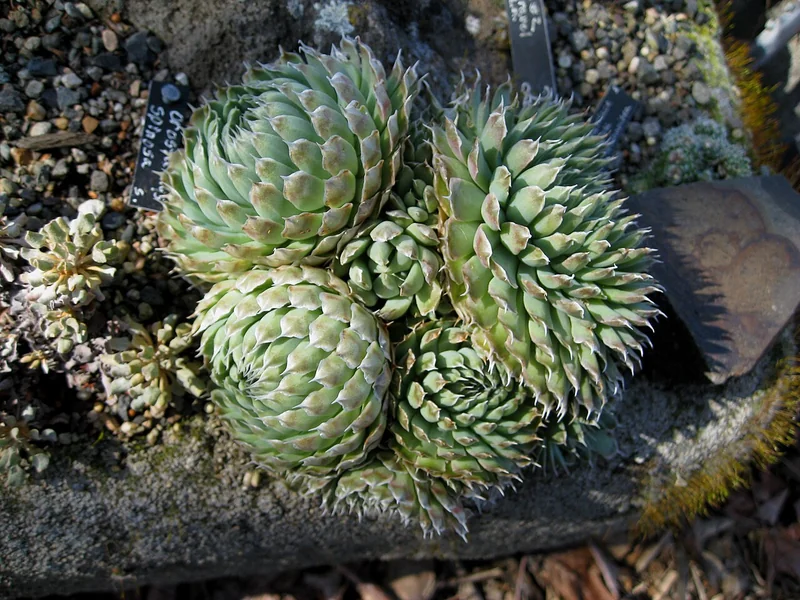 Featured photoorostachys-spinosa.jpg
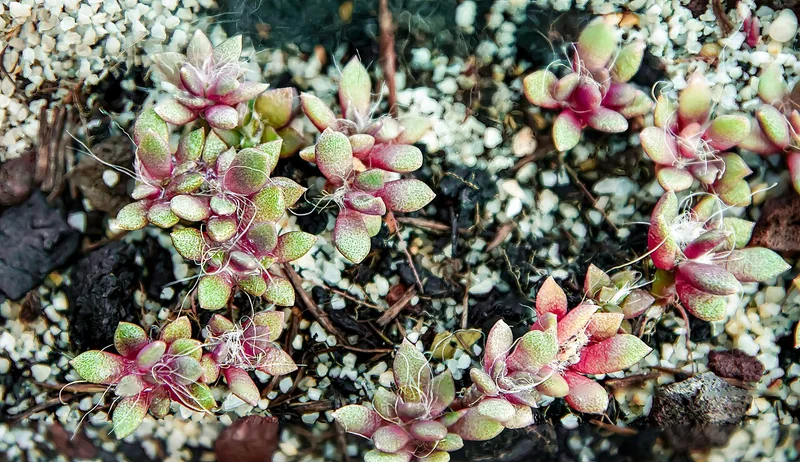
Orostachys spinosa is a biennial or monocarpic succulent from the mountains of Siberia, Mongolia, and Central Asia, forming compact, spiny rosettes of grey-green, fleshy leaves. After 2–3 years, the rosette elongates into a tall flower spike bearing cream-white to yellow flowers, then dies — but not before producing abundant offsets at its base to carry on. Its extreme cold tolerance and architectural symmetry make it a remarkable windowsill or cold greenhouse specimen.
Care facts at a glance
- Light
- Bright indirect
- Water
- Water every 2–3 weeks in the growing season; very sparingly or not at all in winter.
- Humidity
- 10–50 %
- Temperature
- -30–30 °C
- Soil
- Very gritty, free-draining cactus or alpine mix; tolerates poor, mineral soils.
- Origin
- Rocky mountain slopes and stony steppes of Central Asia, Siberia, Mongolia, and China.
- Mature size
- Rosette 5–10 cm; flowering spike to 30 cm.
Overview
Orostachys spinosa (L.) Sweet was described in 1826 and belongs to the Crassulaceae family — the same family as Echeveria, Sedum, and Sempervivum. Like Sempervivum (to which it is distantly related), O. spinosa is monocarpic: the main rosette dies after flowering. However, unlike Sempervivum, the plant typically takes 2–3 years rather than many to flower, and produces very generous numbers of offsets before dying, ensuring perpetuation. The spiny tips on the leaves are a hardening adaptation to high-altitude, wind-swept habitats.
Care Priorities
- Cool or even cold winters are actually beneficial — this is a hardy alpine plant that thrives in unheated windowsills, cold frames, or cool conservatories.
- In summer, provide maximum light to maintain the symmetrical rosette form; etiolation in low light causes an untidy, sprawling appearance.
- Allow the plant to offset naturally and collect offsets when repotting to maintain a continuous collection after the main rosette flowers.
- Do not over-fertilise — lean conditions are natural and produce the most symmetrical, tightly formed rosettes.
Common Problems
The main rosette dying after flowering is normal and expected — this is not a problem. Ensure offsets are well established (at least 3 cm diameter) before the parent rosette flowers so they can continue the collection. Over-fertilisation produces lax, atypically large rosettes with a loose form. Root rot occurs if the pot is left wet over winter — keep dry and cool but not frozen in pots. Aphids can appear on the elongating flower spike in summer; treat with insecticidal soap.
Sources & further reading (2)
- botanical-garden — accessed 2026-05-27
- encyclopedia — accessed 2026-05-27
Frequently asked questions
My plant is growing a tall stem — should I cut it off?
No — this is the flowering spike, a normal and spectacular event in the plant's life. Allow it to grow and bloom. The rosette will die after flowering, but the offsets produced at the base will continue. Collect and pot the offsets to maintain your collection.
How cold can it go?
Extremely cold — O. spinosa is among the hardiest succulents in cultivation, tolerating temperatures to -30 °C in well-drained soil. It is native to Siberian and Central Asian mountains where winters are severe. In a pot, keep it frost-free to prevent the pot cracking, but the plant itself will survive very hard frosts.
Is it related to Sempervivum?
Distantly — both are in the Crassulaceae family and share some features, including the monocarpic rosette habit and offset production. Orostachys is distinguished by its more spiny leaf tips, its preference for cooler and drier continental climates, and a slower flowering cycle (2–3 years vs. many years for Sempervivum).