Monstera lechleriana
Monstera lechleriana Care Guide
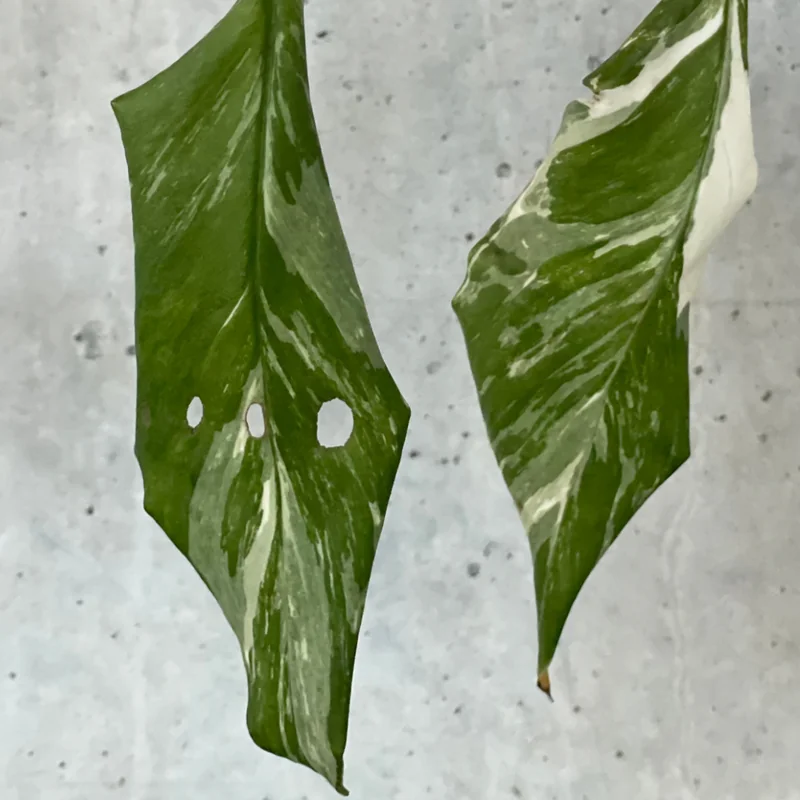 Featured photomonstera-lechleriana.jpg
Monstera lechleriana is a large, climbing monstera from humid forests of South and Central America that produces elongated leaves with oval to circular fenestrations (holes) distinct from the elongated holes of M. adansonii. Mature leaves can reach 60 cm long, making it an impressive specimen indoors. It grows vigorously with adequate light and warmth and is somewhat easier to cultivate than rare collector monsteras, bridging the gap between everyday species and specialty aroids.
Care facts at a glance
- Light
- Bright indirect
- Water
- Water when the top 3 to 4 cm of soil has dried; roughly every 7 to 14 days depending on season.
- Humidity
- 55–80 %
- Temperature
- 16–30 °C
- Soil
- Well-draining aroid mix with bark and perlite; avoid dense or compacted substrates.
- Origin
- Humid tropical forests from southern Mexico through Peru and Brazil.
- Mature size
- 3 to 5 m as a climber; adult leaves 40 to 60 cm long.
Overview
Monstera lechleriana was described by Schott in 1862. It is closely related to M. adansonii and is sometimes mislabelled as such in the horticultural trade, though lechleriana typically produces larger leaves with rounder, more evenly distributed fenestrations. Recent taxonomic revisions have clarified the distinction between these two species, with lechleriana generally being the larger of the two in cultivation.
Care Priorities
- Provide a moss pole or climbing structure; the fenestrations develop more fully as the plant climbs and matures.
- Bright, indirect light is ideal — deep shade causes small, unfenestrated leaves.
- Water evenly and allow moderate drying between waterings; root rot in dense substrate is the main concern.
- Fertilise regularly during the growing season to support rapid leaf production.
Common Problems
Leaves lacking fenestrations are a sign of either immaturity or inadequate light; try a brighter position and ensure the plant has something to climb. Yellow leaves developing from the base are normal ageing. Scale insects sometimes colonise the undersides of the thick leaves — inspect regularly and treat with neem oil solution or insecticidal soap.
Sources & further reading (2)
- botanical-garden — accessed 2026-05-08
- encyclopedia — accessed 2026-05-08
Frequently asked questions
How is M. lechleriana different from M. adansonii?
Lechleriana produces larger leaves with rounder, more circular holes, while adansonii is smaller with narrower, more elongated fenestrations. Lechleriana is generally the larger, more vigorous grower.
Does it need high humidity?
It is more tolerant of average household humidity (50 to 60 percent) than many collector aroids, making it a practical choice for typical living spaces.
Can I grow it in a hanging basket?
It can trail nicely but produces its largest, most fenestrated leaves only when allowed to climb upward. A hanging basket limits leaf size.