Hoya polyneura
Hoya polyneura Care Guide
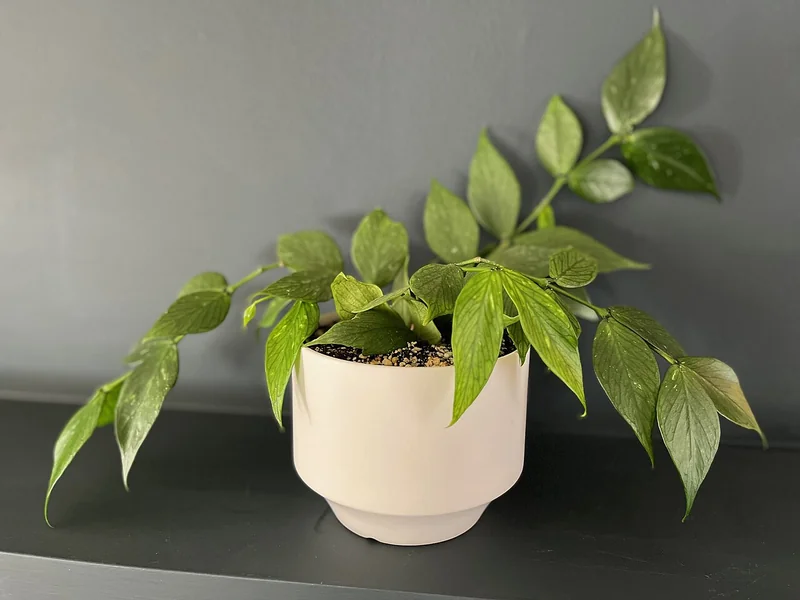 Featured photohoya-polyneura.jpg
Hoya polyneura, commonly known as the fishtail hoya, is a Himalayan and Chinese species with one of the most distinctively shaped leaves in the genus: each leaf is long and narrow with a pointed tip and a prominent midrib from which secondary veins fan outward like a fishtail or feather. It produces clusters of small, star-shaped pale yellow flowers with a subtle fragrance. It is a moderate grower that tolerates cooler temperatures than most hoyas, making it a practical choice in temperate climates.
Care facts at a glance
- Light
- Bright indirect
- Water
- Water when the top 3 to 4 cm of the mix has dried; approximately every 10 to 14 days in summer.
- Humidity
- 50–75 %
- Temperature
- 10–28 °C
- Soil
- Well-draining hoya mix: bark and perlite with minimal organic matter.
- Origin
- Himalayan foothills, Nepal, northern India, and southwestern China.
- Mature size
- Vining to 2 to 3 m; leaves 8 to 14 cm long.
Overview
Hoya polyneura was described by Hook.f. and belongs to the section of mostly Himalayan and Chinese hoyas. Unlike tropical hoyas that require warm, humid conditions year-round, polyneura tolerates cooler temperatures and is suitable for cool rooms in winter. The distinctive vein pattern, resembling a fish skeleton, gives it its common name. The species is increasingly popular among hoya collectors who appreciate its unusual leaf shape and its tolerance for cooler growing conditions.
Care Priorities
- Bright, indirect light encourages compact growth and reliable flowering.
- Cooler winter temperatures (10 to 15 °C) are tolerated and can help trigger spring flowering.
- Well-draining substrate is essential; the roots are sensitive to waterlogging.
- Do not remove flower peduncles after blooming; they are perennial and produce new flowers each season.
Common Problems
Yellow leaves followed by root inspection revealing dark, mushy tissue indicates root rot from overwatering. Dry, curled leaves in very warm rooms suggest the plant needs either more water or cooler conditions — this species prefers moderate rather than tropical temperatures. Mealybugs at leaf nodes are common; inspect and treat early.
Sources & further reading (2)
- botanical-garden — accessed 2026-05-08
- encyclopedia — accessed 2026-05-08
Frequently asked questions
Is H. polyneura suitable for cooler homes?
Yes — it is one of the most cold-tolerant hoyas available, comfortable down to 10 °C. This makes it practical for unheated rooms or conservatories in temperate climates.
How do I tell it from other hoyas?
The distinctively narrow leaf with a prominent central rib and strongly diverging lateral veins (the fishtail pattern) is unique among commonly cultivated hoyas.
Does it flower easily?
It flowers more reliably than some hoyas when given adequate bright light. A cool winter rest often triggers spring and summer blooms.