Aeschynanthus radicans
Aeschynanthus radicans (Lipstick Plant) Care Guide
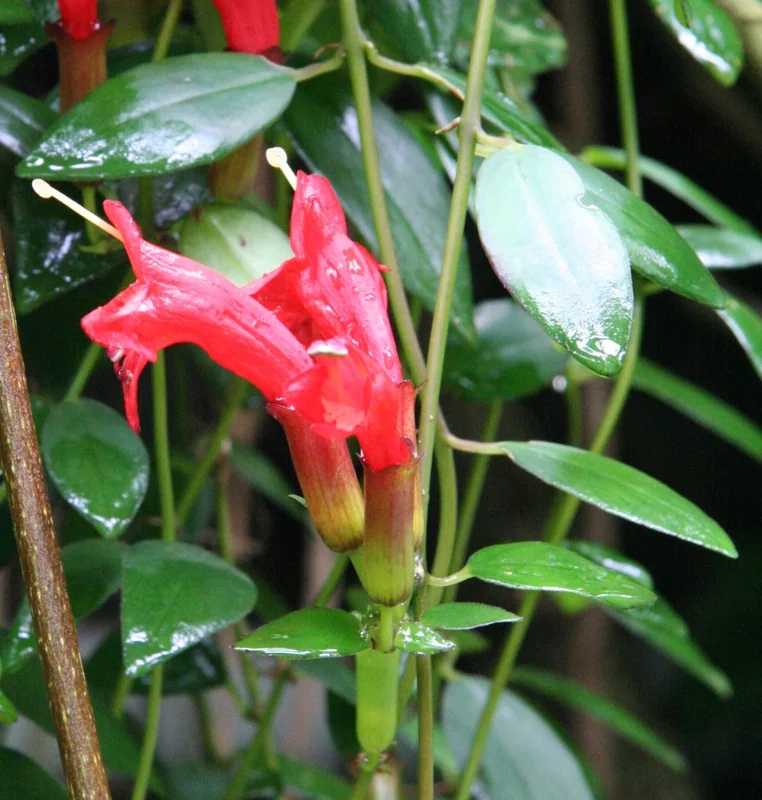 Featured photoaeschynanthus-radicans.jpg
Aeschynanthus radicans, sold as the lipstick plant, is a south-east Asian epiphytic gesneriad with thick glossy green leaves on trailing stems and bright red tubular flowers emerging from dark calyxes. The flowers' emergence from the dark sleeve gives the trade name.
Care facts at a glance
- Light
- Bright indirect
- Water
- Water when the top 2 to 3 cm of mix has dried.
- Humidity
- 50–70 %
- Temperature
- 18–27 °C
- Soil
- Free-draining epiphytic mix of orchid bark, perlite, and coco coir.
- Origin
- Tropical rainforests of Indonesia, Malaysia, and Java.
- Mature size
- Trailing stems to 60 cm.
Overview
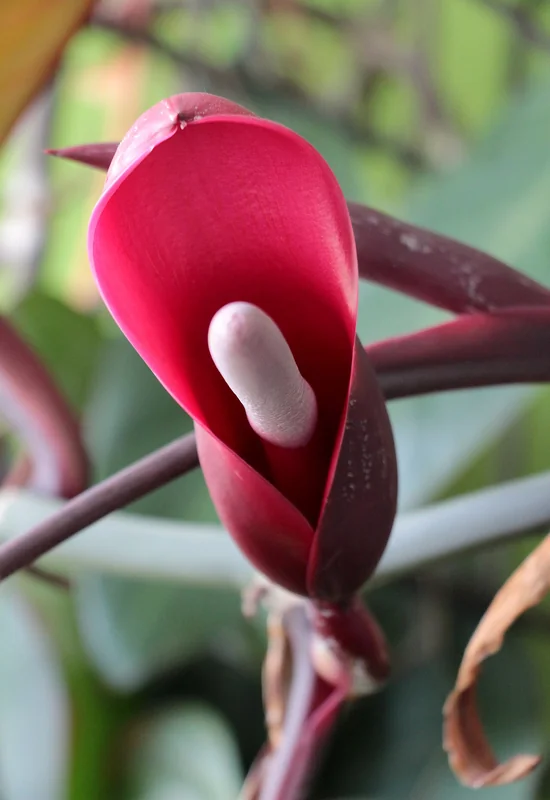
Aeschynanthus radicans is a tropical epiphyte in Gesneriaceae, the same family as African violets and Streptocarpus. The species grows on tree trunks and branches in habitat, draping its trailing stems and producing the famous tubular red flowers from dark purple-black calyxes — the flower buds emerging from the calyxes look exactly like lipstick tubes.
Care Priorities
- Bright filtered light keeps stems compact and supports flowering.
- Free-draining epiphytic mix with orchid bark.
- Water when the top of the mix dries; reduce in winter.
- A slight cool dry rest in autumn (around 15 °C and reduced watering) triggers flowering.
Common Problems
Lack of flowering is most often insufficient bright light or the absence of a cool autumn rest. Yellow leaves are usually overwatering. Brown leaf tips signal dry air; raise humidity above 50 percent for crisp foliage.
Sources & further reading (2)
- encyclopedia — accessed 2026-04-29
- botanical-garden — accessed 2026-04-29
Frequently asked questions
Why is it called the lipstick plant?
Aeschynanthus flowers emerge from dark purple or near-black tubular calyxes, with the bright red corolla pushing out as the bud opens. The combination of red emerging from a dark sleeve looks exactly like a lipstick tube being twisted up — the visual gives the plant its trade name.
How do I trigger flowering?
A. radicans needs bright filtered light, a slight autumn rest with cooler temperatures (around 15 °C) and reduced watering, then a return to warm bright conditions in late winter to set buds. Skip any of those steps and the plant stays foliage-only.
Can I propagate from a cutting?
Yes — take a healthy stem cutting with at least three nodes, root in moist epiphytic mix or in water, then pot up once roots reach 2 cm. Cuttings root readily during the warm growing season.