Aeschynanthus pulcher
Aeschynanthus pulcher (Beautiful Lipstick Plant) Care Guide
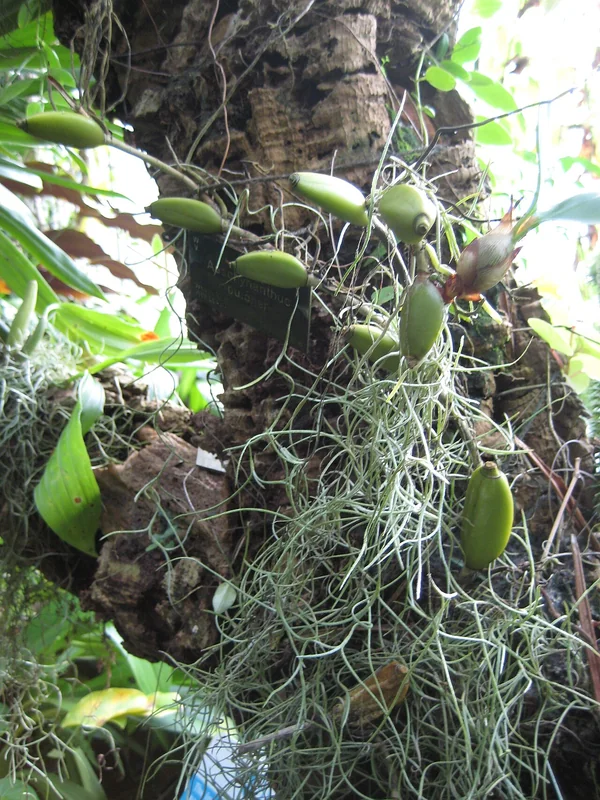 Featured photoaeschynanthus-pulcher.jpg
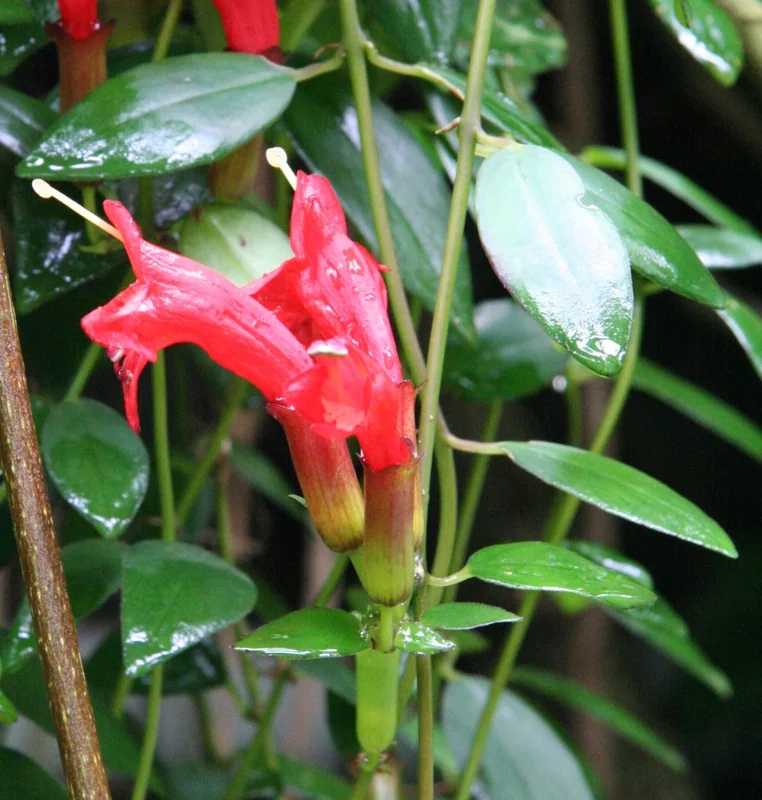
Aeschynanthus pulcher is a tropical Indonesian epiphytic gesneriad similar to the more familiar A. radicans, with thick glossy green leaves on trailing stems and bright red tubular flowers — but with a green calyx rather than the dark purple sleeve of A. radicans. The two species are widely confused at retail.
Care facts at a glance
- Light
- Bright indirect
- Water
- Water when the top 2 to 3 cm of mix has dried.
- Humidity
- 50–70 %
- Temperature
- 18–27 °C
- Soil
- Free-draining epiphytic mix of orchid bark, perlite, and coco coir.
- Origin
- Tropical rainforests of Indonesia, especially Java.
- Mature size
- Trailing stems to 60 cm.
Overview
Aeschynanthus pulcher is the original 'lipstick plant' described to science in the 1840s, predating the more recently introduced A. radicans. The two species share growth habit and flower shape but A. pulcher has a green calyx around its red corolla rather than the dark purple sleeve that gives A. radicans its dramatic look.
Care Priorities
- Bright filtered light keeps stems compact and supports flowering.
- Free-draining epiphytic mix with orchid bark.
- Water when the top of the mix dries; reduce in winter.
- A slight cool dry autumn rest triggers flowering in late winter.
Common Problems
Failure to flower is most often insufficient light or no cool rest period. Yellow leaves indicate overwatering. Spider mites cluster in dry indoor air; rinse foliage monthly to discourage them.
Sources & further reading (2)
- encyclopedia — accessed 2026-04-29
- botanical-garden — accessed 2026-04-29
Frequently asked questions
How is A. pulcher different from A. radicans?
Both have glossy green leaves and red tubular flowers, but A. pulcher has a green calyx around the corolla while A. radicans has a dark purple-black calyx. The dramatic 'lipstick tube' look comes from the dark calyx of A. radicans; A. pulcher flowers look like simpler red tubes against green.
Are they grown the same way?
Yes — care requirements are essentially identical. Both are tropical Indonesian epiphytes that prefer bright filtered light, free-draining epiphytic mix, and a slight autumn rest to trigger flowering.
Why is it called 'pulcher'?
The species name *pulcher* is Latin for 'beautiful'. The species was described in the 1840s and named for its showy red tubular flowers, which were a novelty in European horticulture at the time.