Hoya macgillivrayi
Hoya macgillivrayi Care Guide
 Featured photohoya-macgillivrayi.jpg
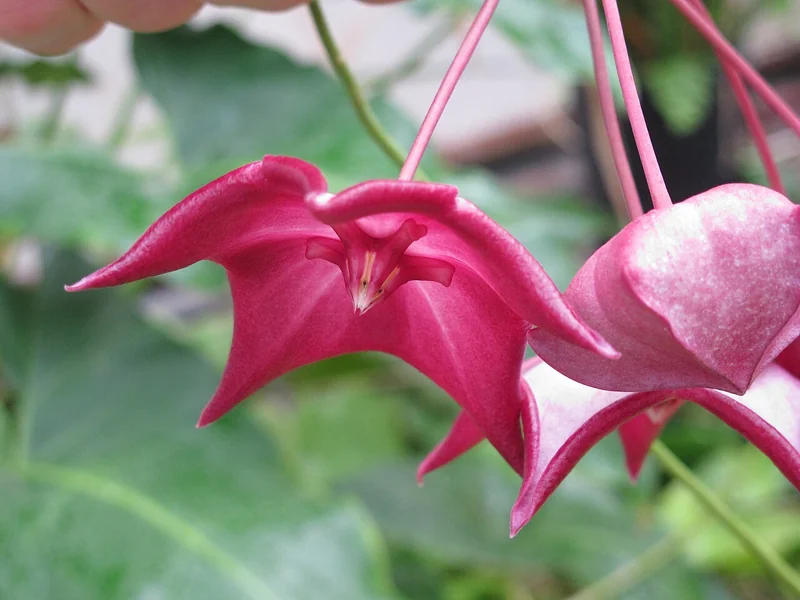
Hoya macgillivrayi is a vigorous Australian hoya from the rainforests of Queensland's Cape York Peninsula, producing the largest individual flowers of any commonly cultivated hoya species — deep wine-red to burgundy-maroon stars up to 7–8 cm across with a thick, waxy texture and a powerful musky-sweet evening fragrance. The large, oval, glossy-green leaves and fast-climbing growth make it a statement specimen plant, and its flowers are among the most dramatically coloured in the genus.
Care facts at a glance
- Light
- Bright indirect
- Water
- Water every 10 to 14 days in the growing season; allow the top half of the medium to dry between waterings.
- Humidity
- 55–80 %
- Temperature
- 15–32 °C
- Soil
- Open, well-draining hoya mix: equal parts orchid bark, perlite, and a small amount of potting mix.
- Origin
- Tropical rainforests of Cape York Peninsula, Queensland, Australia.
- Mature size
- Vigorous climber; stems to 4+ m. Leaves 12–18 cm long, broadly oval.
Overview
Hoya macgillivrayi F.M.Bailey was described in 1900 and is named in honour of John Macgillivray, the naturalist aboard HMS Rattlesnake during its surveys of Queensland's northern coast. It is endemic to the wet tropical rainforests of Cape York Peninsula at elevations up to 1,000 m. The individual flowers, at up to 8 cm in diameter, are the largest of any hoya species in widespread cultivation and produce a rich, complex fragrance strongest in the evening — combining musky, sweet, and faintly chocolate notes. The flower colour ranges from deep burgundy-maroon in standard forms to near-black in some clones.
Care Priorities
- Provide a sturdy climbing support — the vigorous vines grow rapidly and need something substantial to cling to.
- Bright, indirect light with some morning direct sun is essential; without sufficient light the plant grows vigorously but fails to bloom.
- Never remove old peduncles — the enormous flowers re-emerge from the same spurs season after season.
- A mild winter rest (reduce watering, allow temperatures to drop to 16–18 °C) is beneficial for flower bud initiation.
- The large leaves accumulate dust; wipe periodically with a damp cloth to maintain efficient photosynthesis.
Common Problems
Failure to flower despite vigorous growth indicates insufficient light or a missing rest period — move to a brighter position and allow a 6–8 week cool, dry winter rest. Scale insects on the thick stems are common; treat with horticultural oil and a soft brush. Root rot from overwatering in large, moisture-retentive media can develop undetected because the robust plant stays green for some time; always use an airy, fast-draining mix. Bud drop before flowers open usually indicates sudden temperature change or draughts — maintain stable conditions when buds are developing.
Sources & further reading (2)
- botanical-garden — accessed 2026-05-27
- encyclopedia — accessed 2026-05-27
Frequently asked questions
How large do the flowers really get?
Individual flowers reach 7–8 cm in diameter — roughly the size of a large coin or small saucer. Each umbel contains 10–20 of these massive blooms. The overall flower cluster can be 15–20 cm across and produces a fragrance that fills a room.
Is it difficult to grow?
H. macgillivrayi is actually one of the more forgiving hoyas once established. Its large leaves and vigorous growth indicate substantial reserves; it tolerates some neglect. The main requirement is a bright position with climbing support and patience — first flowers typically arrive 2–3 years after rooting a cutting.
Do I need high humidity for it?
It prefers 55–80% humidity but will survive at lower levels (40–50%) without serious leaf damage. However, spider mites become more of a problem in dry conditions, and very low humidity may delay flowering. A pebble tray or regular misting helps in dry indoor environments.