Homalomena rubescens
Homalomena rubescens Care Guide
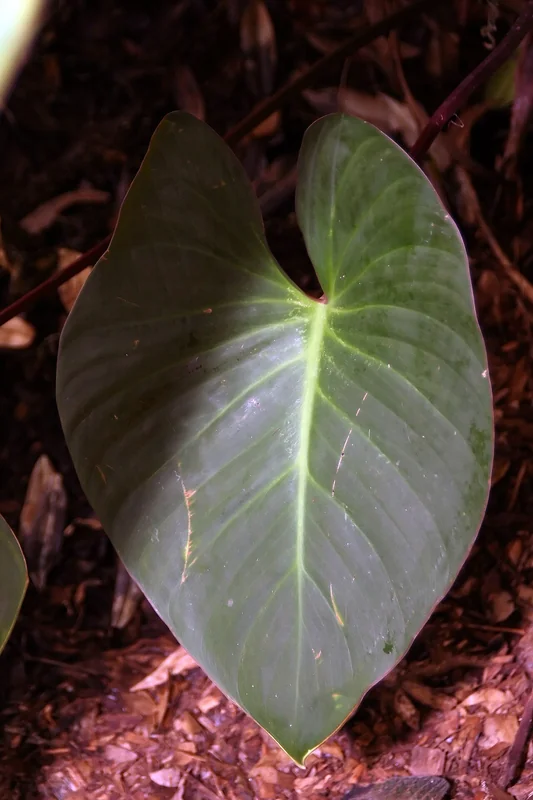 Featured photohomalomena-rubescens.jpg
Homalomena rubescens is a compact, clump-forming aroid native to tropical Southeast Asia. Its lustrous, broadly ovate leaves are carried on upright petioles and emit a faint anise-like fragrance when brushed. It tolerates lower light better than most aroids and adapts readily to average household humidity, making it a forgiving choice for beginners and collectors alike.
Care facts at a glance
- Light
- Low light
- Water
- Water when the top 3–4 cm of soil has dried; approximately every 7 to 10 days in warm months.
- Humidity
- 40–70 %
- Temperature
- 16–30 °C
- Soil
- Well-draining peat or coco-based potting mix amended with perlite at a 3:1 ratio.
- Origin
- Tropical forests of Southeast Asia, from India to the Philippines.
- Mature size
- 30 to 60 cm tall and wide; clumping habit.
Overview
Homalomena rubescens belongs to the Homalomeneae tribe of Araceae and was formally described by Kunth in 1841. The genus name derives from the Greek for 'equal thread', referencing the leaf venation. Unlike many aroids, it tolerates the relatively dry air of heated interiors and will produce offsets at the base, gradually forming a dense, attractive clump. The red tinge on young stems and petioles gives the species its epithet.
Care Priorities
- Keep away from direct sun, which scorches the leaves rapidly.
- Allow the medium to dry partially between waterings; the rhizome stores moisture efficiently.
- Average household temperatures (18–28 °C) are ideal; avoid cold draughts below 13 °C.
- Repot every 1–2 years into a pot only slightly larger than the root ball to prevent overwatering issues.
Common Problems
Yellowing lower leaves are usually a normal cycling-off of old growth, but yellowing that spreads rapidly with mushy petioles indicates root rot — unpot and trim affected roots. Brown leaf tips can signal low humidity or salt build-up from fertiliser; flush the soil thoroughly every 3 months. Spider mites thrive in dry conditions; increasing humidity and wiping leaves regularly keeps populations in check.
Sources & further reading (2)
- botanical-garden — accessed 2026-05-27
- encyclopedia — accessed 2026-05-27
Frequently asked questions
Does Homalomena rubescens need high humidity?
No — it tolerates 40% humidity comfortably, making it more adaptable than most tropical aroids. Above 60% it grows faster, but it will not suffer visibly at typical indoor levels.
How do I propagate it?
Division is easiest: unpot the plant in spring and gently separate rooted offsets from the main clump. Each division should have at least 2–3 leaves and a portion of the rhizome. Pot into fresh mix and keep warm and moist until established.
Why do my leaves smell faintly of anise?
Homalomena species produce aromatic compounds in their tissues, particularly when leaves are damaged or brushed. The scent is harmless and is actually a distinguishing trait used to tell Homalomena apart from similar aroids in the field.