Goeppertia veitchiana
Goeppertia veitchiana Care Guide
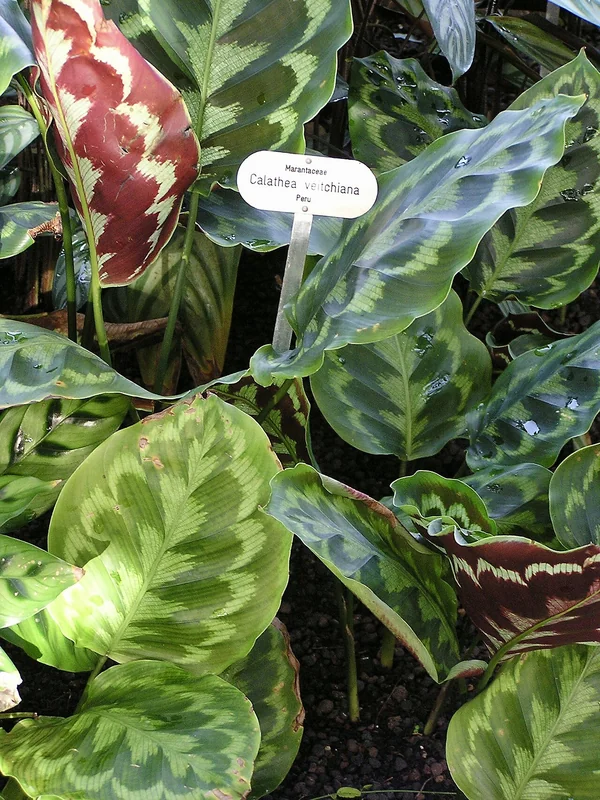 Featured photogoeppertia-veitchiana.jpg
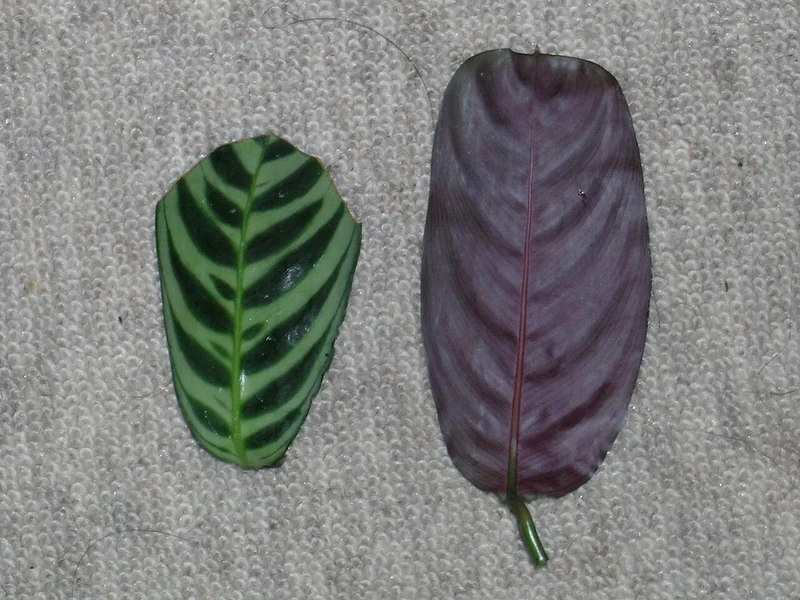
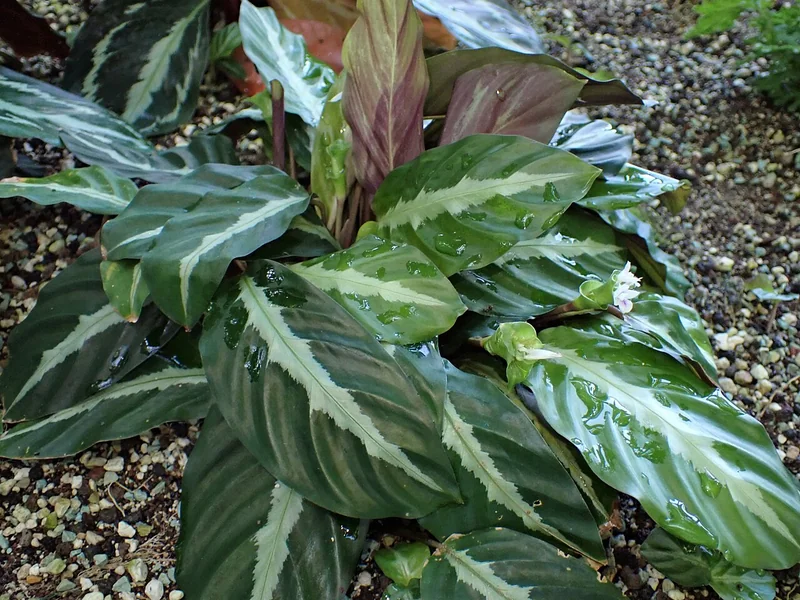
Goeppertia veitchiana (formerly Calathea veitchiana) is a large-leaved prayer plant from Ecuador, named in honour of the Victorian nurseryman James Veitch. It produces substantial oval leaves with an intricate feather or fishbone pattern in silver-grey on a deep green surface with a paler green central stripe, and deep burgundy-purple undersides. One of the larger Goeppertia species in cultivation, it makes a stately houseplant for a warm, humid room and has been popular in indoor cultivation since the Victorian era.
Care facts at a glance
- Light
- Low light
- Water
- Water every 6 to 9 days; keep consistently moist. Allow the top 1–2 cm to dry between waterings.
- Humidity
- 60–85 %
- Temperature
- 18–30 °C
- Soil
- Moisture-retentive, well-draining, slightly acidic mix: peat-free compost, perlite (20%), and coconut coir.
- Origin
- Humid lowland and submontane rainforests of Ecuador.
- Mature size
- Clump-forming; 60–90 cm tall. Leaves to 40 cm long.
Overview
Goeppertia veitchiana (Hook.) Borchs. & S.Suárez was described in 1862 and introduced into British cultivation by the Veitch nurseries of Exeter and Chelsea — one of the most celebrated Victorian plant nurseries, known for sponsoring botanical collectors worldwide. The intricate feather patterning on the leaves is produced by differential chloroplast density — cells in the patterned zones contain fewer or smaller chloroplasts, creating the lighter grey-silver markings against the darker green background. The plant's large size and architectural leaf display made it a Victorian conservatory centrepiece, and it remains popular today in large indoor spaces.
Care Priorities
- Its larger size requires a correspondingly larger pot — 20–25 cm is suitable for a mature specimen.
- Rainwater or filtered water is strongly recommended; G. veitchiana is among the more fluoride-sensitive prayer plants.
- High humidity (60%+) prevents the distinctive leaf curling and browning that affects this species quickly in dry conditions.
- Avoid cold floors and windowsills in winter; the large leaves lose heat quickly and cold stress shows as widespread yellowing.
- Repot in spring every 1–2 years; the spreading rhizome outgrows its container relatively quickly.
Common Problems
Brown leaf margins in hard-water areas are almost inevitable without switching to rainwater or filtered water; no treatment restores damaged leaf edges, but new leaves will emerge healthy with corrected watering. Bacterial leaf spot (Pseudomonas) produces irregular water-soaked patches that enlarge in humid, stagnant air; improve airflow and remove affected leaves at the base. Spider mites in winter cause progressive pale stippling and leaf drying; treat with repeated neem oil or horticultural oil applications. Large leaves collecting dust impair photosynthesis; wipe gently with a damp cloth monthly.
Sources & further reading (2)
- botanical-garden — accessed 2026-05-27
- encyclopedia — accessed 2026-05-27
Frequently asked questions
Is this the same as the 'Medallion Calathea' sold in shops?
The name 'Medallion Calathea' is applied to several Goeppertia species with rounded, patterned leaves. G. veitchiana is one of the plants sold under this name, along with G. roseopicta and G. warszewiczii. All have similar care requirements; the leaf patterning and underside colour are the most reliable differentiators.
Can I use the leaves to check humidity?
Informally, yes — the leaves of G. veitchiana are responsive to humidity and roll inward along their length when ambient humidity drops below comfortable levels. A plant with persistently rolled leaves in the daytime is a reliable indicator that the local humidity is too low.
Why does my plant lose lower leaves regularly?
Progressive lower-leaf loss is a normal growth pattern in Goeppertia — the plant continuously produces new leaves from the centre while old outer leaves senesce. The rate of loss should be balanced by new growth. If loss significantly exceeds new leaf production, check for root rot or temperature stress.