Goeppertia undulata
Goeppertia undulata Care Guide
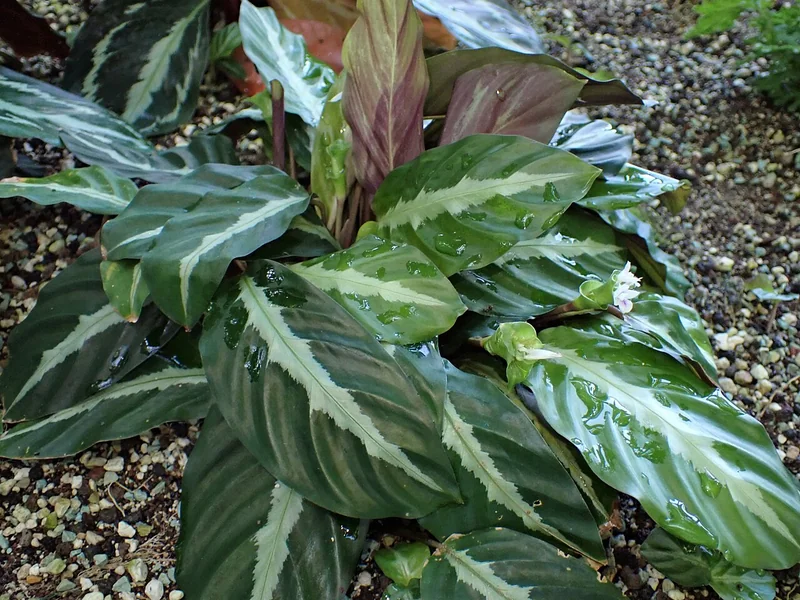 Featured photogoeppertia-undulata.jpg
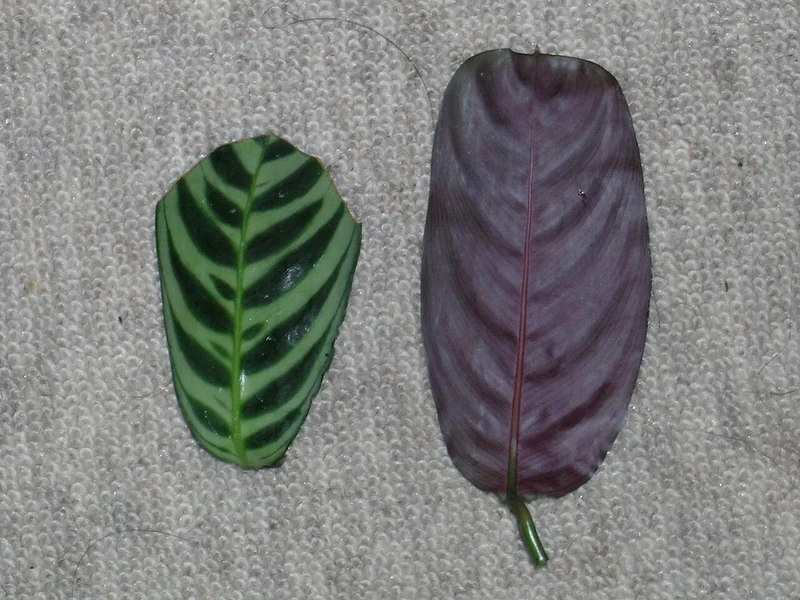
Goeppertia undulata (formerly Calathea undulata) is a prayer plant from Ecuador with distinctively wavy-edged, oblong leaves marked with silvery-white feather stripes on a dark-green background and purple-red undersides. Like all members of the Marantaceae family, it performs nyctinasty — its leaves fold upright at night and unfurl horizontally during the day. The undulating leaf margins give the plant its name and create an attractive tactile texture that distinguishes it from flat-leaved calathea relatives.
Care facts at a glance
- Light
- Low light
- Water
- Keep consistently moist; water every 6 to 9 days when the top 1–2 cm of medium dries. Never allow full dryout.
- Humidity
- 55–80 %
- Temperature
- 18–30 °C
- Soil
- Moisture-retentive, well-draining mix: peat-free potting compost with added perlite (20%) and a small amount of coconut coir.
- Origin
- Humid tropical forests of Ecuador.
- Mature size
- Clump-forming; 40–60 cm tall.
Overview
Goeppertia undulata (Linden & André) Borchs. & S.Suárez was previously known as Calathea undulata — the reclassification into Goeppertia reflects a comprehensive revision of the Marantaceae family published in 2012 that separated the neotropical Calathea into multiple genera. G. undulata is native to Ecuador's humid lowland and foothill forests. The wavy leaf margins that give the species its name are a structural feature of the leaf blade and not a sign of any deficiency or damage; they are consistent and appear on all new leaves. The silver striping pattern on the dark-green upper surface is produced by differential chloroplast density between the patterned zones.
Care Priorities
- Use filtered or collected rainwater; tap water in hard-water areas causes brown leaf tips within weeks due to fluoride and mineral accumulation.
- Keep the medium consistently moist; unlike succulents, prayer plants cannot tolerate full medium dryout.
- Moderate, indirect light — the light-and-dark pattern of the leaves indicates a forest-floor origin adapted to dappled shade.
- Good humidity (55%+) keeps the leaves unfurling properly; in very dry air the leaf edges curl inward and remain partly furled.
- Avoid draughts and cold windowsills; temperature consistency is important.
Common Problems
Brown leaf tips are the most common issue, caused by fluoride in tap water, low humidity, or over-fertilisation; switch to rainwater and reduce fertiliser concentration. Spider mites thrive in dry, warm conditions; increase humidity and treat with repeated neem oil applications at 5-day intervals to break the life cycle. Curling, inward-rolled leaves indicate low humidity or cold draughts; move to a warmer, more humid spot. Leaves not performing nyctinasty (failing to fold at night) may indicate root health issues or very deep shade; examine the roots and increase light slightly.
Sources & further reading (2)
- botanical-garden — accessed 2026-05-27
- encyclopedia — accessed 2026-05-27
Frequently asked questions
Why was the name changed from Calathea?
In 2012 a comprehensive molecular phylogenetic study showed that the genus Calathea as traditionally defined was not a natural (monophyletic) group. The neotropical species were split into several genera including Goeppertia, which now holds most of the commonly cultivated 'calatheas'. The name change is scientifically correct but slow to filter through the horticultural trade; plants are still widely sold as Calathea undulata.
Do the wavy edges indicate stress?
No — the undulating (wavy) leaf margins are a consistent, genetic characteristic of this species, present on every leaf on every plant. They are not a response to conditions. If leaves are severely cupped inward (not merely wavy), this does indicate low humidity or water stress.
Can I use tap water?
In soft-water areas tap water is usually fine. In hard-water areas the fluoride, chlorine, and mineral content causes progressive brown leaf tipping. Leaving tap water in an open container for 24 hours before use allows chlorine to off-gas, but fluoride remains. Collected rainwater, distilled water, or a reverse-osmosis filter is the best long-term solution.