Anthurium scherzerianum
Anthurium scherzerianum (Pigtail Anthurium) Care Guide
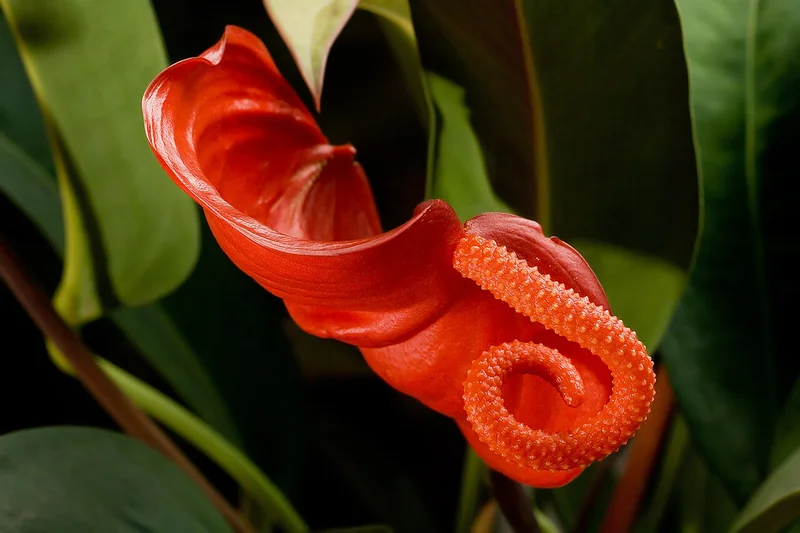 Featured photoanthurium-scherzerianum.jpg
Anthurium scherzerianum is shorter and tougher than its cousin A. andraeanum, with narrower leathery leaves and a distinctive coiled or pigtail spadix above the spathe. It tolerates lower humidity better than most anthuriums, which makes it a good first species for general indoor conditions. Steady warmth and bright filtered light produce flowers off and on year-round.
Care facts at a glance
- Light
- Bright indirect
- Water
- Water when the top 2 cm of mix has dried; reduce in winter when growth slows.
- Humidity
- 50–70 %
- Temperature
- 16–27 °C
- Soil
- Open aroid mix of orchid bark, perlite, and peat or coir in roughly equal parts.
- Origin
- Cloud forests of Costa Rica.
- Mature size
- 30 to 45 cm tall, similar spread.
Overview
Anthurium scherzerianum is the original 1860s European houseplant anthurium and remains one of the most forgiving species for living-room conditions. The pigtail-coiled spadix is the easiest way to tell it apart from A. andraeanum, whose spadix stays straight.
Care Priorities
- East or shaded south window suits it best.
- Keep night temperatures above 15 °C; cold draughts cause leaf drop.
- Water on the dry side rather than the wet side.
- Wipe leathery leaves clean every few weeks so they take in light efficiently.
Common Problems
Brown crisp leaf edges usually signal underwatering or very dry air. Soft, blackening leaf bases mean the crown is sitting in water — let the mix dry out and check pot drainage. Few or no flowers points to too little light or too much nitrogen.
Sources & further reading (2)
- botanical-garden — accessed 2026-04-28
- encyclopedia — accessed 2026-04-28
Frequently asked questions
How is this different from a regular anthurium?
Anthurium scherzerianum has a curled, tail-like spadix and narrower lance-shaped leaves; Anthurium andraeanum has a straight spadix and broader heart-shaped leaves. Scherzerianum is also more drought-tolerant.
Can I keep it in a north-facing room?
It will survive but may stop flowering. A grow light running 8 to 10 hours a day in winter brings the blooms back.
Why are the leaves curling inward?
Curled leaves point to underwatering or low humidity. Check the pot weight first — a pot that lifts very light is dry to the core.