Echeveria subsessilis
Echeveria subsessilis Care Guide
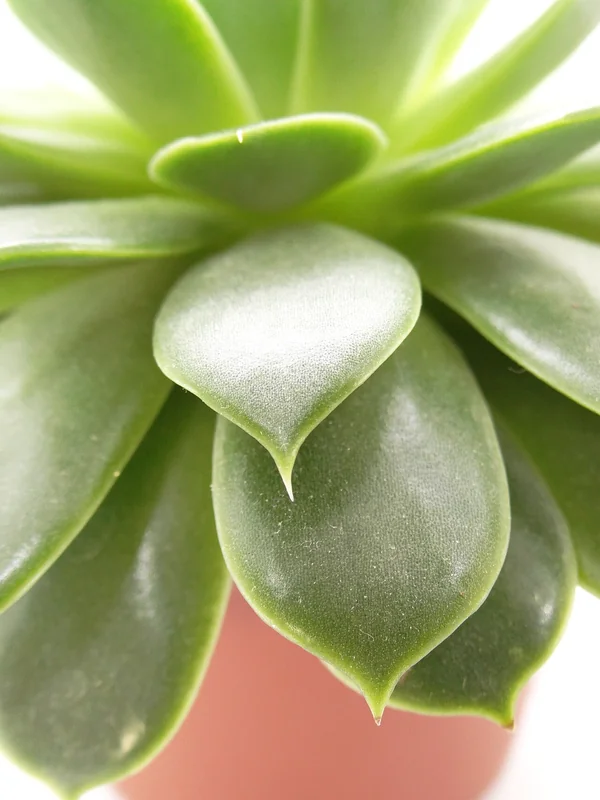 Featured photoecheveria-subsessilis.jpg
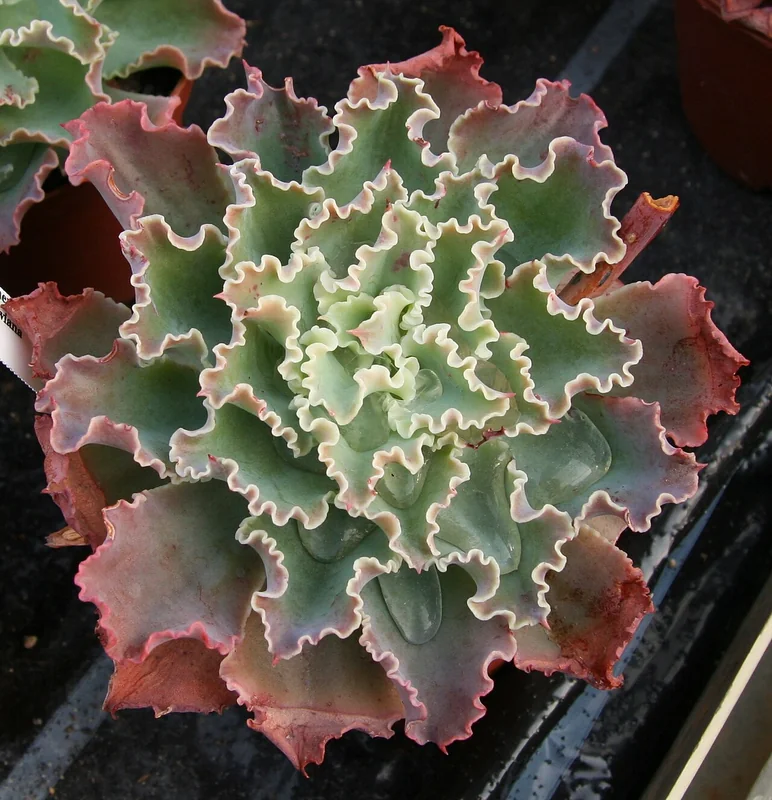
Echeveria subsessilis is a medium-sized, clump-forming echeveria from the Mexican states of Hidalgo and San Luis Potosí. Its leaves are blue-green to grey-green with distinctly wavy margins and a slight pink blush at the tips under bright light. The rosettes are compact and offsetting, making them a practical choice for windowsills and succulent arrangements. Spring and summer flowering produces tall stems bearing orange-yellow tubular blooms.
Care facts at a glance
- Light
- Bright indirect
- Water
- Water when the soil has dried completely, about every 2 to 3 weeks in summer.
- Humidity
- 30–55 %
- Temperature
- 5–35 °C
- Soil
- Standard succulent mix with perlite.
- Origin
- Rocky limestone slopes of Hidalgo and San Luis Potosí, Mexico.
- Mature size
- 10 to 15 cm tall; rosette 10 to 20 cm across.
Overview
Echeveria subsessilis was described by (S.Watson) Rose. The name 'subsessilis' refers to the nearly stemless (sub-sessile) habit. It is closely related to E. peacockii but is generally larger and more tolerant of varied indoor conditions. The blue colouration is from a waxy cuticle that provides UV protection, common in many echeverias from high-altitude Mexican habitats.
Care Priorities
- Bright light is essential for compact rosette form and good blue colouration; low light produces green, stretched leaves.
- Keep the rosette dry — water soil level only to prevent rot.
- Provide drainage holes and gritty substrate.
- Cool winters (10 to 15 °C) encourage reliable spring flowering.
Common Problems
Pale or green-tinged leaves are a sign of insufficient light — move to a brighter windowsill. Soft tissue at the base of the rosette is an early sign of crown or root rot; act promptly by removing the plant and treating as described for overwatering damage. Mealybugs love the tight leaf axils; inspect regularly.
Sources & further reading (2)
- botanical-garden — accessed 2026-05-08
- encyclopedia — accessed 2026-05-08
Frequently asked questions
Is it the same as 'Morning Beauty'?
The cultivar name 'Morning Beauty' is applied to a particularly blue form of E. subsessilis and is widely used in trade. True E. subsessilis may be slightly less intense in colouration than selected 'Morning Beauty' clones.
Does it tolerate outdoor growing?
Yes, in climates without frost. It thrives in rock gardens or containers with excellent drainage and is a popular garden plant in mild Mediterranean-type climates.
How often should I repot?
Every 2 to 3 years or when offsets fill the pot. Spring repotting gives the plant the full growing season to re-establish.