Colocasia esculenta
Colocasia esculenta Care Guide
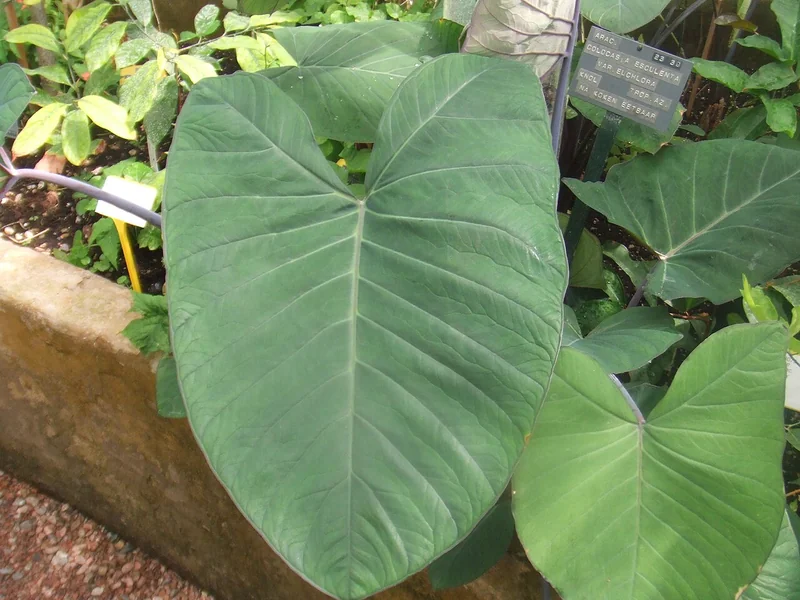 Featured photocolocasia-esculenta.jpg
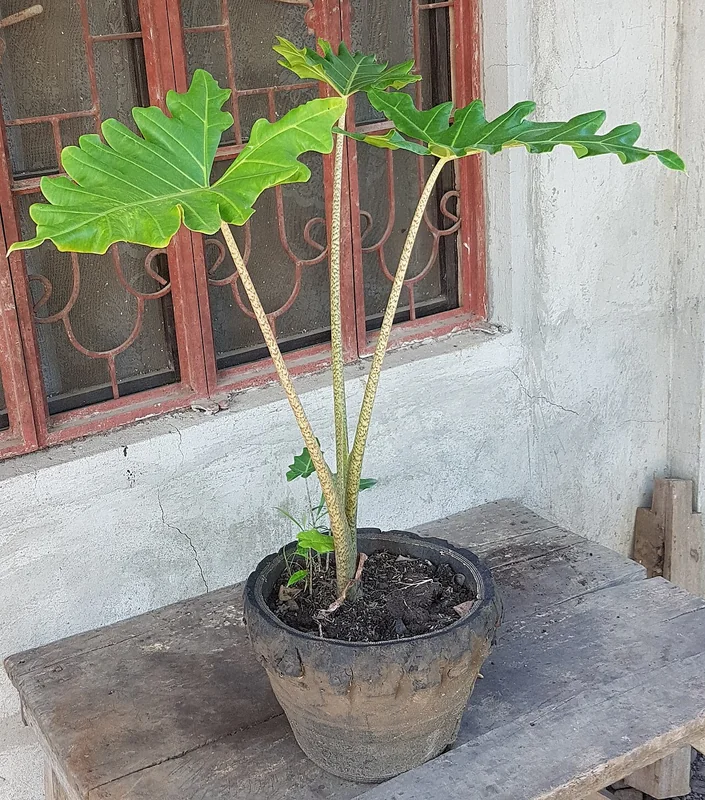
Colocasia esculenta, known widely as taro or elephant ear, is one of the oldest cultivated tropical aroids in the world. Grown as a dramatic houseplant, it produces enormous heart-shaped to shield-shaped leaves up to 60 cm across that repel water in a mesmerising beading display. Indoors it requires bright light, generous moisture, and warm temperatures to maintain its characteristic vigour.
Care facts at a glance
- Light
- Bright indirect
- Water
- Keep the soil consistently moist but not waterlogged; water every 3 to 5 days in summer.
- Humidity
- 60–90 %
- Temperature
- 18–35 °C
- Soil
- Rich, moisture-retentive loam or potting mix; add coco coir to increase water retention.
- Origin
- Native range spans South and Southeast Asia; widely naturalised pan-tropically.
- Mature size
- 0.9 to 1.5 m tall indoors; leaves up to 60 cm long.
Overview
Colocasia esculenta has been cultivated in tropical Asia for at least 10,000 years and is one of the world's oldest crop plants. As a houseplant it is grown purely for its extraordinary foliage. The peltate leaf blade is attached to its petiole some distance from the edge, creating the characteristic 'umbrella' form. In warm, humid conditions indoors it will go dormant in winter, dying back to a corm, only to re-sprout vigorously in spring.
Care Priorities
- Provide the brightest indirect light available — a conservatory or south-facing window with light curtain shading is ideal.
- Maintain consistently moist soil; more so than almost any other houseplant aroid.
- Feed generously with a nitrogen-rich fertiliser during the growing season to fuel the rapid leaf turnover.
- Allow the plant to go dormant naturally in autumn; reduce watering and keep the corm at 10–15 °C over winter.
Common Problems
Drooping, yellowing leaves in summer usually signal drought stress rather than overwatering — check the soil before reducing water. Pale, bleached leaves indicate too much direct sun; move back from the window. Brown leaf tips are caused by low humidity or fertiliser salt build-up; flush the pot with plain water monthly. Taro leaf blight (caused by Phytophthora colocasiae) creates brown, water-soaked lesions on the leaves; improve airflow and avoid overhead watering.
Sources & further reading (2)
- botanical-garden — accessed 2026-05-27
- encyclopedia — accessed 2026-05-27
Frequently asked questions
Can I keep Colocasia esculenta as a permanent indoor plant?
Yes, though it goes through a dormant phase in winter. Reduce watering in autumn and allow the above-ground growth to die back. Store the corm in barely moist medium at cool room temperature, then resume normal care in spring when new shoots appear.
Why does water bead on the leaves?
The leaf surface is covered in microscopic waxy bumps that create a superhydrophobic layer — the 'lotus effect'. Water forms spherical droplets that roll off the leaf, carrying dust with them. This is entirely normal and one of the plant's most decorative features.
What pot size does it need?
Colocasia grows rapidly and benefits from a large container — at least 30 cm in diameter — to accommodate its vigorous root system. A heavier pot (terracotta or ceramic) helps prevent the plant from toppling under the weight of its large leaves.