Ceropegia stapeliiformis
Ceropegia stapeliiformis Care Guide
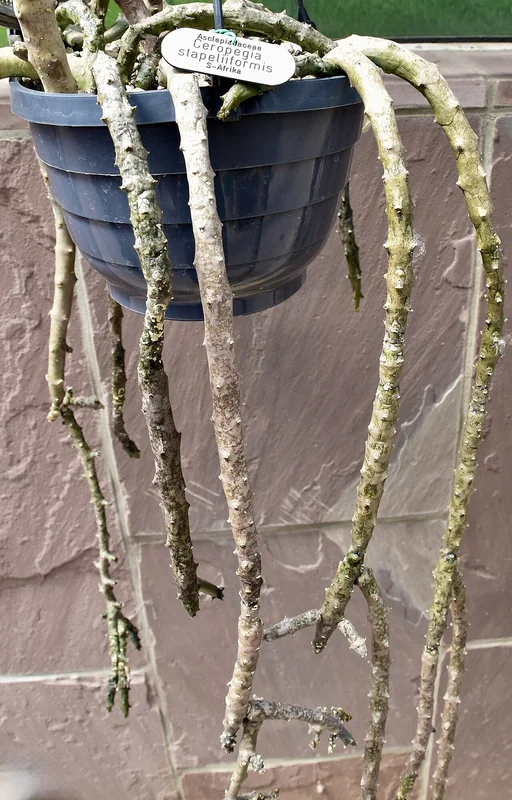 Featured photoceropegia-stapeliiformis.jpg
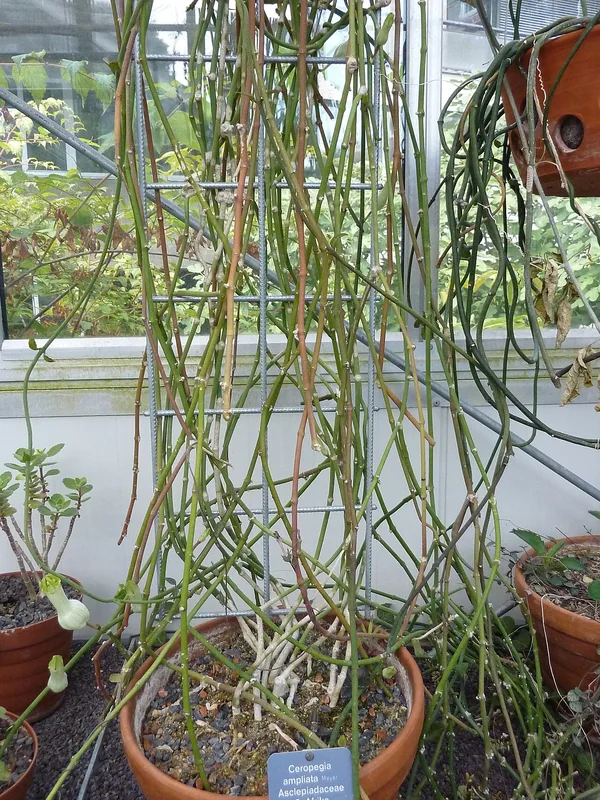
Ceropegia stapeliiformis is a creeping and mounding South African succulent best known for its extraordinary snake-like stems — grey-green, mottled with dark green and red-brown blotches, growing in irregular segments that genuinely resemble a coiled snake at first glance. The flowers are equally dramatic: upright, tubular structures of white with dark maroon stripes and hairy fused petal tips, functioning as temporary insect traps. Growing from a tuber, it tolerates extended drought and thrives on neglect, making it one of the most low-maintenance succulent oddities available.
Care facts at a glance
- Light
- Bright indirect
- Water
- Water every 14 to 21 days in summer; once a month or less in winter. Allow complete drying between waterings.
- Humidity
- 30–60 %
- Temperature
- 8–35 °C
- Soil
- Very open, gritty succulent mix: 60% coarse grit or perlite, 40% potting mix.
- Origin
- Semi-arid regions of South Africa, particularly the Eastern Cape and KwaZulu-Natal.
- Mature size
- Creeping mound; stems to 60–90 cm long, 1–2 cm diameter.
Overview
Ceropegia stapeliiformis Haw. was described in 1819, named for its resemblance to the stapeliad succulents (Stapelia, Orbea, etc.) in stem form. The segmented, mottled, leafless or near-leafless stems are a dramatic adaptation to arid conditions — photosynthesis occurs in the stem surface rather than leaves, reducing transpiration. The stem patterning provides camouflage among rocks and dried plant debris in its native South African habitat. The flowers, like others in the genus, are temporary insect traps; the hairy petal tips prevent a fly from escaping until it has collected pollen, then release it unharmed.
Care Priorities
- Grow in a very shallow, wide pot rather than a deep container — the tuber and roots are shallow-spreading.
- Full sun to bright indirect light; the mottled patterning of the stems intensifies in higher light.
- The snake-like stems can be arranged aesthetically by placing them in the desired direction while young and flexible.
- A winter rest (near-dry, cool: 10–15 °C) is important for long-term health; this species does not thrive with year-round warm, wet conditions.
- Handle carefully — the stems are brittle at their segment joints.
Common Problems
Stem rot usually begins at the soil surface around the tuber crown; ensure the tuber sits at or just above the soil level in a very free-draining mix. Vine weevil larvae can attack the tuber undetected; if the plant suddenly collapses check the tuber for feeding damage. Mealybugs in the soil around the tuber are common; inspect when repotting. Etiolation (elongated, pale, thin stems) indicates insufficient light — increase direct sun exposure gradually. The stems are fragile at segment joints; transport and repotting require careful handling.
Sources & further reading (2)
- botanical-garden — accessed 2026-05-27
- encyclopedia — accessed 2026-05-27
Frequently asked questions
Does it really look like a snake?
Yes — the thick, segmented, grey-green-and-brown mottled stems coiling across a pot surface are strikingly convincing at a glance. The pattern mimics the dorsal scales of certain African snakes. It is one of the most conversation-stopping succulents in a collection, and visitors consistently mistake the plant for a live snake before looking closely.
Why are the stems segmented?
The segmentation reflects the growing pattern of successive growth seasons. Each segment represents one growth push. The joint between segments is the weakest point, which is why gentle handling during repotting is important.
Is the flower scented?
The flowers emit a faint odour in the daytime that attracts small flies — the scent is not pleasant to human noses. It is mild and not noticeable across a room. The primary attraction of this plant is the stems, not the flowers, though the flowers are architecturally fascinating in their own right.